
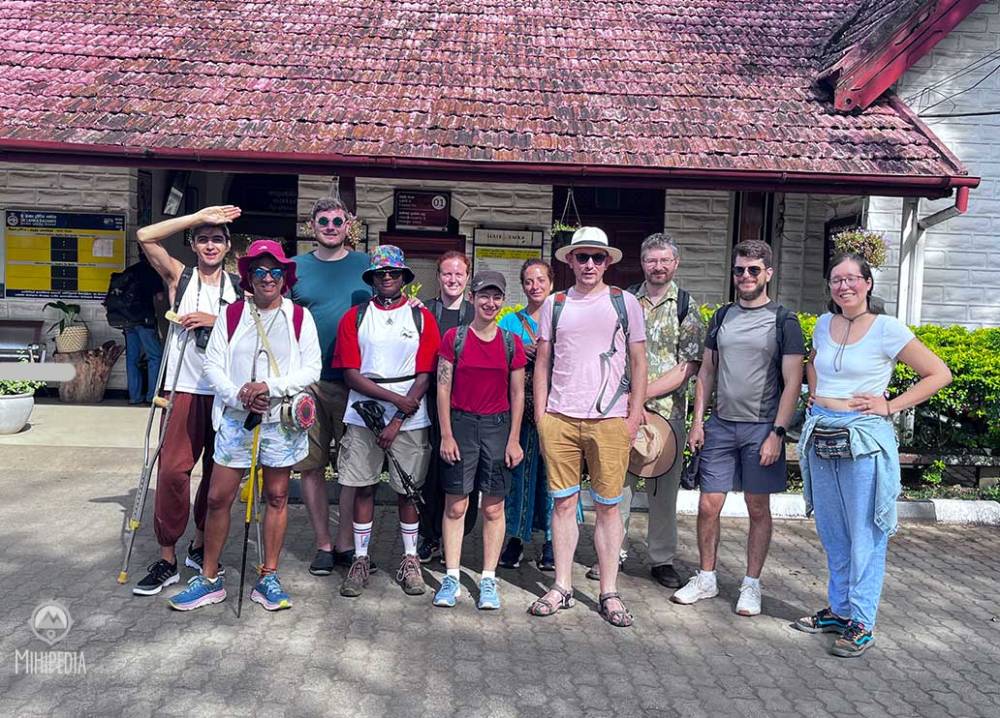
We woke to a cool, lemon-gold morning at Senasuma Homestay, a quiet little guesthouse tucked into a corner of Ella. After a quick breakfast of hoppers, fruit and coffee, we joined the rest of our group of ten friends from across the UK, Italy, France, Ireland, Poland, Greece and Belgium and ambled out at 9 a.m., ready for this stage of the Pekoe Trail.
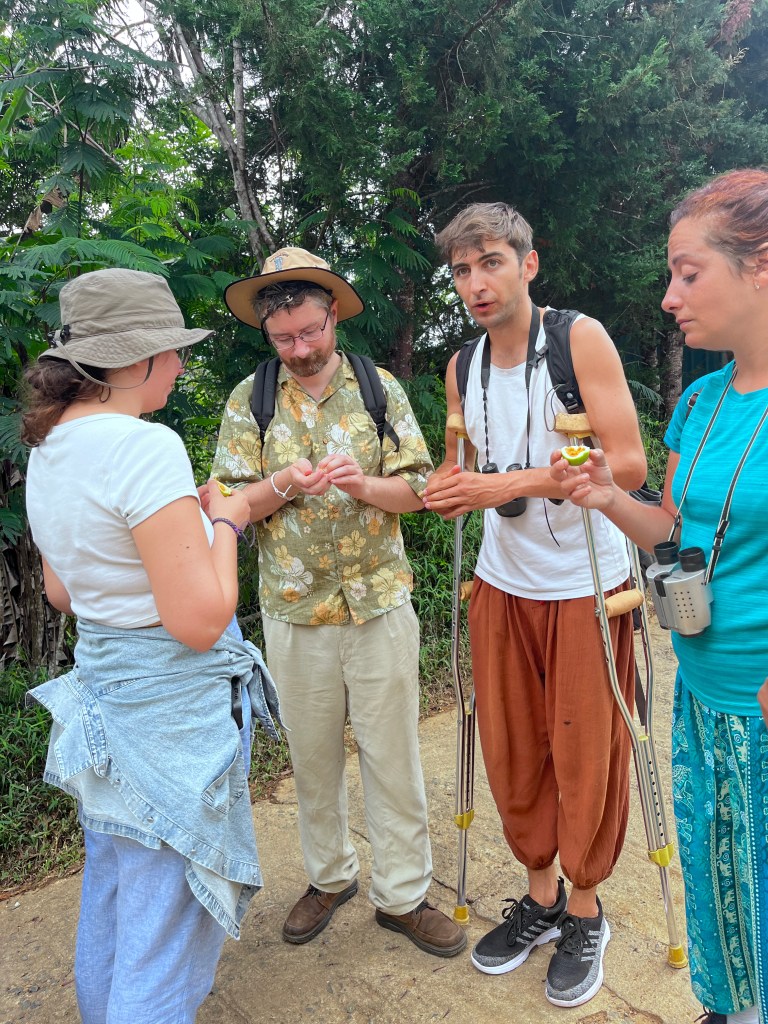
Pekoe Trail 16 starts at the Ella Railway Station and runs 8.7 km with an elevation gain of about 296 m, enough to warm the legs without feeling the hamstrings burn. Ewan, still recovering from a heroic, but ill-fated attempt at the hokey-pokey on a dance floor three nights earlier, was undeterred. He swung along on crutches with the swagger of a one-man marching band, turning the trail into his own personal choreography. Each click and thud of the crutches set a beat for the rest of us as we left the bustle of Ella and slipped into a cool green corridor of tea and mist.
The first kilometre wound between small homes where woodsmoke drifted over the tea bushes. Our polyglot chatter of French jokes, Italian travel tips, English chatter floated above the narrow track.
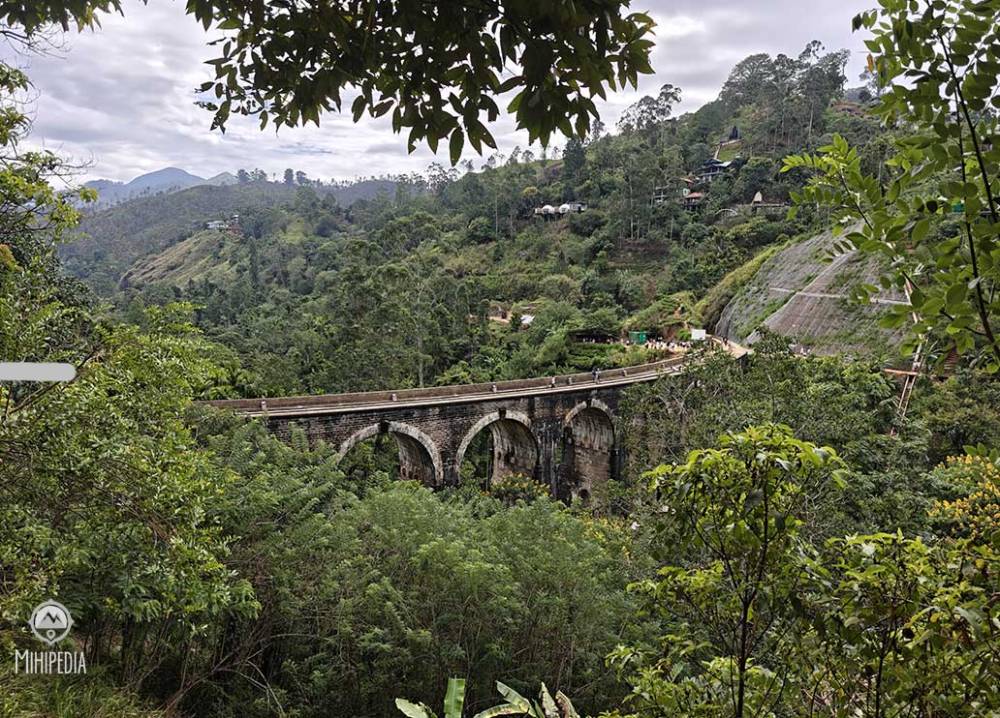
As we rounded a bend the Nine Arch Bridge appeared, its graceful stone sweep framed by thick jungle. We paused for king coconuts from a wayside stall, the chilled water a perfect hill-country refresher, and waited. Right on cue the blue-and-cream train rumbled across, its whistle echoing like a call from another century. Cameras clicked, conversation hushed, and for a heartbeat it felt timeless.
The Nine Arch Bridge, or Ahas Namaye Palama (“Bridge in the Sky”), was built during the British colonial era as part of the railway extension from Ella to Demodara, with construction beginning around 1913 and finishing shortly after World War I. Wartime steel shortages forced engineers to abandon their original plan for metal supports, so the entire structure was crafted from stone and brick—a remarkable all-masonry design that stretches 91 metres long, 24 metres high, and 7 metres wide across nine graceful arches. Local legend credits master mason P.K. Appuhamy, whose skill impressed the British officials enough to entrust him with the project, and the bridge remains a functioning section of the Colombo–Badulla line. Today its dramatic setting amid tea fields and misty jungle, coupled with the echo of trains crossing its span, makes it one of Sri Lanka’s most photographed and beloved landmarks.
As we set off, romance dimmed when we noticed the litter: plastic bottles, biscuit wrappers, stray flip-flops. The trail deserved better. Still, the hills rolled on, patchwork green against the morning sky, the air sweet with the scent of drying tea.
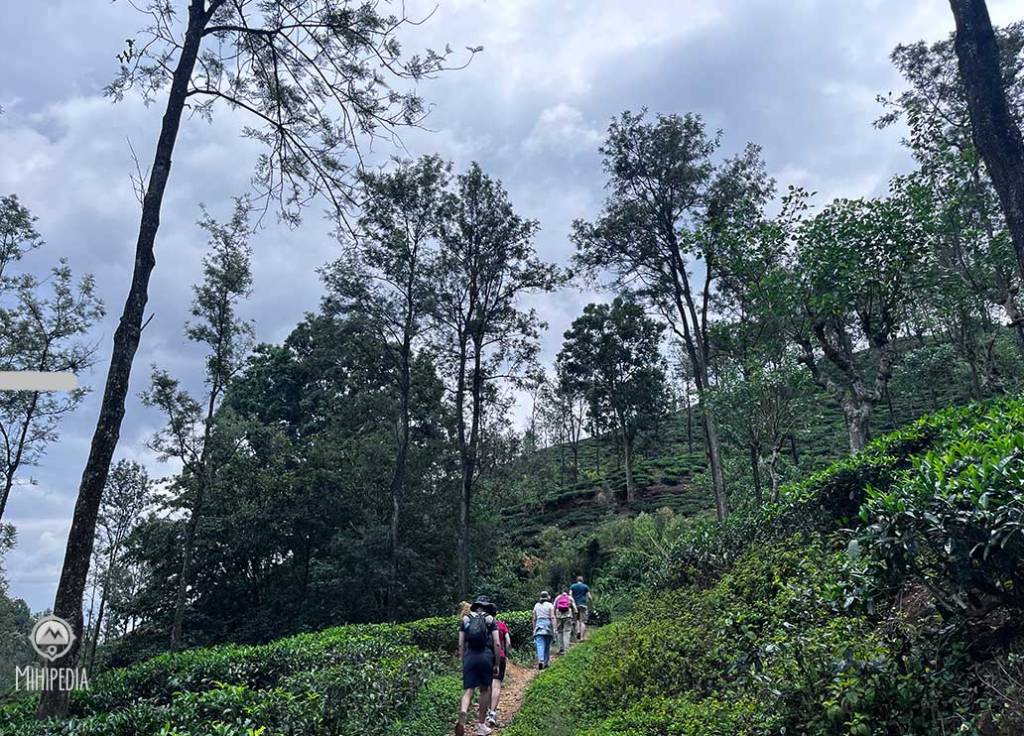

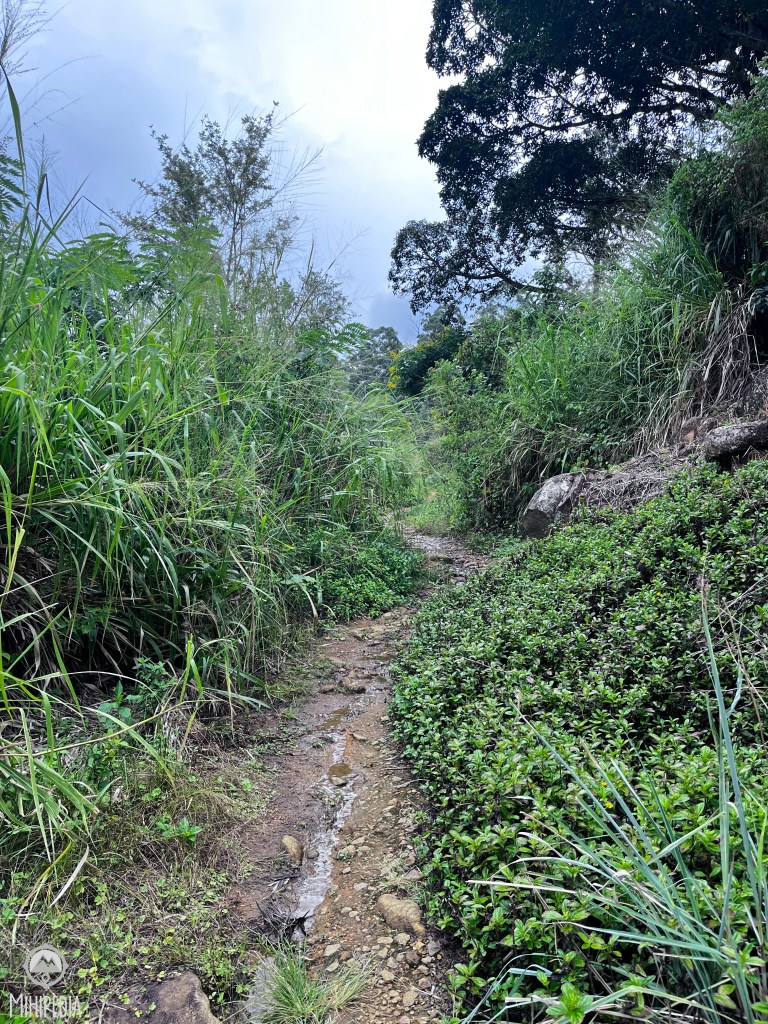
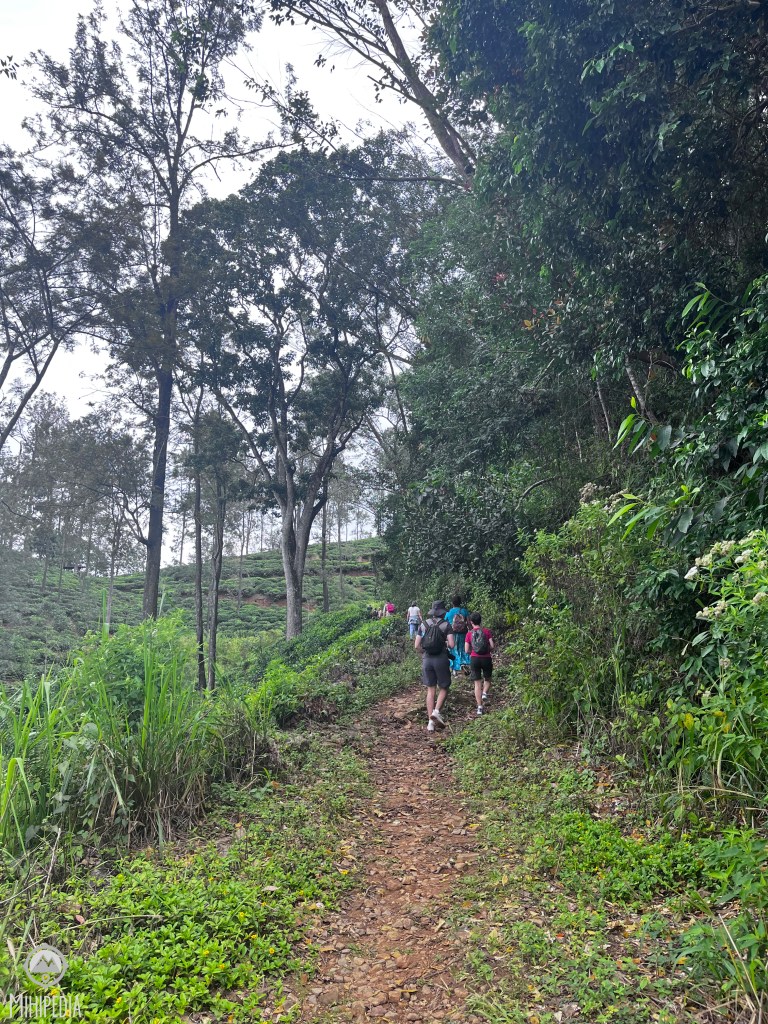
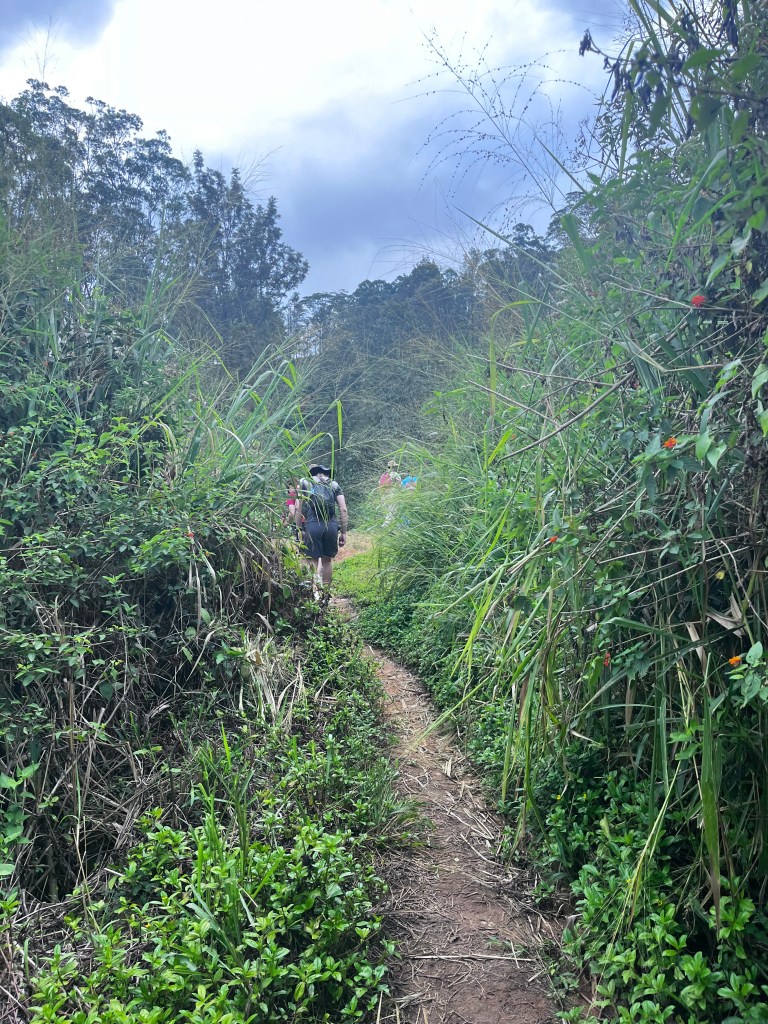
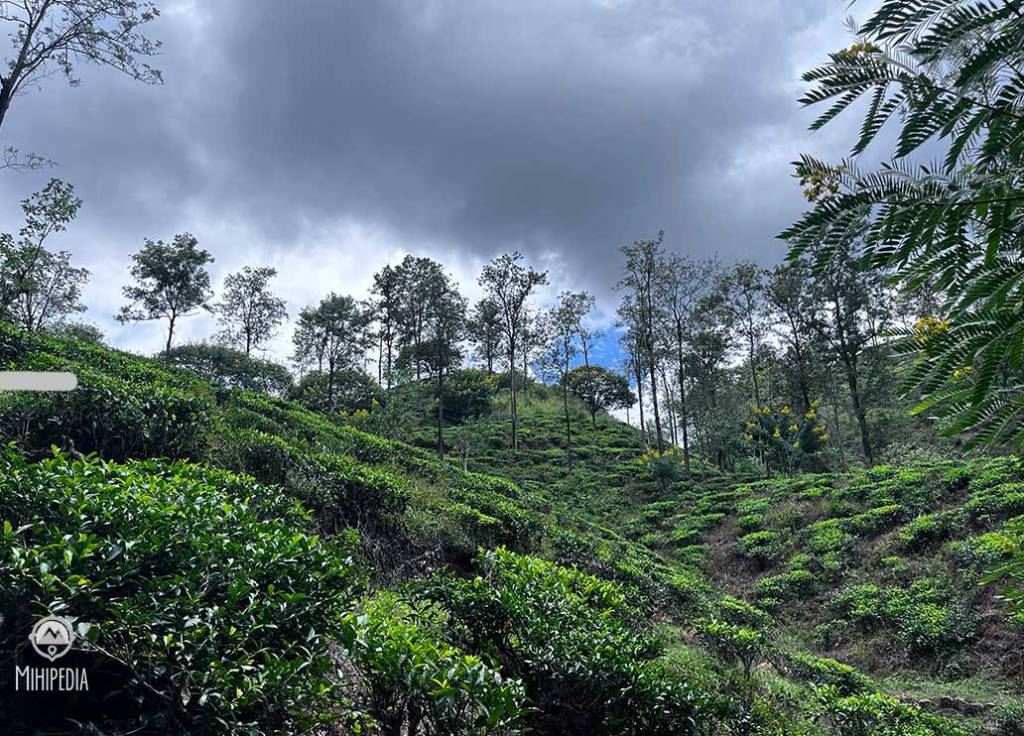


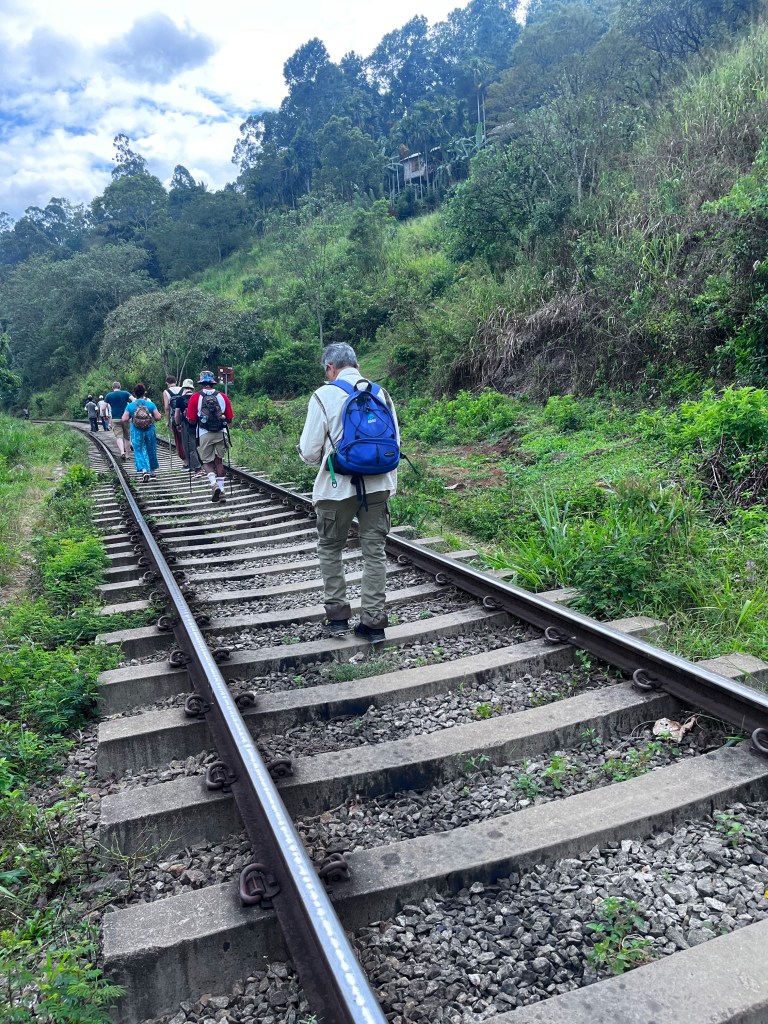
From there the trail softened into gentle undulations, through the Demodara Tea Estate where we hike through more tea fields, homesteads, and friendly stray dogs and herds of goats, staring quizzically at us as we strolled by. The weather turned hot and humid, a light sweat clinging to our backs, while an occasional drizzle cooled the air just enough to keep us moving. About three-quarters of the way in we stumbled into a patch alive with leeches, dozens of the little hitchhikers eager for a ride. Shoes and socks were quickly checked, and a round of repellent and laughter followed as we flicked them off. We also passed a handful of other trekkers, backpackers from Europe and a few local hikers, proof that this stage is a popular stop for visitors chasing the famous bridge and a taste of tea-country life. The views were steady rather than dramatic: rolling hills, distant paddy glints, and finally a teasing glimpse of Demodara’s station roof.


By 1 p.m. we stepped off the path at the Demodara Railway Station, legs dusty and spirits high. Hungry and thirsty, we found a wayside tea shop offering a local buffet lunch which we enjoyed before heading back to Ella.
Stage 16 may not offer sweeping drama, but it delivers something quieter; the slow pulse of tea-country life, and that unforgettable sight of a train crossing stone arches older than memory.
However, I doubt I’d hike this one again. Of the fifteen trails I’ve tackled so far, it ranks firmly at the bottom, and not because of the company, which was excellent, but because the trail itself was far too littered and unkempt to enjoy.
 Mihipedia.lk