
This is the first Mihipedia Getaway of 2026, and nine of us are more than ready to trade the mainland’s momentum for something quieter, wilder.
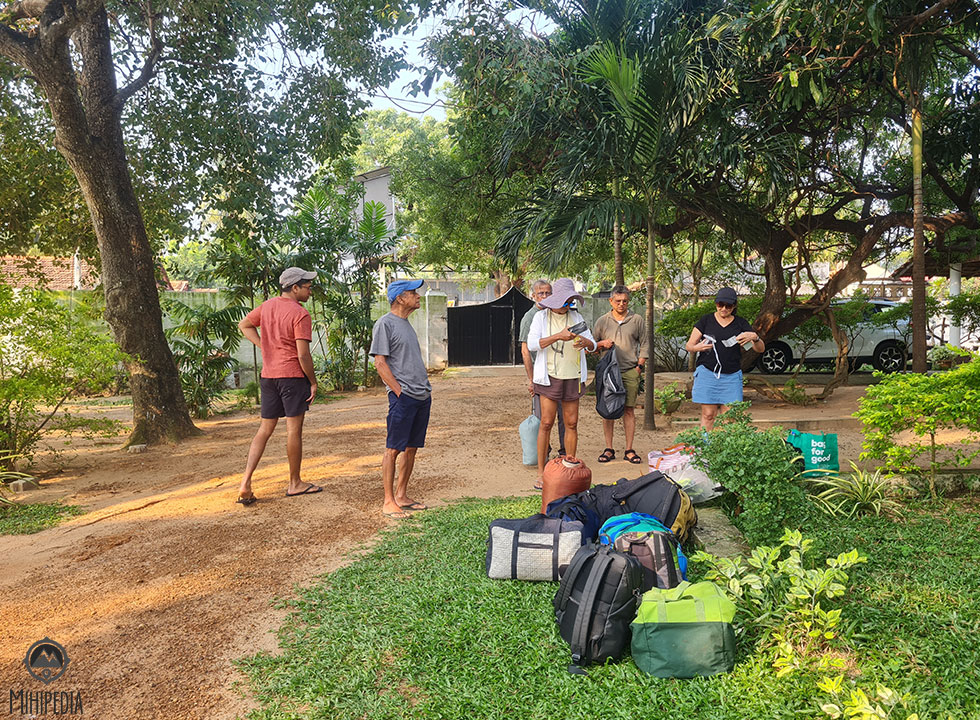
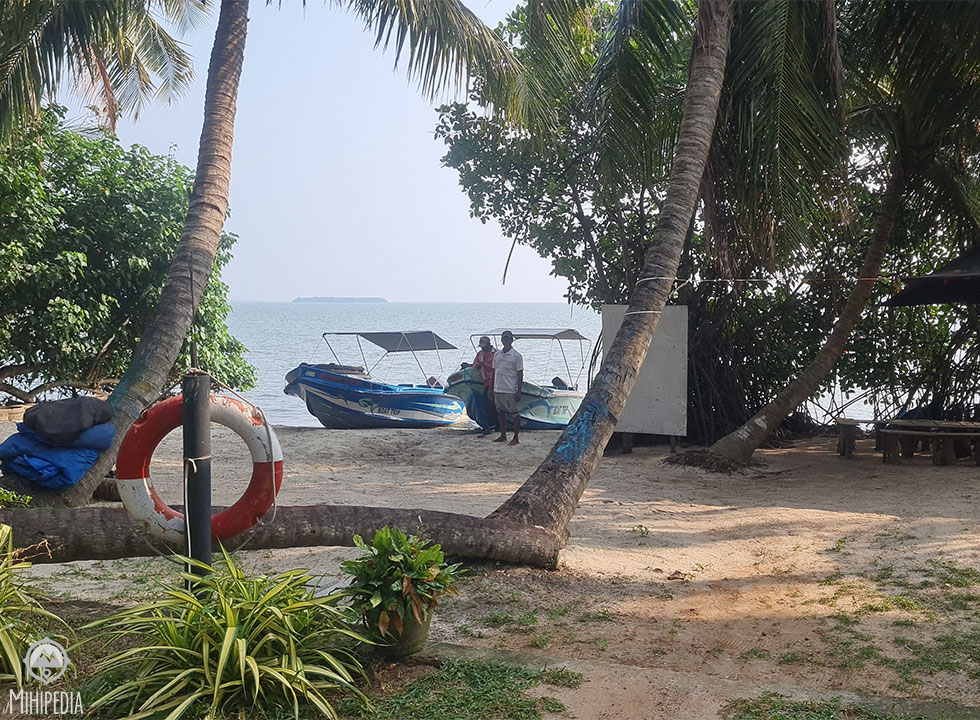
We leave Colombo before dawn, reaching Kalpitiya by 9 a.m. Jude, our guide, boatman, and soon-to-be hero chef is already waiting. Two small boats bob at the water’s edge as we load overnight tents, compact backpacks, and a heroic quantity of food and drinks.
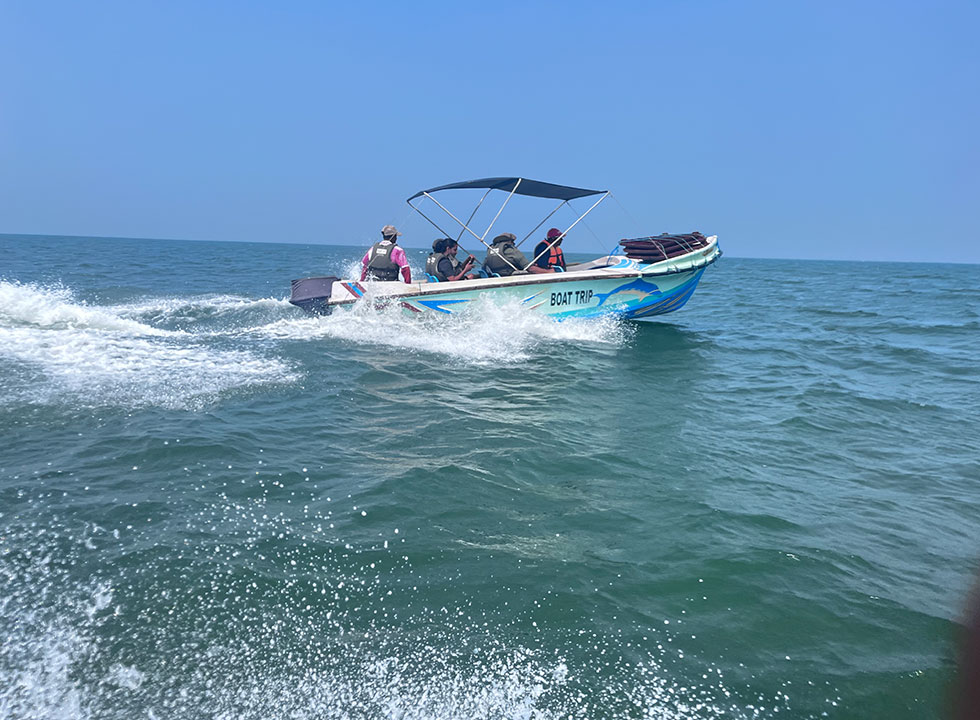
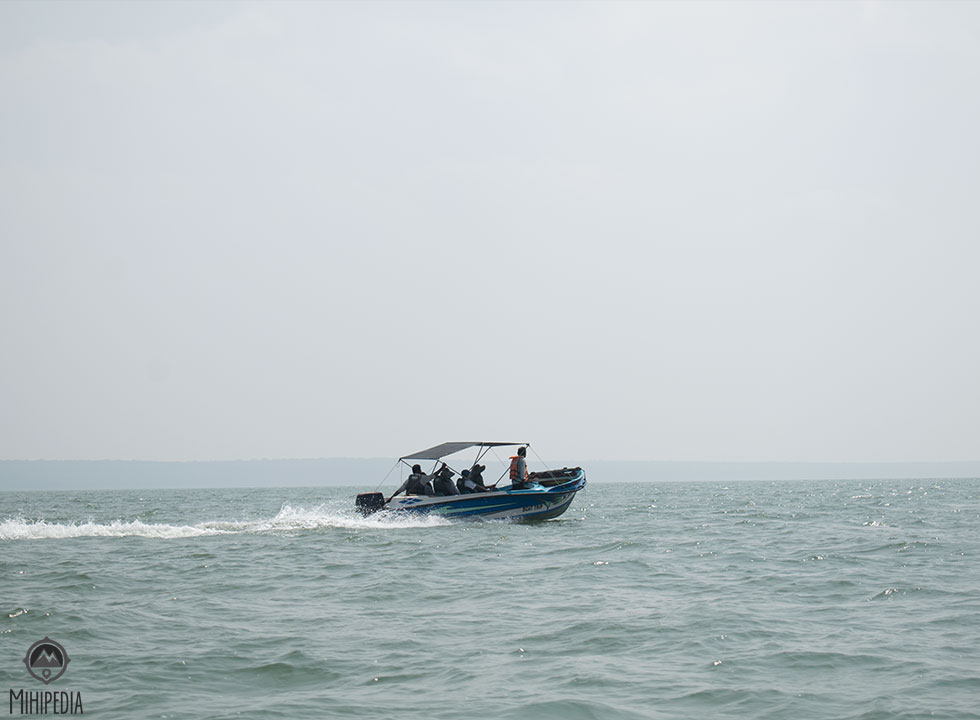
Excitement hangs in the air. Moments later, we’re skimming across the lagoon as Kalpitiya slips away behind us. The wind lifts, the water sparkles, and with every metre, the world we leave behind feels less relevant.
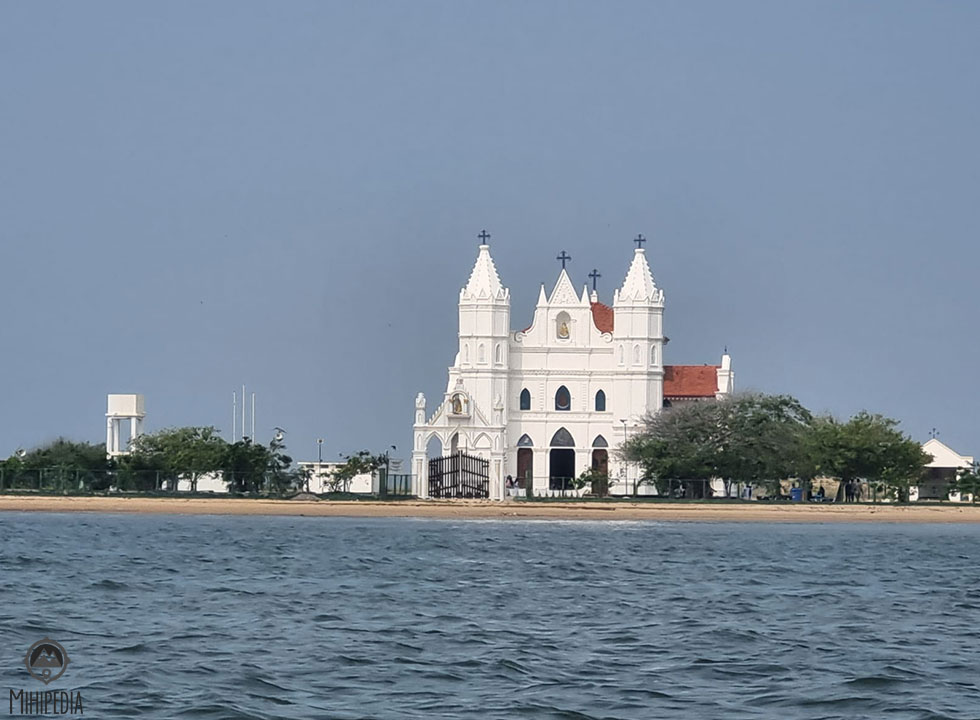
About forty minutes in, a pale silhouette appears on the horizon: Velankanni Church. Newly constructed on Uchchamuni, one of Kalpitiya’s smallest and most striking islands, and inspired by the famed Basilica of Our Lady of Good Health in Velankanni, Tamil Nadu, it rises like a white mirage from the lagoon. Surrounded entirely by water, the church feels both fragile and steadfast.
The boats dock at the pier and we step inside. The air is cool, the light gentle. Wind and water whisper through open spaces as a priest conducts a quiet service for a handful of devotees. It feels suspended in time, part sanctuary, part lighthouse for the soul.
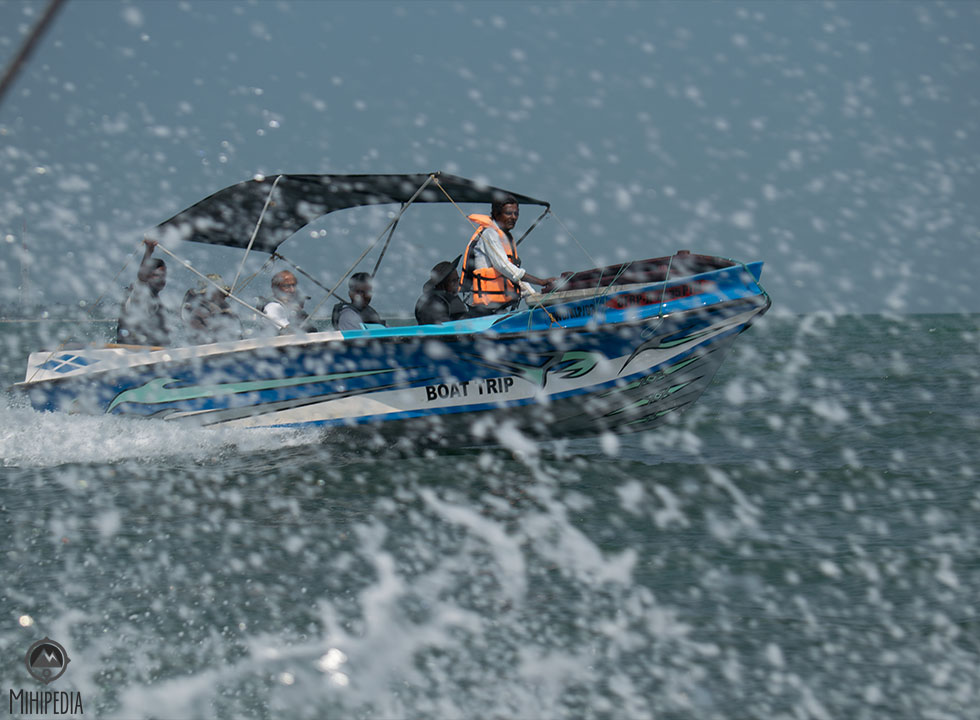
Back on the boats, another 50 minutes of open blue. We pass a stretch locals call the Eye of the Witch, an informal name born from shape and shadow, where a curve of sand or rock seems to stare back at you. It’s a name used now by birdwatchers and islanders alike, drawn from imagination as much as from land.
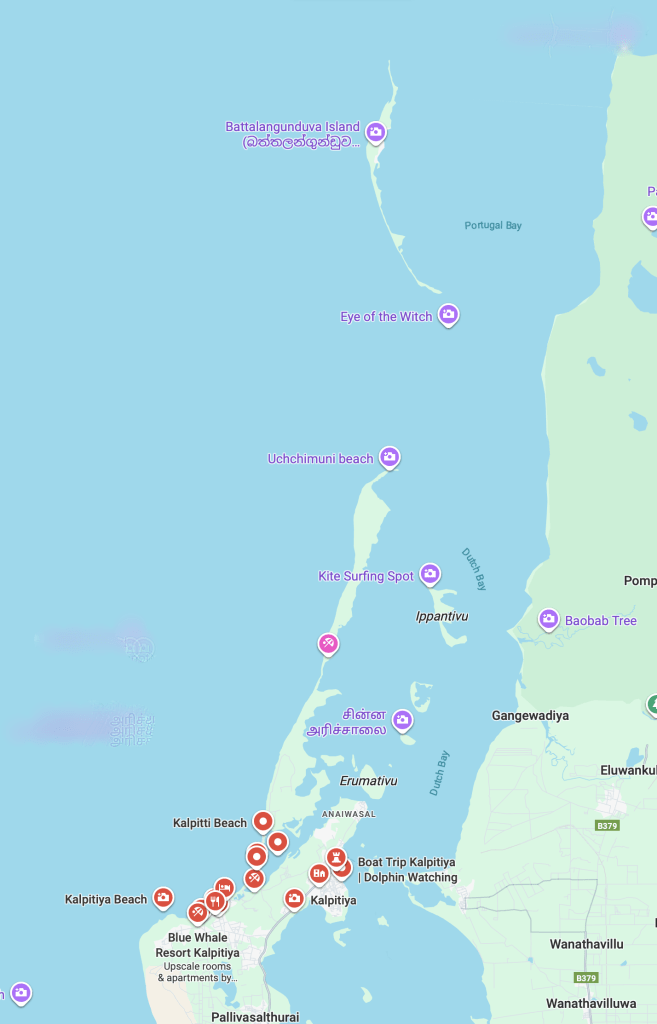
Then we see it. Baththalanguduva.
Jude had promised us a place “just out of reach,” and he delivers.
Often spoken of as the furthest edge of the Kalpitiya archipelago, Baththalanguduva feels like the last inhabited whisper of land before the sea stretches uninterrupted toward India. Surrounded by the Indian Ocean and the Portugal Bay, it belongs to the outermost cluster of islands, prized for isolation, fishing, and raw, unfiltered beauty. Slender and elemental, it feels imagined rather than real.
These islands were not always playgrounds. Kalpitiya once sat along vital maritime routes used by Arab traders, Portuguese explorers, and later the Dutch. Forts, churches, and trading outposts dotted nearby isles. Baththalanguduva, humbler than its neighbours, would have watched sails pass, bells carry across water, people arrive and leave. Today, none of that noise remains. Only wind, water, shells, and sky. And a few fisherfolk and lots of stray dogs!
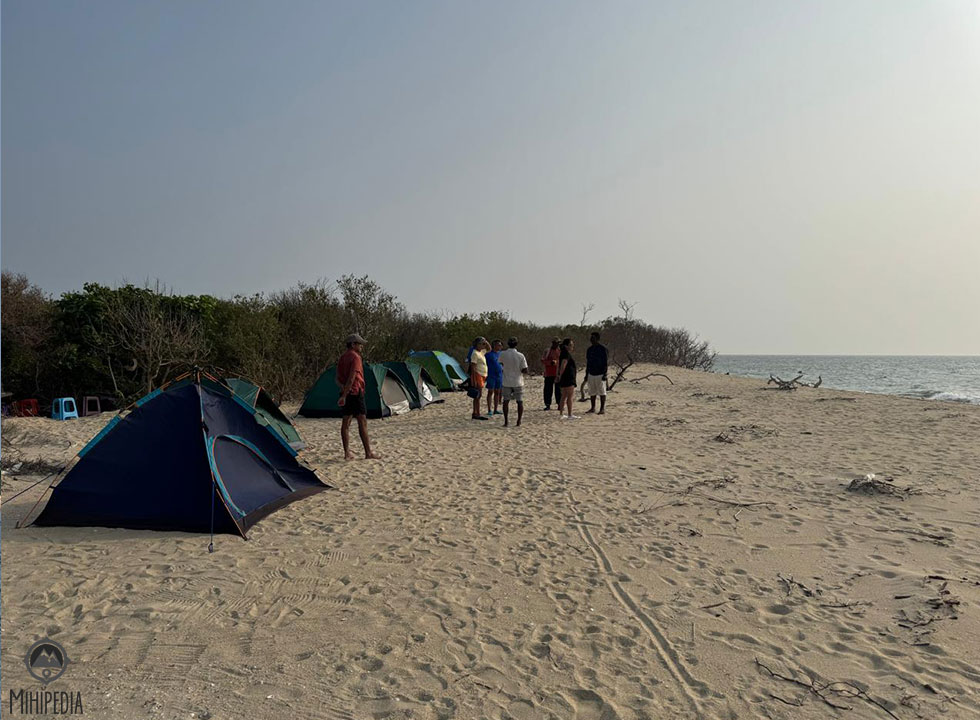
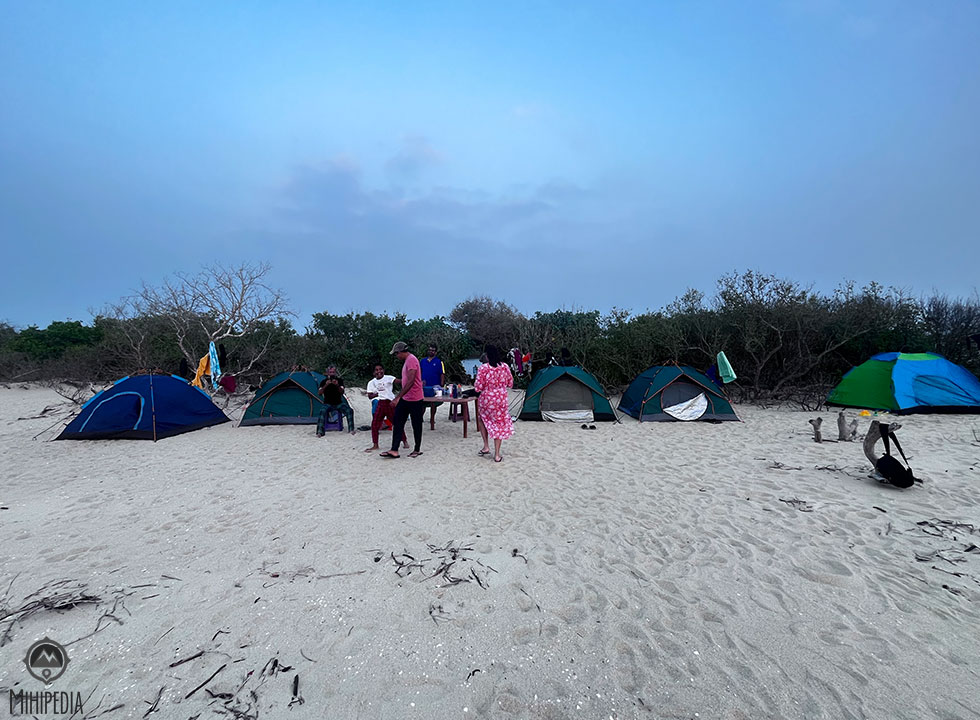
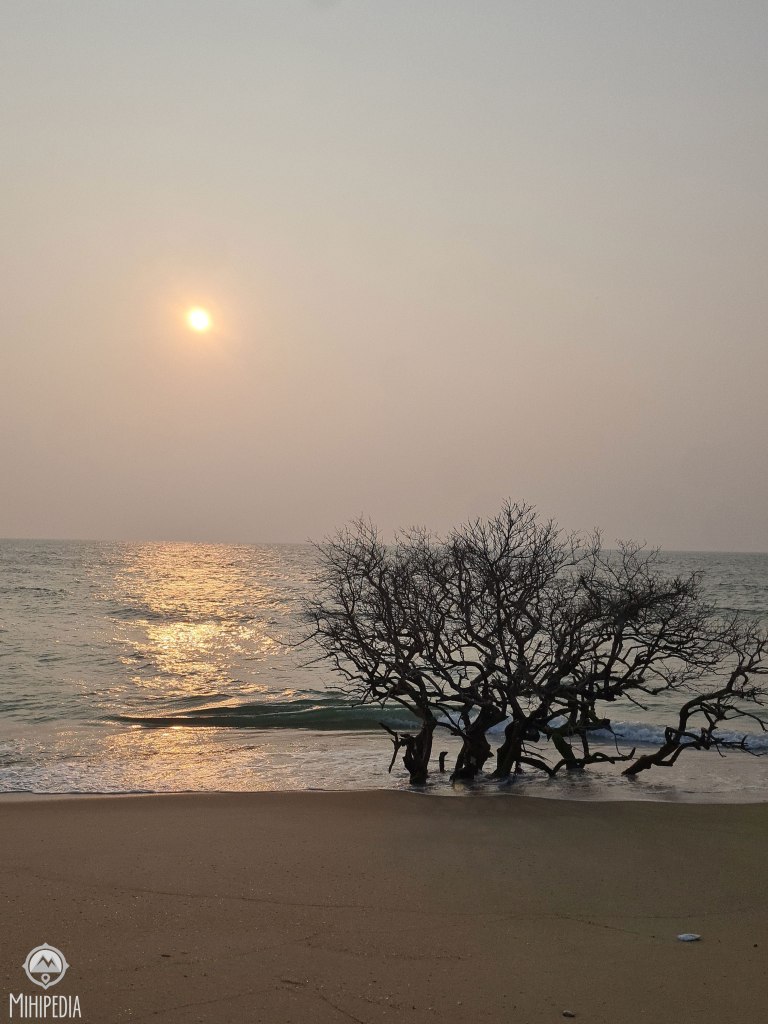
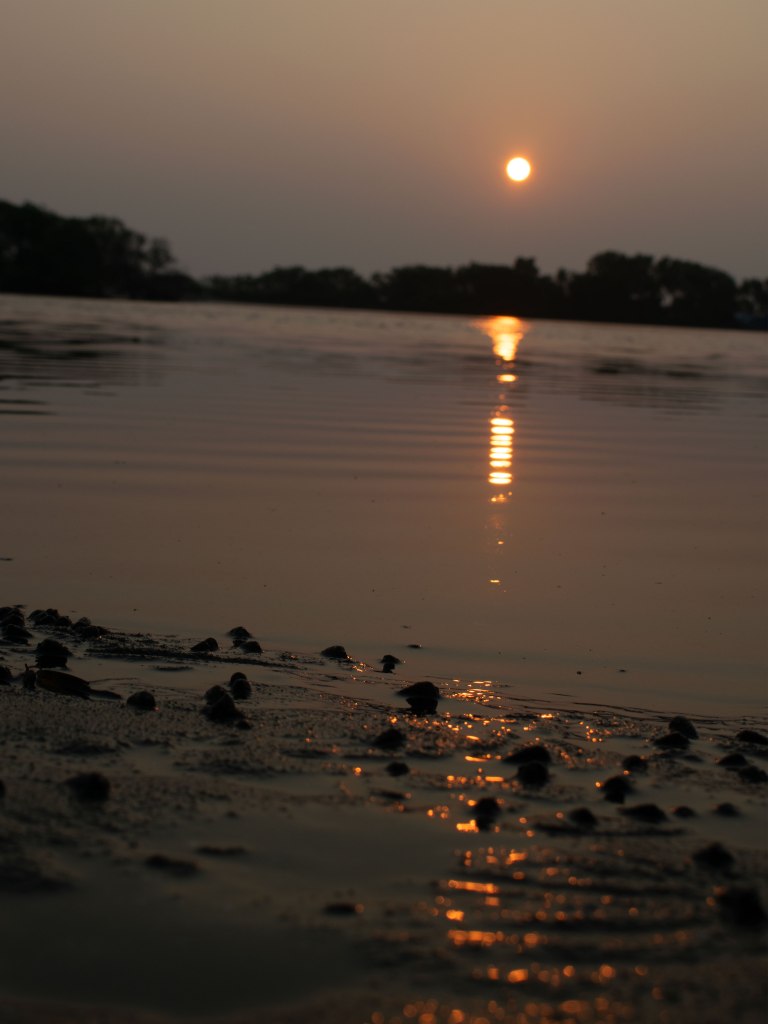
We land on a ribbon of sand and hop out, grinning like children. With Jude, we walk the island, scouting the just-rightspot to pitch our five tents, lagoon on one side, sea on the other. On one side, the lagoon lies smooth and reflective, mirroring clouds and birds. On the other, the Indian Ocean rolls out in restless blue. From one shore we watch the sunset; cross a narrow spine of sand and we greet sunrise. Stand in the middle and you hear both waters at once—a bridge between calm and wild.
For now, we are officially off the clock.
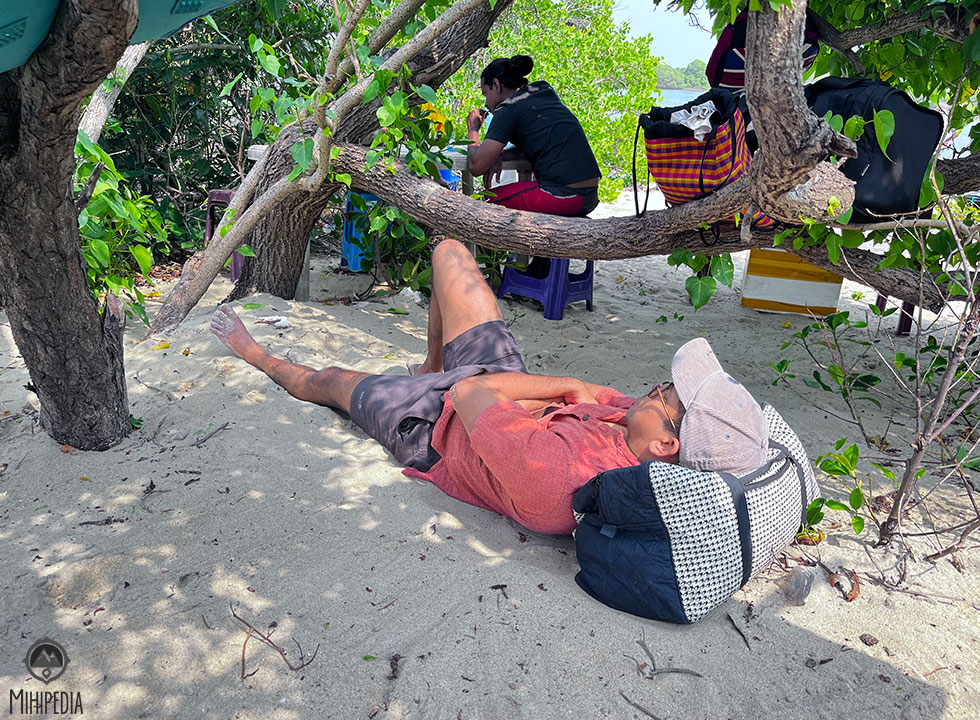
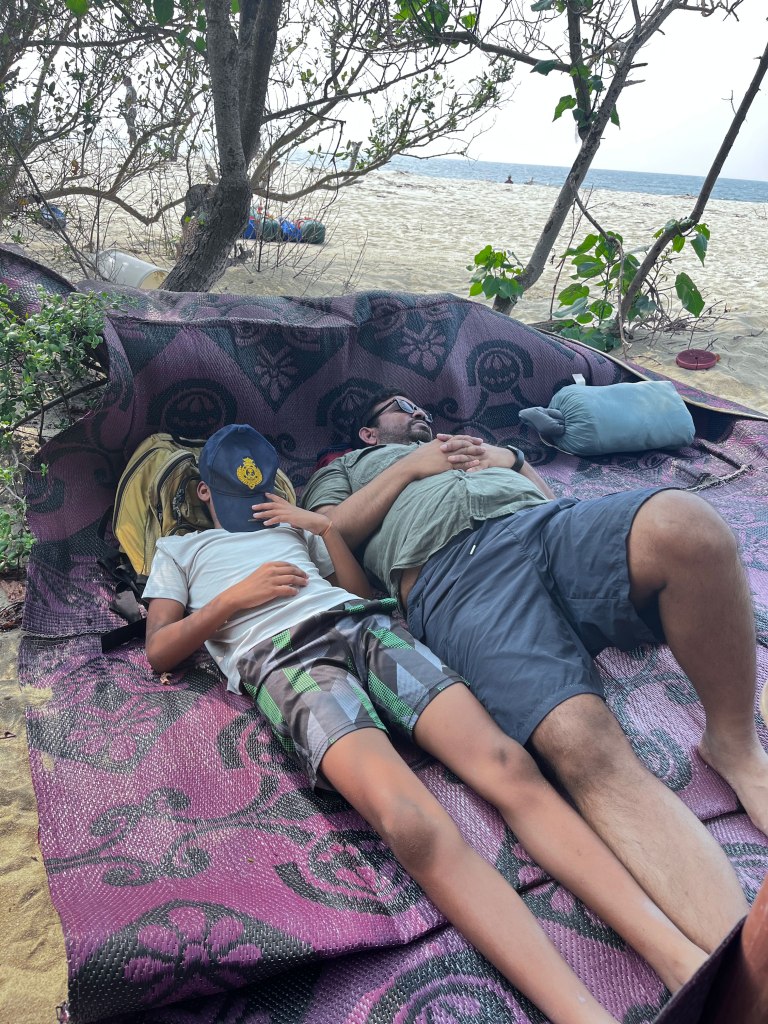
Lunch, comprising crab curry with rice and coconut sambol, is served right on the beach. Plates on knees, toes dug into warm sand, chilled beers crowning the moment. The sun slows everything. Conversation softens. We surrender to a long, lazy afternoon, napping under canvas, listening to the waves breathe.
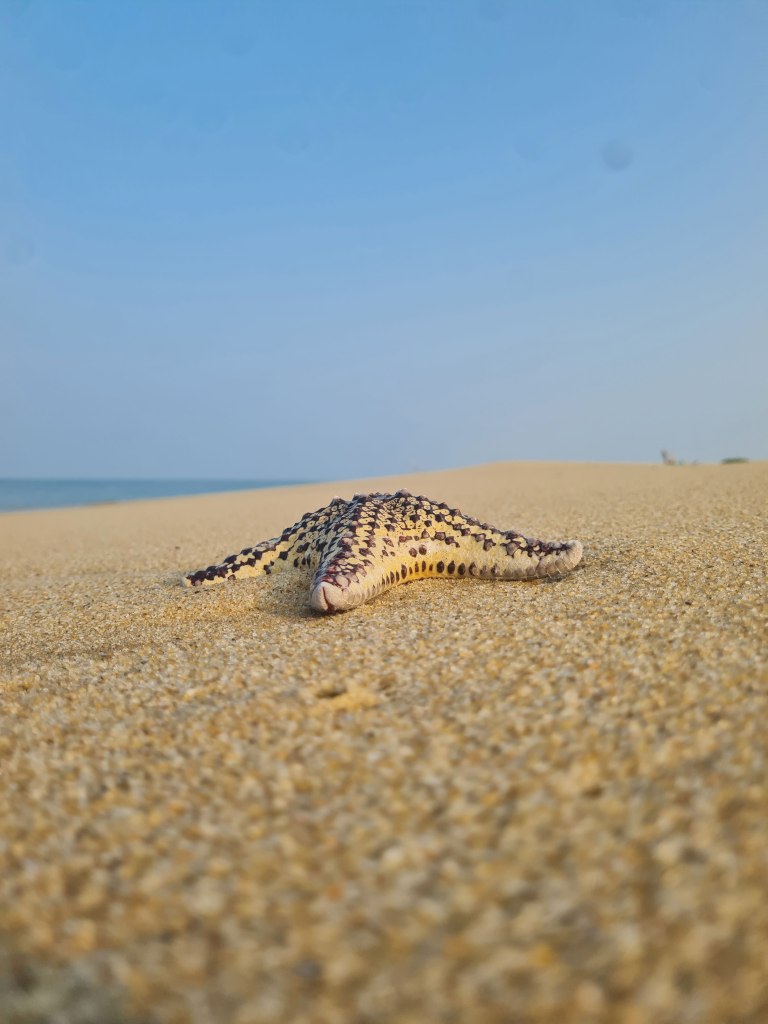
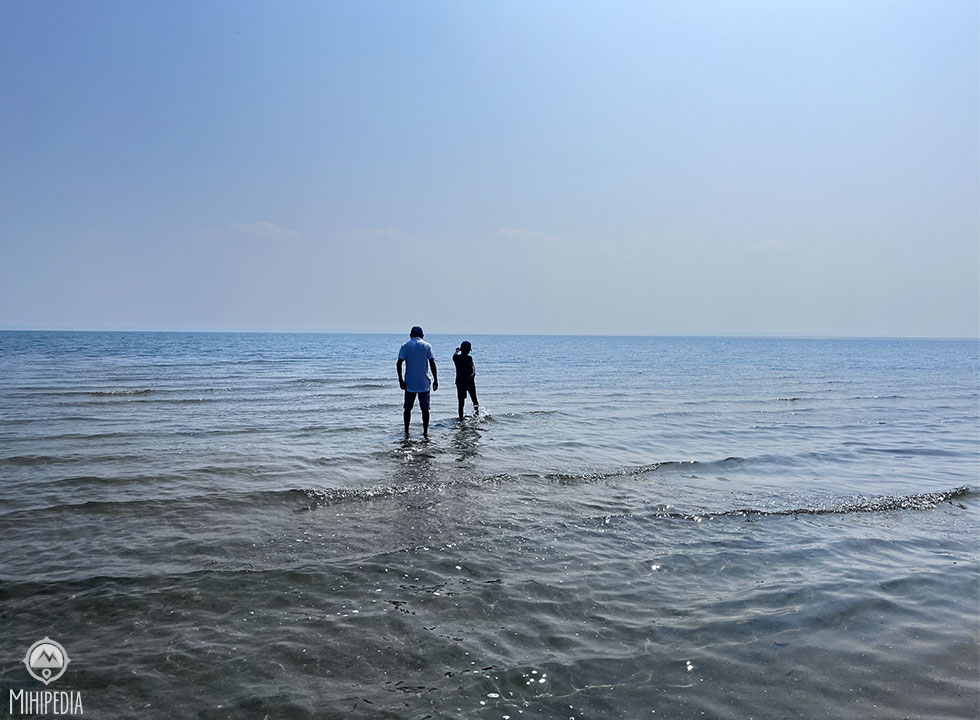
As the heat eases, we fall into rhythm: a salty plunge into the ocean, then a gentler, cooler lagoon bath. We wander the shore collecting shells, tiny pearlescent miracles, each one a small story polished by water.
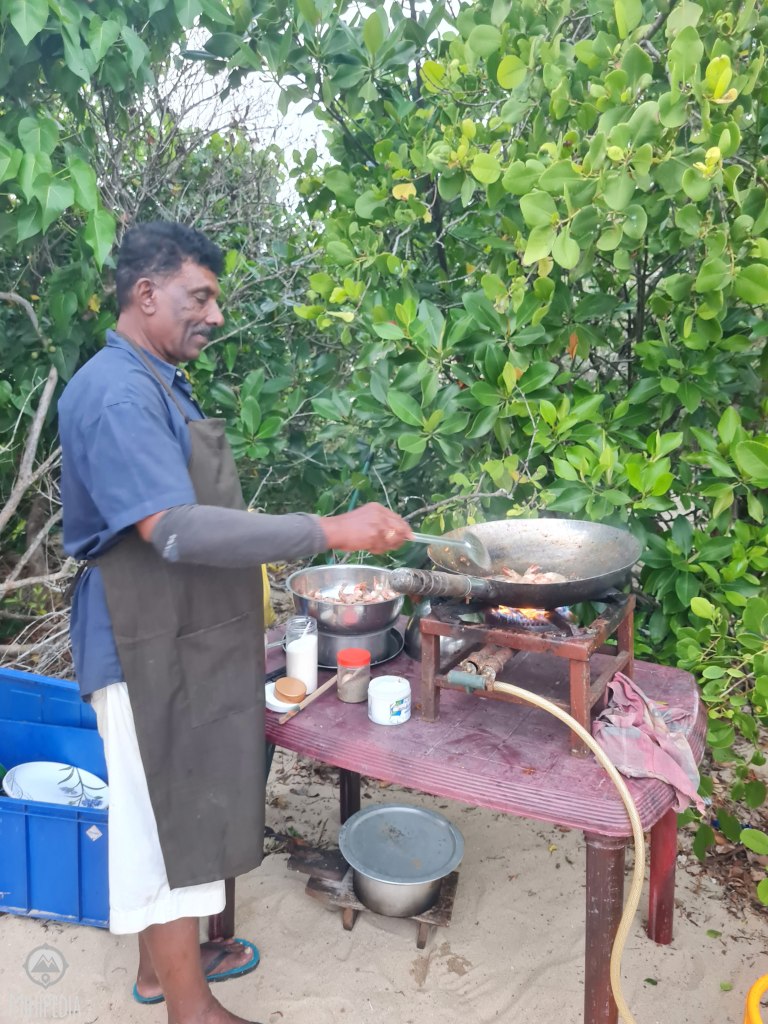
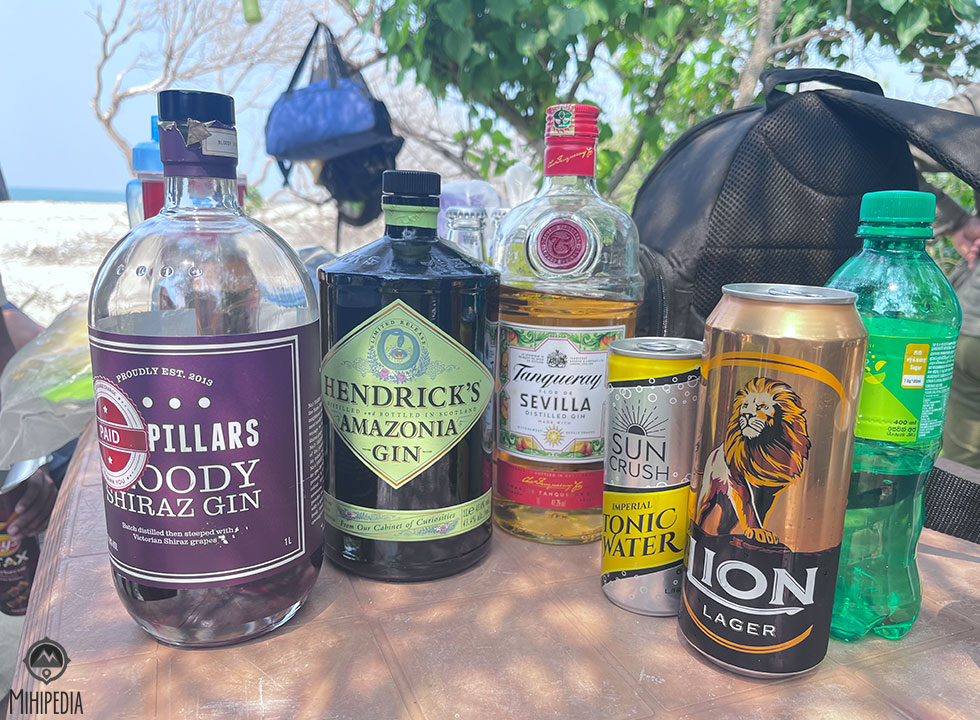
Soon, it’s five o’clock somewhere. Sundowners appear as if by magic. We sit in a loose circle, laughing, swapping stories, watching the youngest among us have the time of his life. As the sun dips, the sky clears into a glittering show. While the BBQ warms, Jude serves platefuls of fried cuttlefish, prawns, and fish, irresistible with a gin and tonic in hand. The evening turns cool. A bonfire crackles to life, sending red and orange embers spiralling into the night.
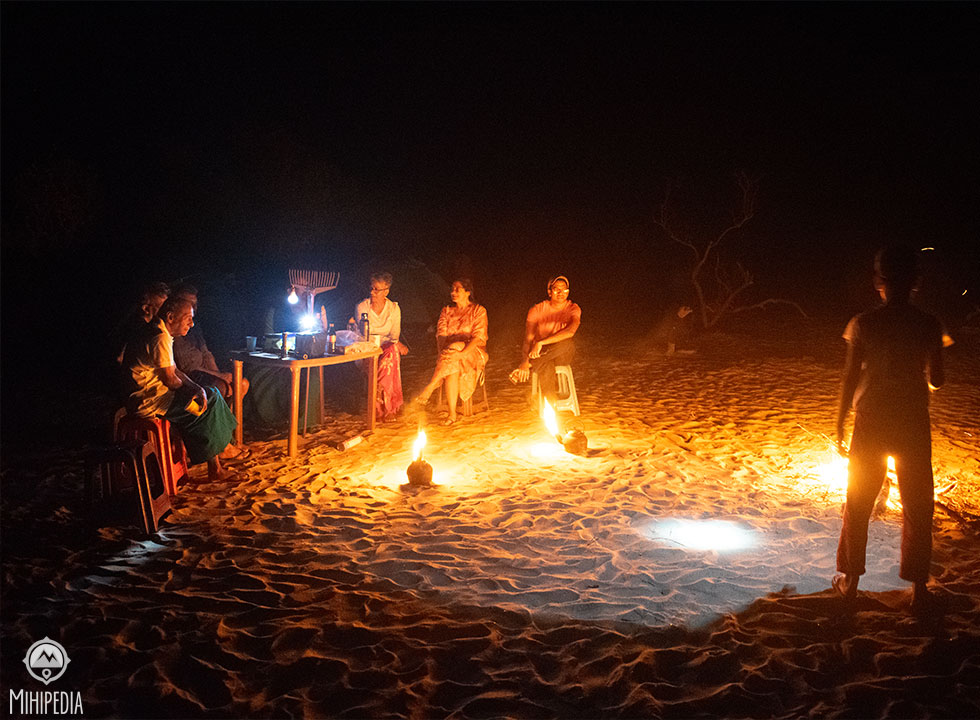

Jackets come on. We linger by the fire, grateful for warmth, food, and company. We are a very happy group of friends.
Sleeping by the sea, snuggled up in tents, with the all-night murmur of waves, is a kind of magic you can’t bottle—only return to. The waves speak. The island breathes.
Morning arrives not with an alarm, but with the earnest chatter of a nine-year-old deep in curious conversation with his dad.
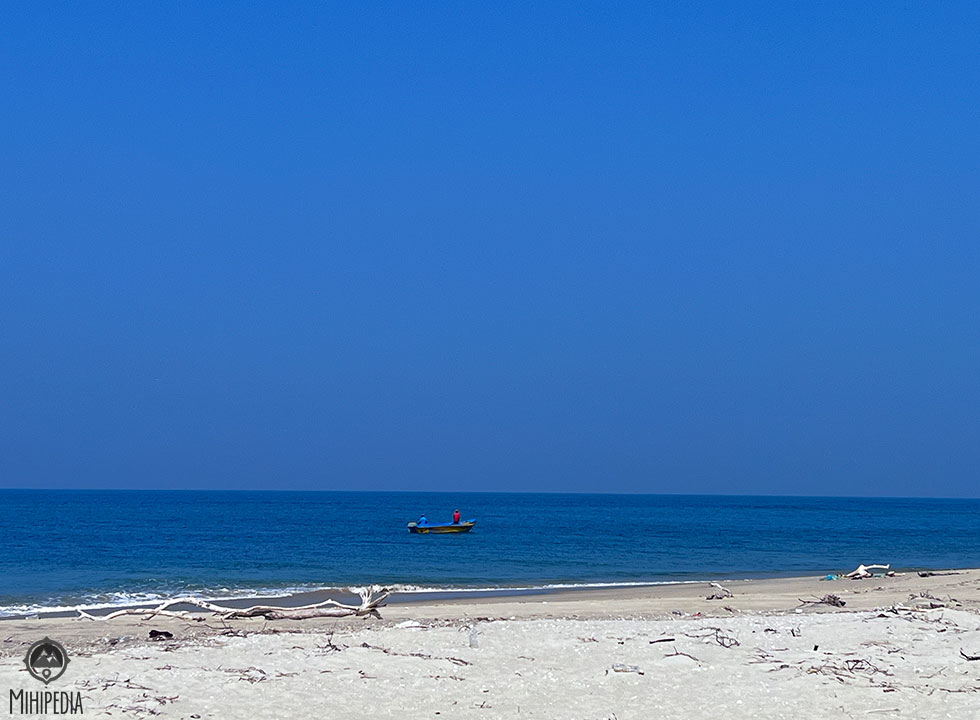
We emerge into soft light. The ritual begins again: hot cups of coffee, another sea swim, more shell-hunting, a simple, perfect breakfast on the beach.
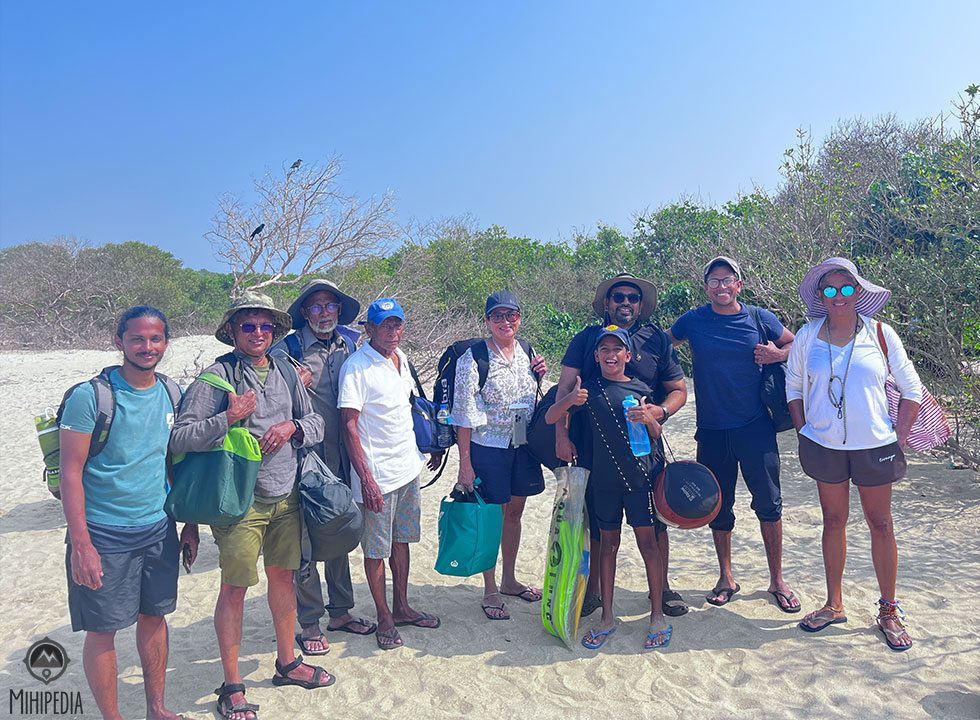
Too soon, it’s time for the gentle undoing. Tents fold. Bags pack. Our footprints are erased by the incoming tide. We climb back into the boats, (a couple of shades darker) watching this island recede into the shimmer.
Baththalanguduva is more than a sandbar. It exists between worlds. Barely a whisper of land, yet it holds its ground with quiet confidence. You can stand in the middle and hear lagoon and ocean speaking at once. The island is always becoming, reshaped by tide and storm, a living thing.
For one perfect night, we belong to its wind, its stars, its stories. And as we leave, it quietly reclaims itself. Some places don’t just host you. They change your rhythm.
Baththalanguduva does exactly that. And we all needed it.
 Mihipedia.lk