
It was hard to leave Hanoi, but I am ready to see Saigon, the capital of Vietnam. True, that it is now called Ho Chi Minh City in honour of Vietnam’s first president and national hero, but somehow I love the name Saigon, which was adopted over 300 years ago and changed since July 1976.
So while Hanoi was vibrant, buzzing and noisy, Saigon is the more sophisticated and dynamic city. We stay at the Hoang Phu Gia Hotel in the heart of the city’s market area.
“So while Hanoi was vibrant, buzzing and noisy, Saigon is the more sophisticated and dynamic city.”
To truly understand Vietnam’s past is to visit the Củ Chi tunnels, which are a testament to this nation’s wartime ingenuity and struggle for freedom. The Vietnam War or as the Vietnamese prefer to call it, the American War lasted from November 1955 until April 1975 and it is reported that at least 45,000 Vietnamese men and women died defending these tunnels.

Our guide, the affable Mr. Khoa tells us that he was a ‘tunnel rat’ since the age of 14. He is short in stature and has a perceivable limp that he attributes to seven years of living inside these cramped tunnels. A long post-op scar down his spine is evidence of surgery to straighten his back. He lost all his teeth due to malnutrition and disease and shows us his false teeth. Yet, he had the amazing interpretation of this war. “It was some ‘big’ man’s propaganda to sell guns that forced us to fight against an unknown man. We fought brother to brother. We did what we were told.”

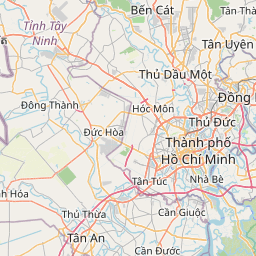
We drive 40 kms out of Saigon to the entrance and as expected join hordes of curious visitors like us. The Củ Chi tunnels are in a vast jungle, similar to one of our rubber tree estates, with the exception that it is riddled with 220 kms of underground tunnels that extend from Saigon all the way up to the Cambodian border.


On the surface, Khoa points out well-concealed trap doors barely wide enough to fit a normal human being, artificial termite mounds that are actually secret lookout points, deep and wide craters made from US B52 bombers, a shooting range, life-sized figures representing the Viet Cong, an old US M47 tank, a military workshop, emptied bombs, bunkers, while giving us his life’s experience.

Underground, the tunnels are divided into three levels- 6, 8 and 10 meters deep, where over 10,000 fighters lived. The network comprises living areas, storage facilities, weapon factories, field hospitals, command centres and kitchens. Khoa tells us how methodical and coordinated the communication between the VC-controlled enclaves were. The tunnels allowed the VC to mount surprise attacks even within the perimeters of the US military base at Dong Du and claimed large numbers of US causalities. Frustrated by the covert attacks, the US resorted to massive firepower turning 420 sq km of Củ Chi into what BBC journalists Tom Mangold and John Penycate, authors of The Tunnels of Cu Chi called “the most bombed, shelled, gassed, defoliated and generally devastated area in the history of warfare”.

I enter one of the underground tunnels, and crawl forward about 15 meters in the dark. It’s dark, small, dusty, suffocating and claustrophobic. I cannot imagine how Khoa endured this for seven years! I’m glad the war is over.
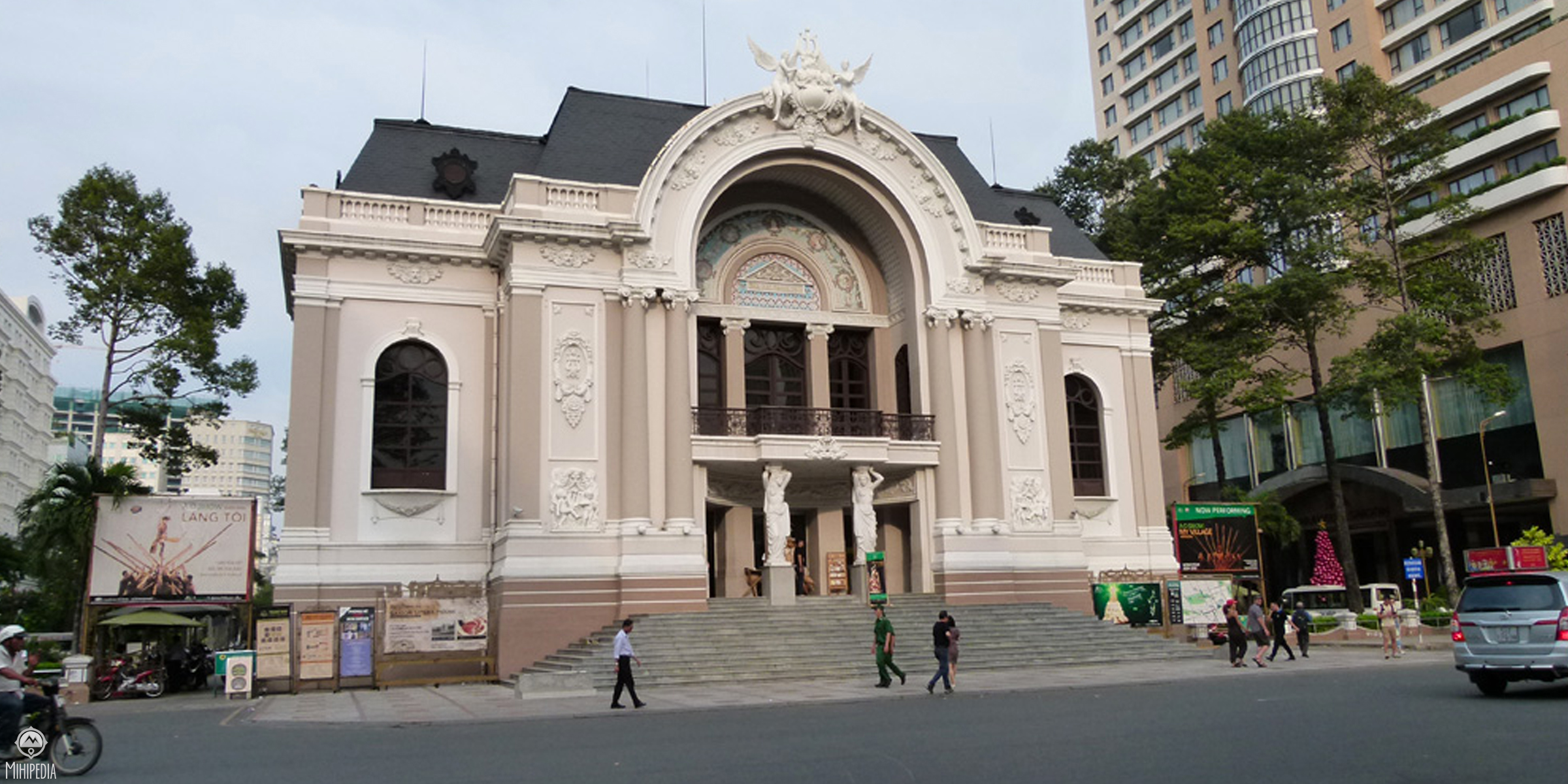
Leaving this wartime legacy, we head back to Saigon’s Dong Khoi Street, heart of the commercial life and an embodiment of old colonial Saigon, dominated by French influence. Despite the many new high-rise buildings and spanking new stores of every internationally famous brand name, interspersed with stylish cafes, restaurants and boutiques, the old Saigon still prevails. We drive past the beautiful Continental Hotel, the Saigon Opera House built in 1898 with a quirky Christmas tree made of bamboo baskets, the Caravelle Hotel and the Hotel de Ville, now used as the People’s Committee Building and the city’s most photographed icon as a reminder of Vietnam’s colonization.


We step into the Central Post Office, a beautiful preserved remnant of French colonial times and perhaps the grandest post office in all of Southeast Asia. The building was designed by Gustave Eiffel – the renowned engineer who also designed the Statue of Liberty and the Eiffel Tower. It’s a stunning piece of living history still functioning as a post office.


Outside, we spend sometime at the foot of the massive statue of the Virgin Mary that stands at the courtyard of the Notre Dame Cathedral.
Built in the late 1880’s by French colonists, it was formerly called Saigon Church. The name Notre Dame was given after the installation of the statue ‘Peaceful Notre Dame’ in 1959. Four years later, in 1962, the Vatican conferred the Cathedral status as a basilica and gave it the official name of Saigon Notre Dame Cathedral Basilica.

We end our day at the Ben Thanh market in downtown Saigon. This place is a bustling maze of shops selling local arts and handicrafts, branded goods, shoes, electrical devices, clothes, bags, fruits, foodstuff and a range of souvenirs. Overwhelmed by all the noise and activity, I step outside where hawker-style local street food is available. The frying, grilling, cooking smells are so tempting, that we stop to taste along the way.

It’s been a long day and we get back to the hotel, totally satisfied.