
The sun rose slowly over the golden plains of the Maasai Mara, casting long shadows across the dew-laced grass. Our bags were packed, our hearts still echoing with the roar of lions and the colours and contours of the wild. The Mara had left its mark—raw, wild, and soul-stirring. But the adventure wasn’t over. Ahead of us was a journey, bound for the sparkling shores of Lake Naivasha, one of Kenya’s Great Rift Valley jewels.
We left the Mara early, the cool morning air brushing against our cheeks as our vehicle rolled over red dirt roads, past acacia trees and curious gazelles.
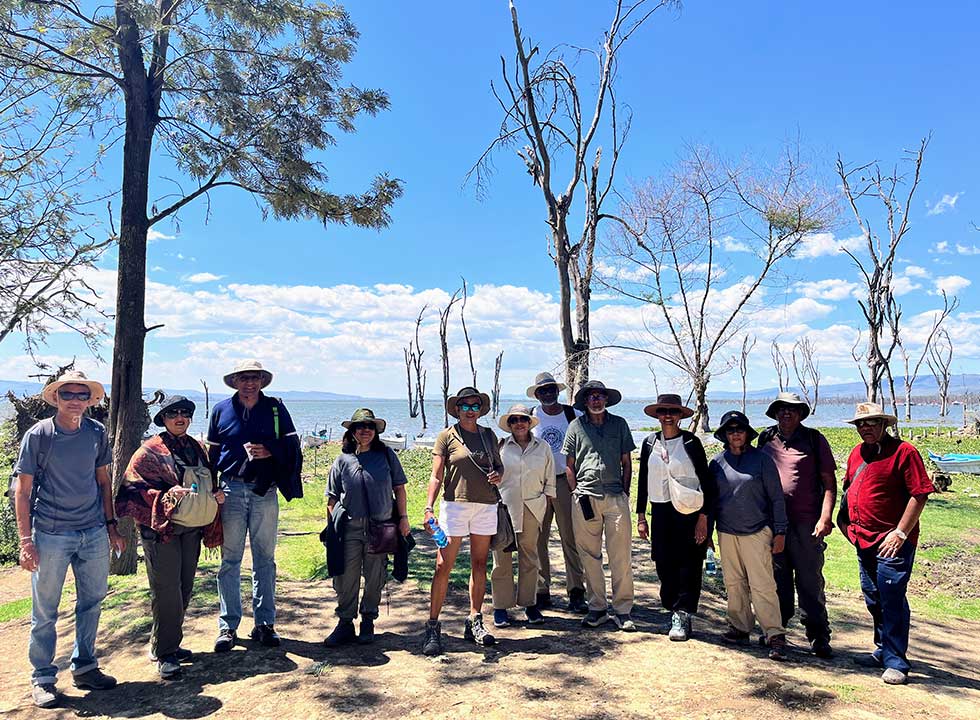
Lake Naivasha, roughly 230 kilometers away took us about five hours by road, winding through the ever-changing landscape of the Rift Valley. The drive itself was a journey—a moving postcard of green escarpments, bustling roadside towns, and fields stretching far and wide.
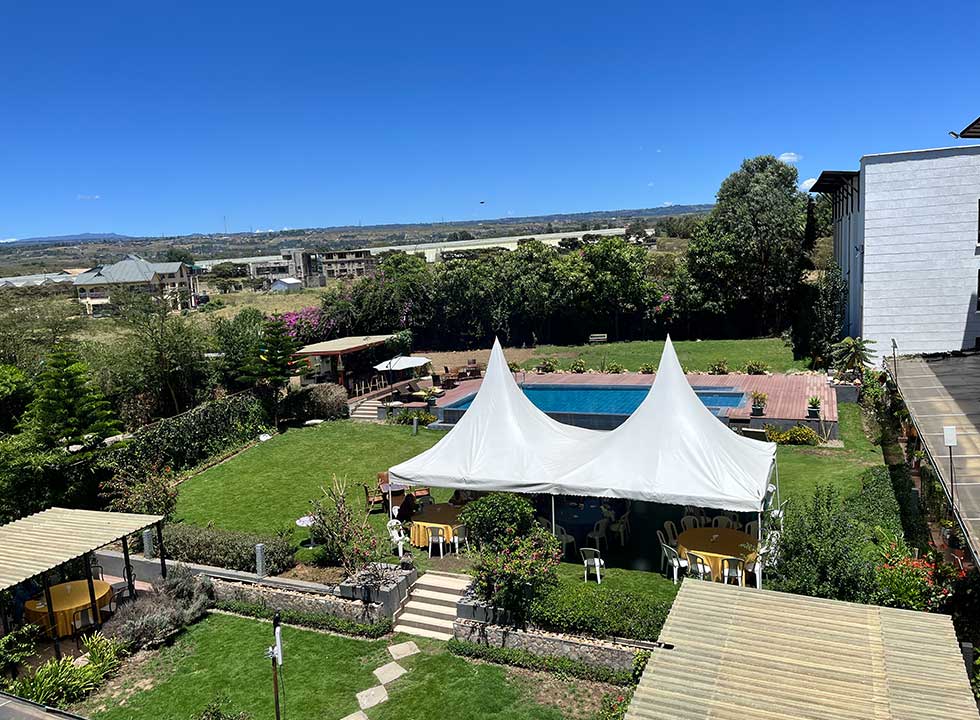
When we finally pulled up to Eseriani Resort, I felt like I’d stumbled into a secret oasis. This place isn’t just a hotel—it’s an experience. Think polished stone, tall glass windows, lush gardens, and the kind of quiet you can actually feel. The scent of fresh linen, and I swear the bed felt like it was carved out of clouds. After the Mara’s rugged wildness, Esiariana’s elegance and the grand buffet lunch laid out before us was a welcome change. The staff greeted us like old friends, with cool towels and glasses of fresh juice—bless them.
Lake Naivasha, a freshwater lake sitting at over 1,800 meters above sea level, is an oasis of life—both human and wild. After the dust and adrenaline of the Mara, Naivasha felt like a deep breath.
We were just there for one night to break our journey so our first adventure, a boat ride – a must do here, had to start immediately. So off we go where the hippos wade and the tourists flock.
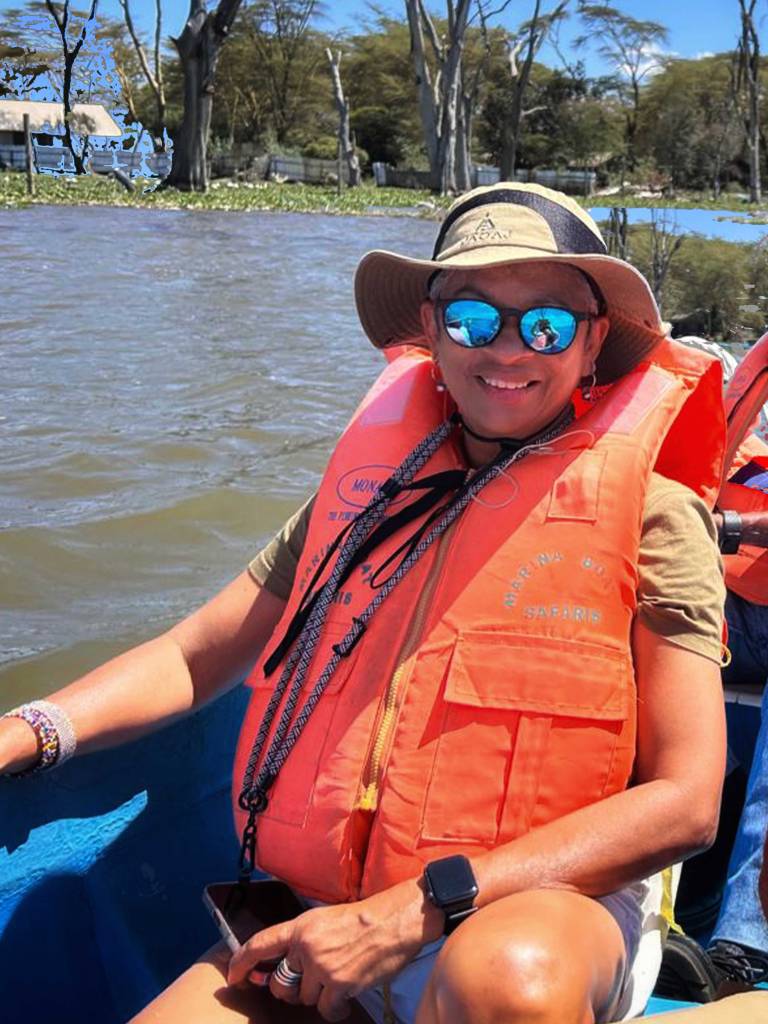
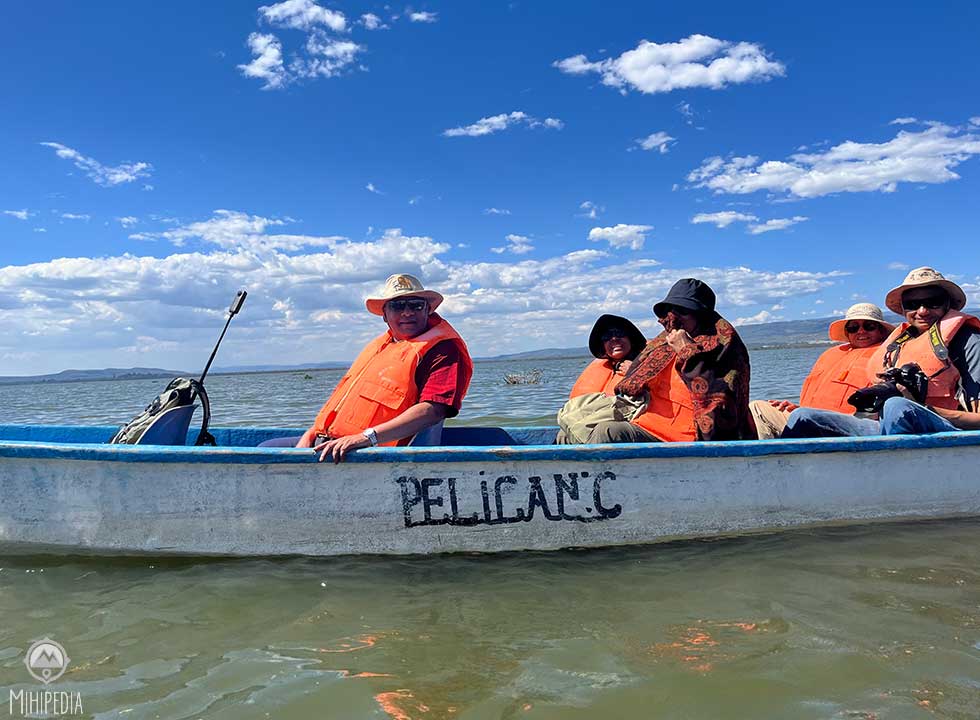
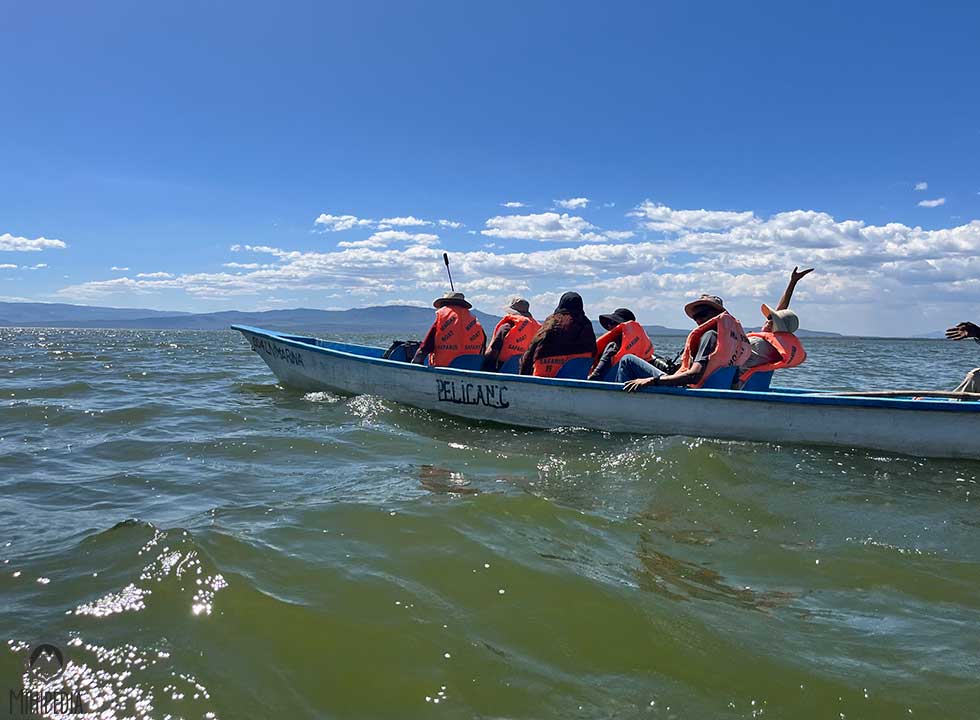
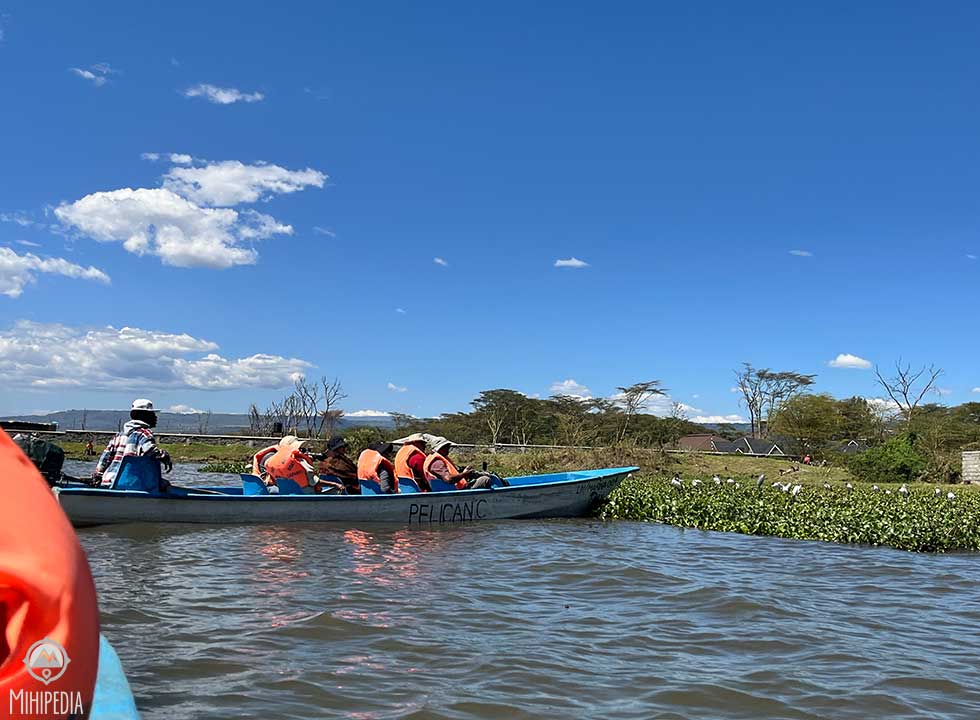
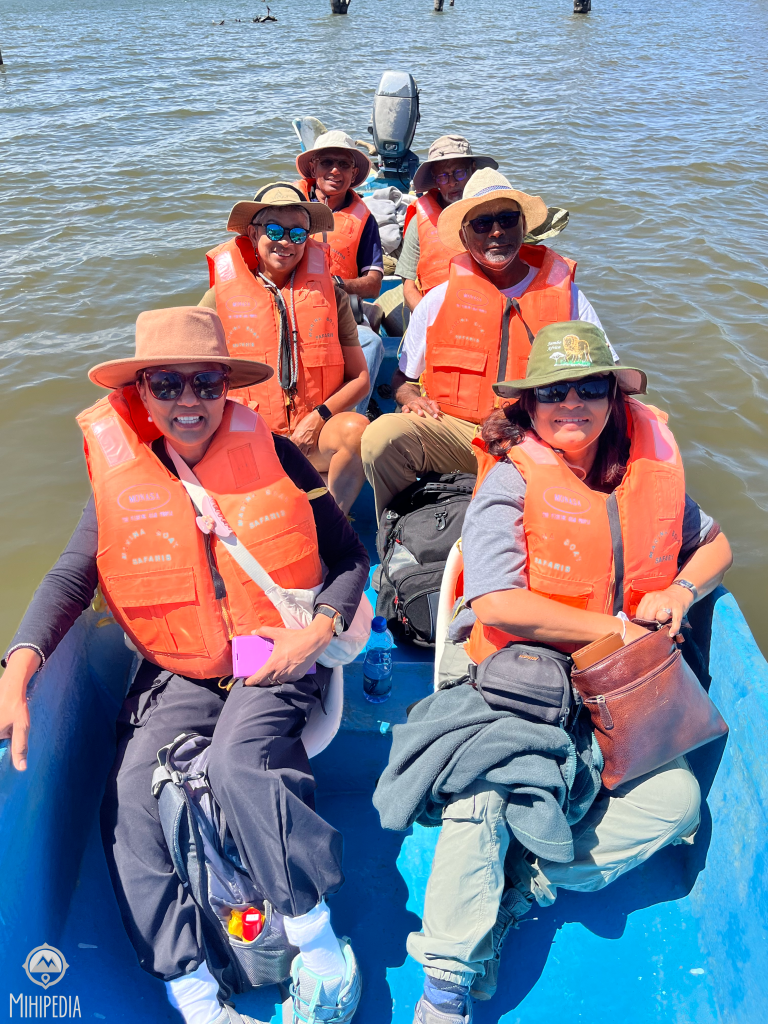
Donned with life jackets, we clamber onto a small motorboat that skimmed over the water, ripples danced around us, and birds took flight from the reeds.
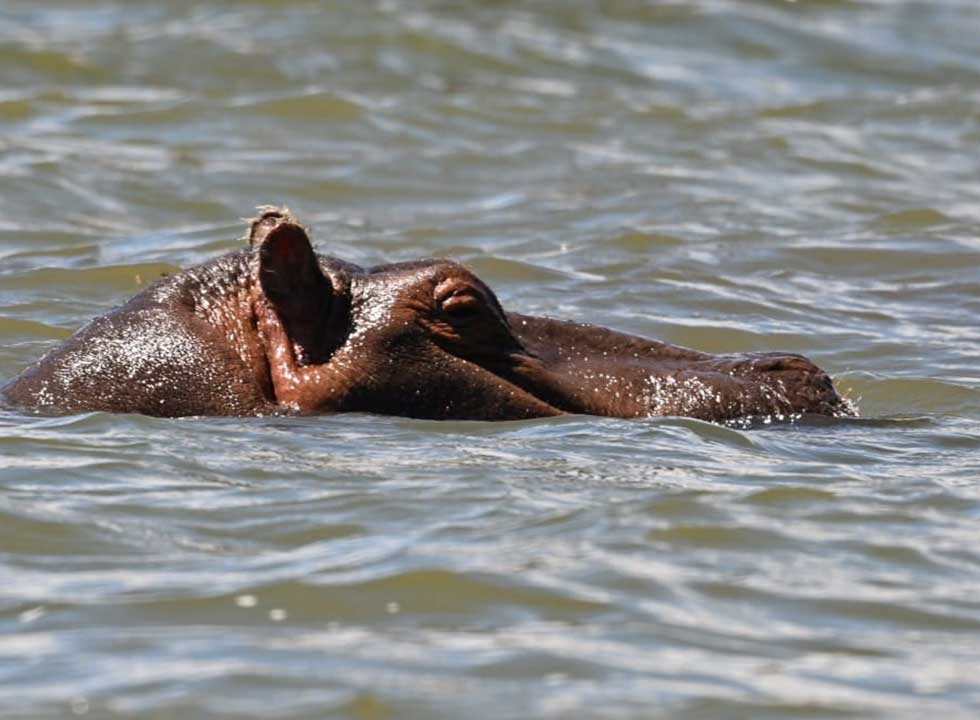
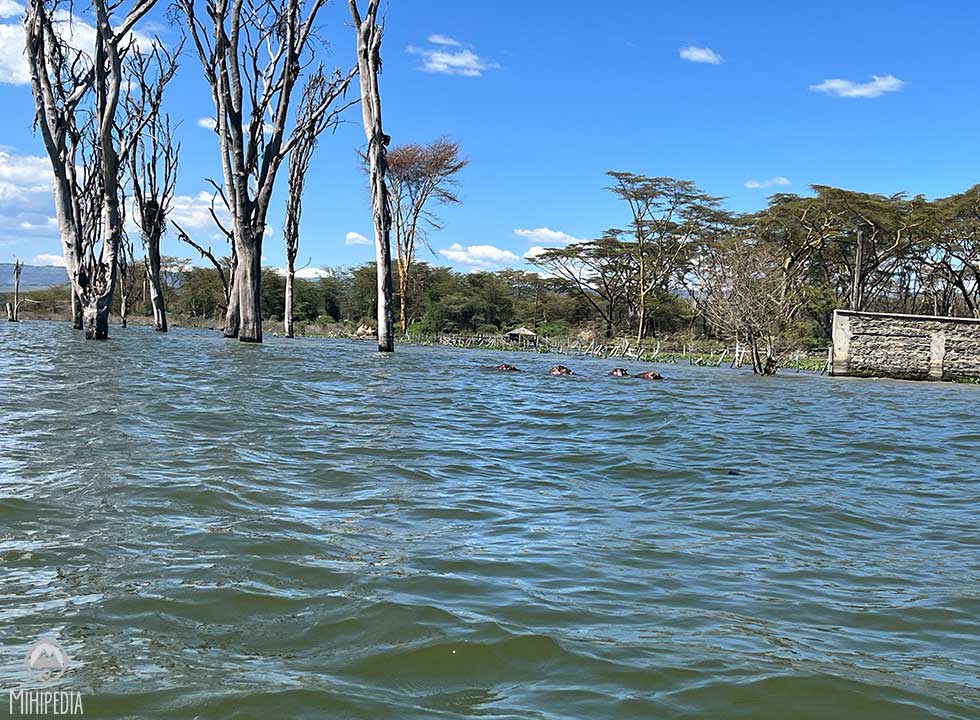
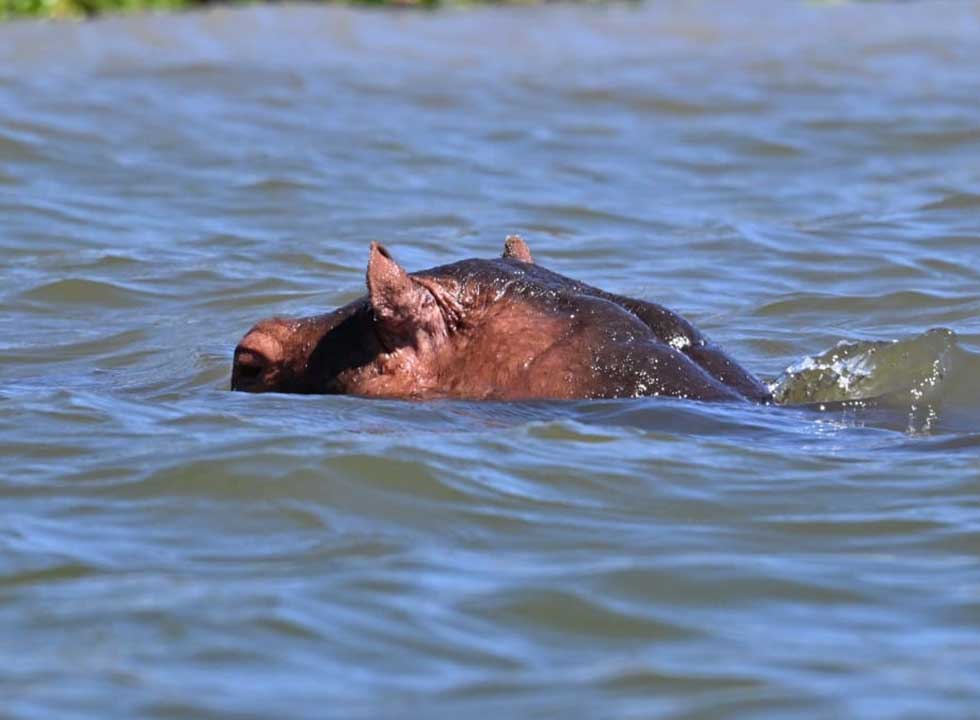
Our boatman cum guide steered us towards the edge of the lake, where hippos bobbed in the water like boulders come to life. Their nostrils flared above the surface, and now and then, one would let out a deep, guttural grunt, startling us with its bass-like power. It was thrilling to see them so close—massive, seemingly gentle, but undeniably wild.
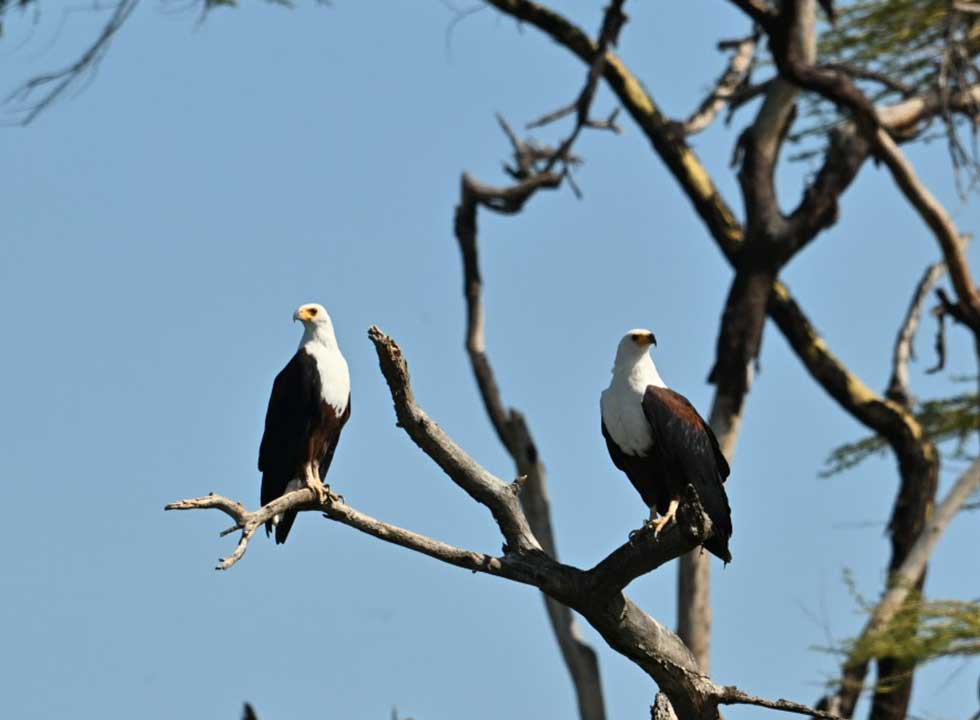
Suddenly, our guide motioned for silence and pointed skyward. Majestic African fish eagles sit high atop a tree branch, their white chests glowing in the sun, eyes scanning the water. We slowed the boat and waited. The guide pursed his lips and let out a shrill call, mimicking the fish eagle and tossed a dead fish into the water.
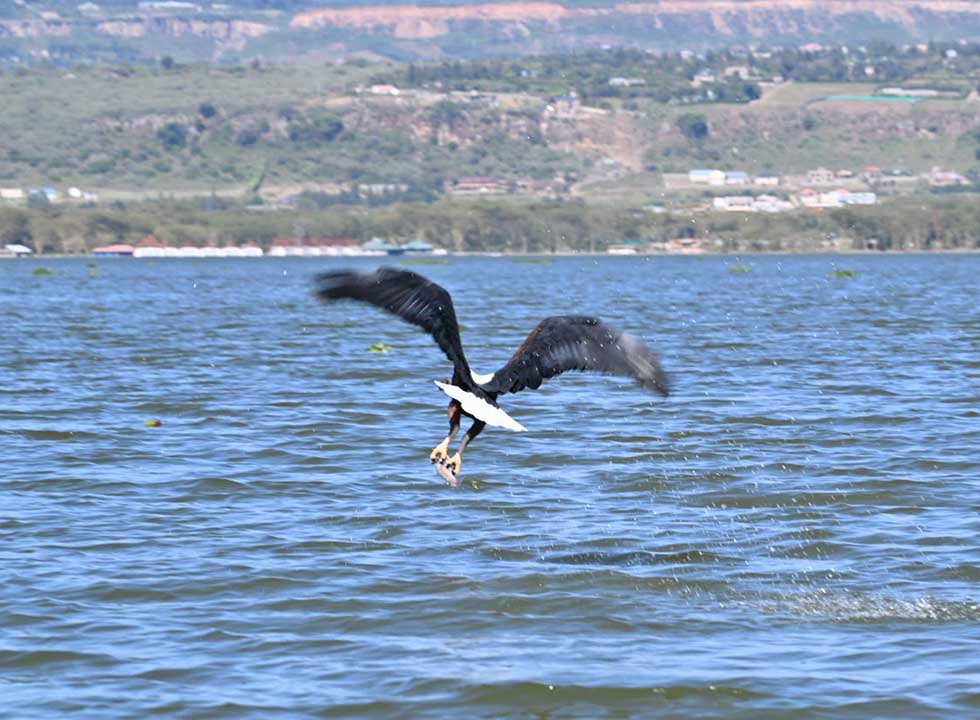
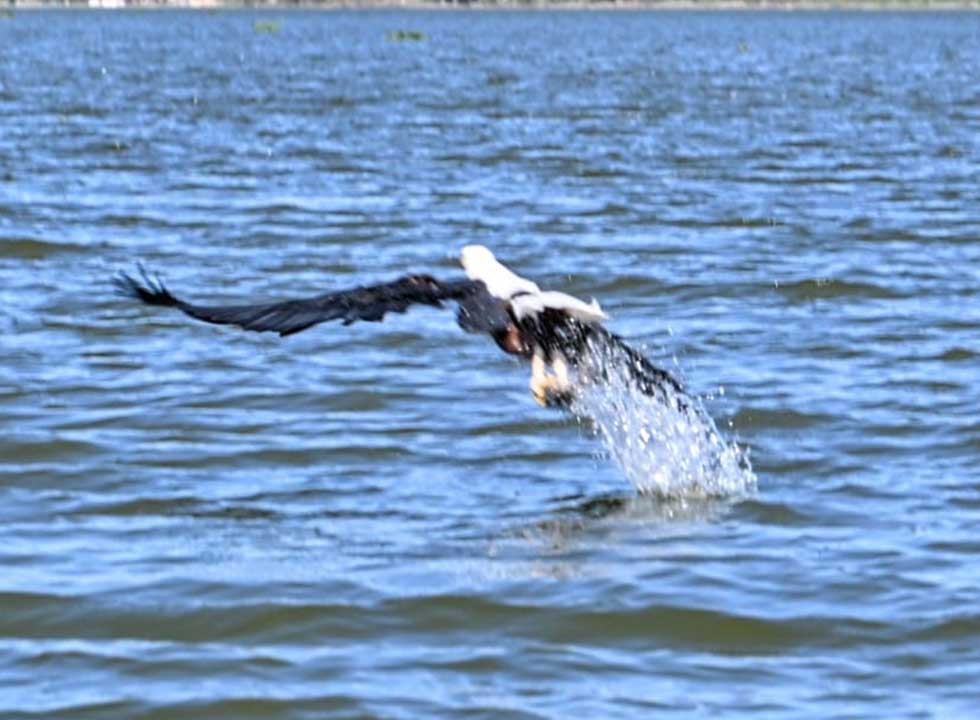
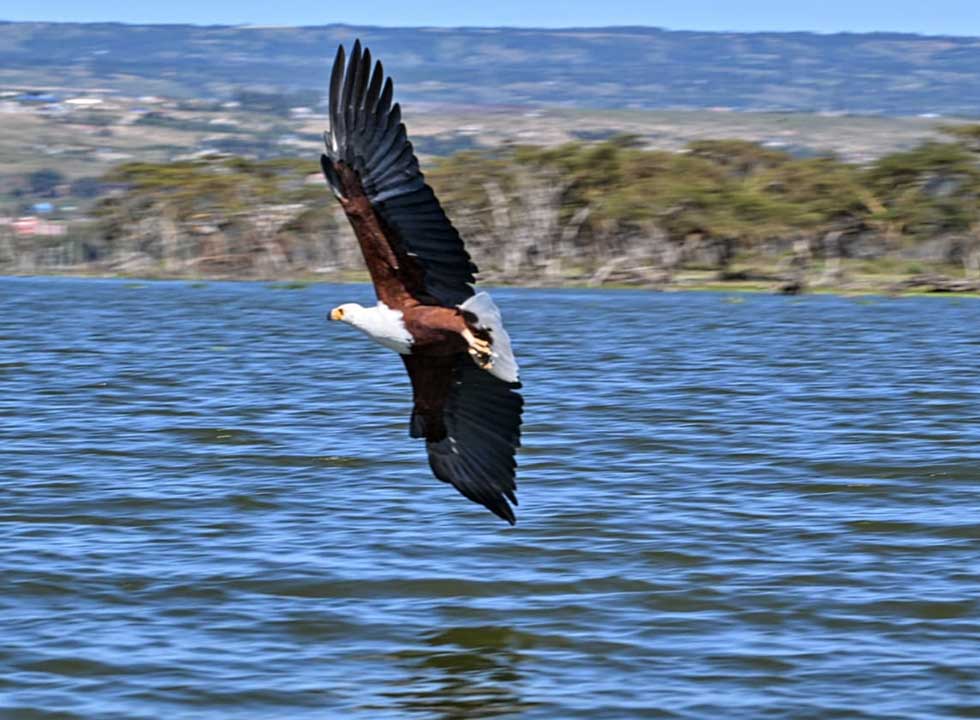
An eagle launched into the air—powerful wings slicing through the sky—and in a flash, it tucked and dove, talons extended. Time slowed. With a splash and a flutter, it surfaced with a fish in its grasp. The entire scene lasted seconds, but it left us breathless. Nature’s precision, on full display.
As we cruised, we passed clusters of papyrus reeds, tangled fig trees, and flashes of brilliant birdlife. Lake Naivasha, a shimmering freshwater lake spanning 139 km², is surrounded by swamps and thick forest. It’s a thriving ecosystem—home to an estimated 1,500 hippos and over 450 bird species.
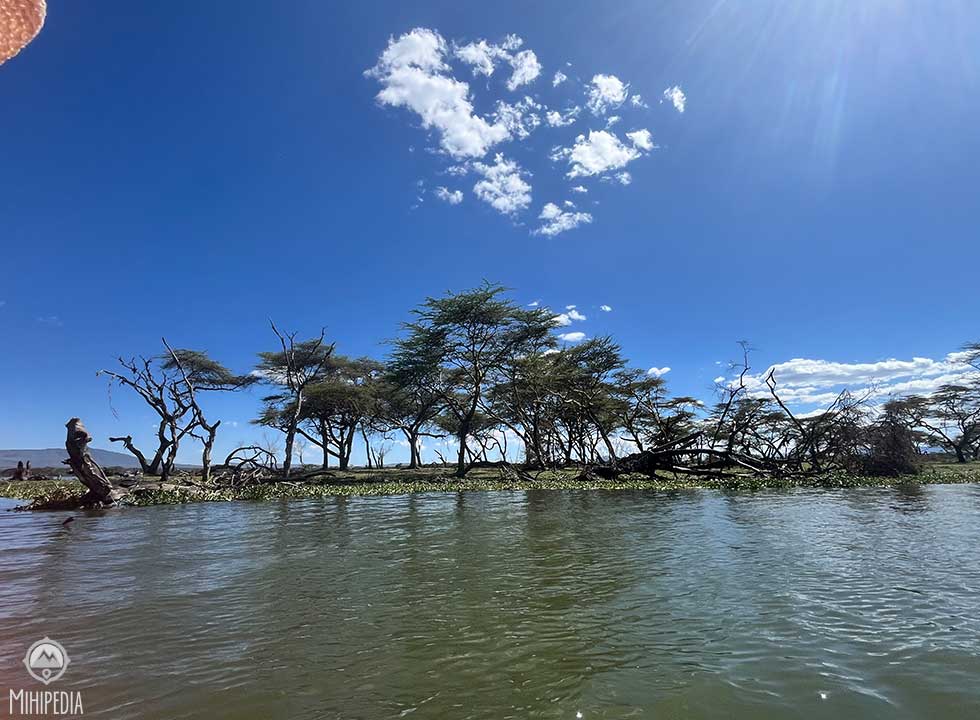
About an hour’s boat ride across the lake lies Crescent Island—a quiet, untouched sanctuary tucked into the eastern side of Lake Naivasha. Though technically a peninsula today, it earned its name from its crescent shape, formed by the rim of an ancient, partially submerged volcano. Volcanic ash still coats the landscape, adding a soft, grey shimmer to the earth.
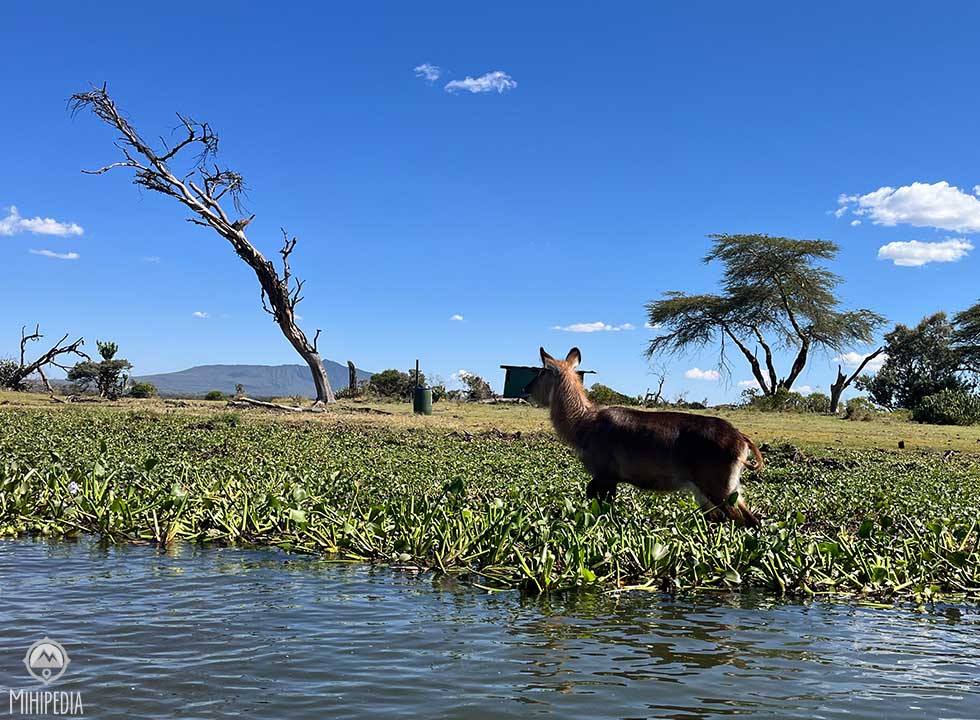
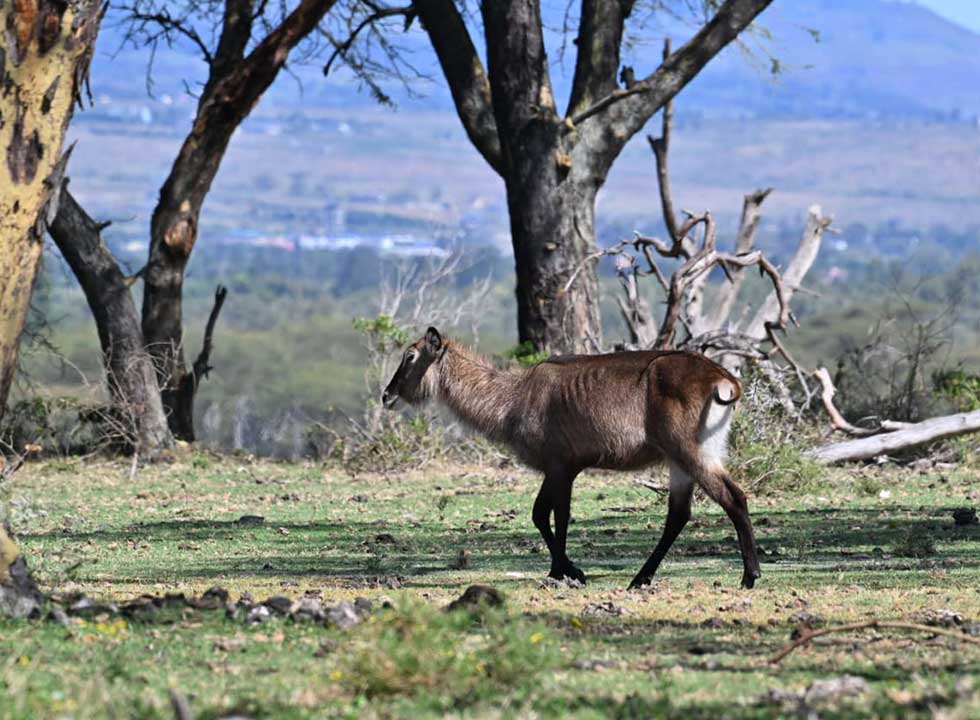

Crescent Island became accessible by land in 1988 when water levels dropped, linking it to the mainland. Despite its growing popularity, it remains one of Naivasha’s best-kept secrets—a serene escape with no predators, allowing wildlife to roam freely and fearlessly. Giraffes, zebras, impalas, and waterbucks graze calmly among visitors, often coming remarkably close.
The island also boasts an impressive array of birdlife, making it a paradise for birdwatchers and nature lovers alike. Fun fact: parts of the classic film Out of Africa were shot right here, adding a touch of cinematic history to the wild beauty.
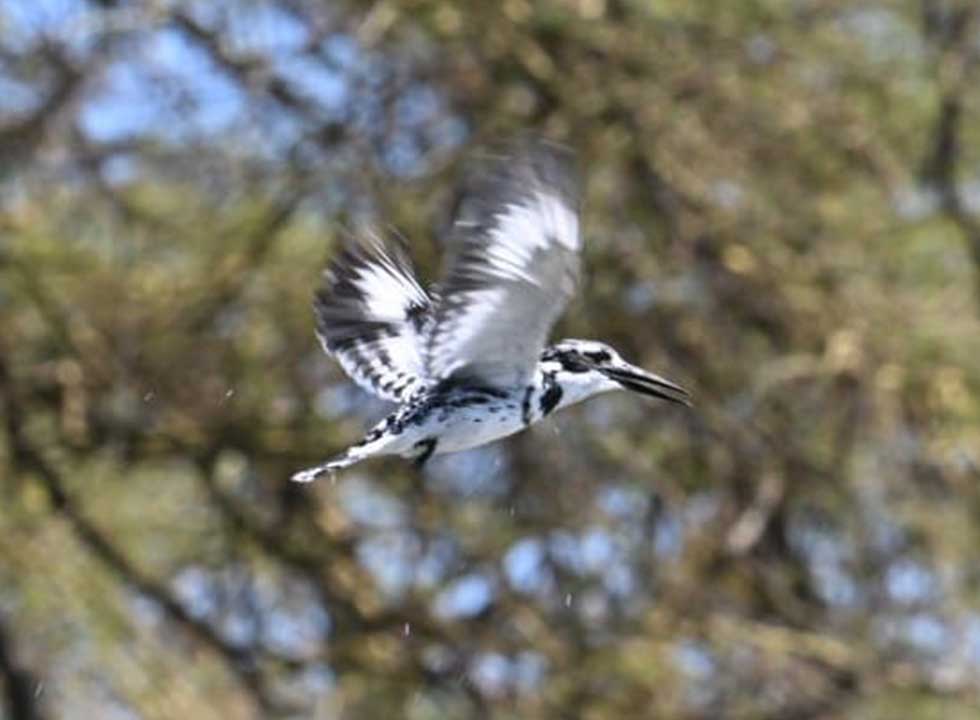
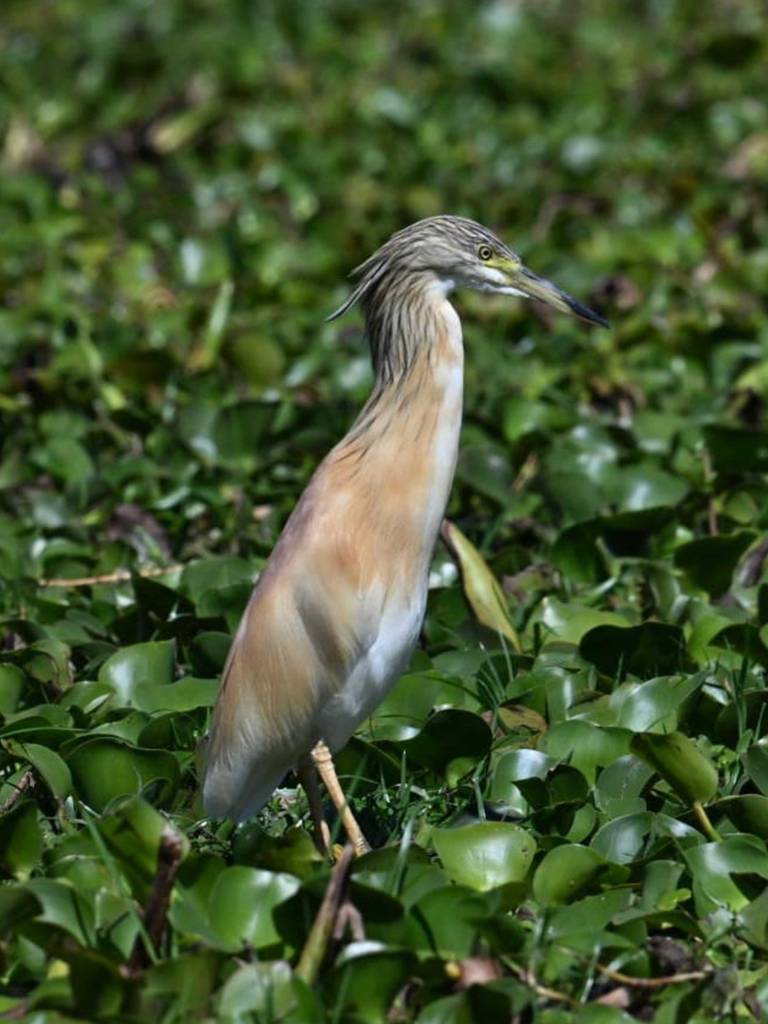
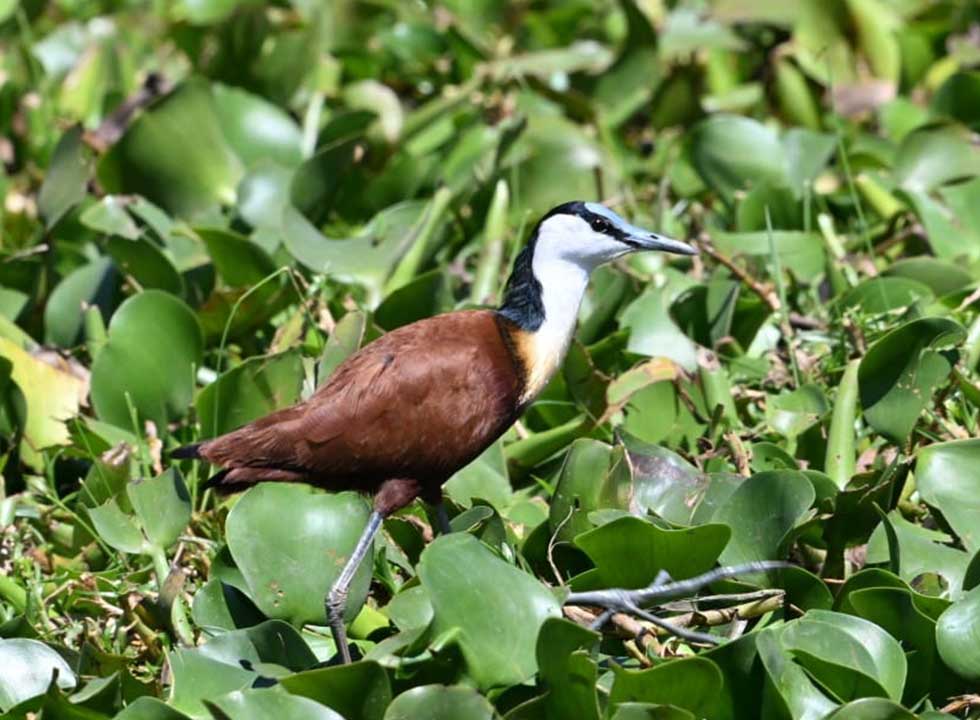
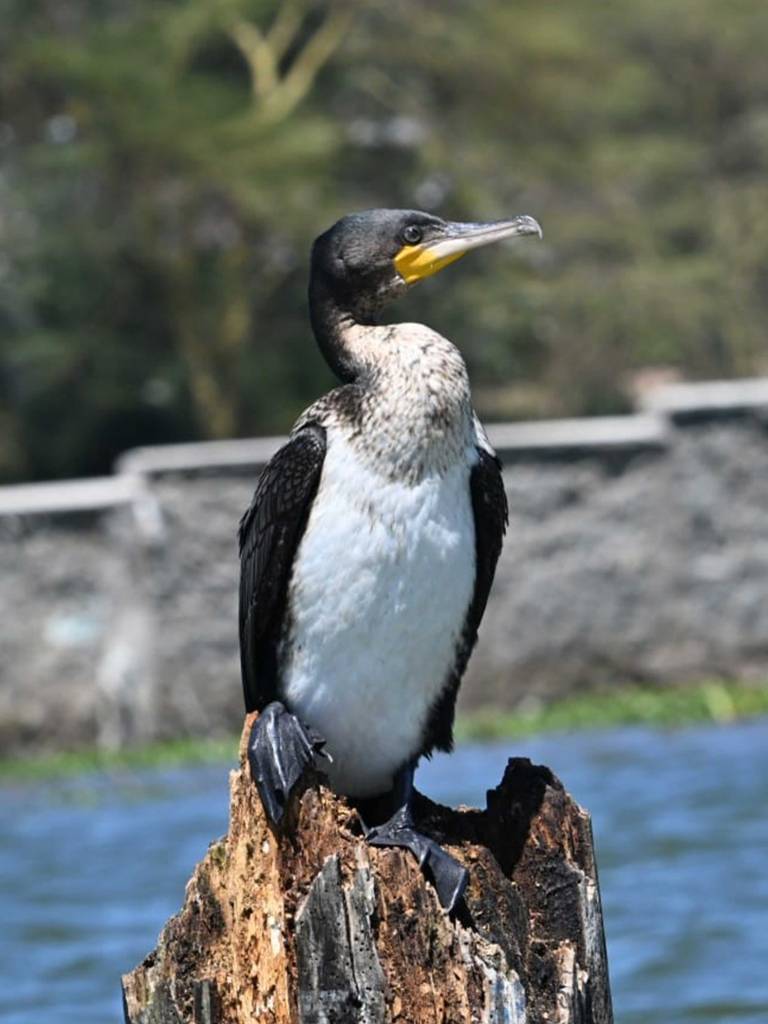
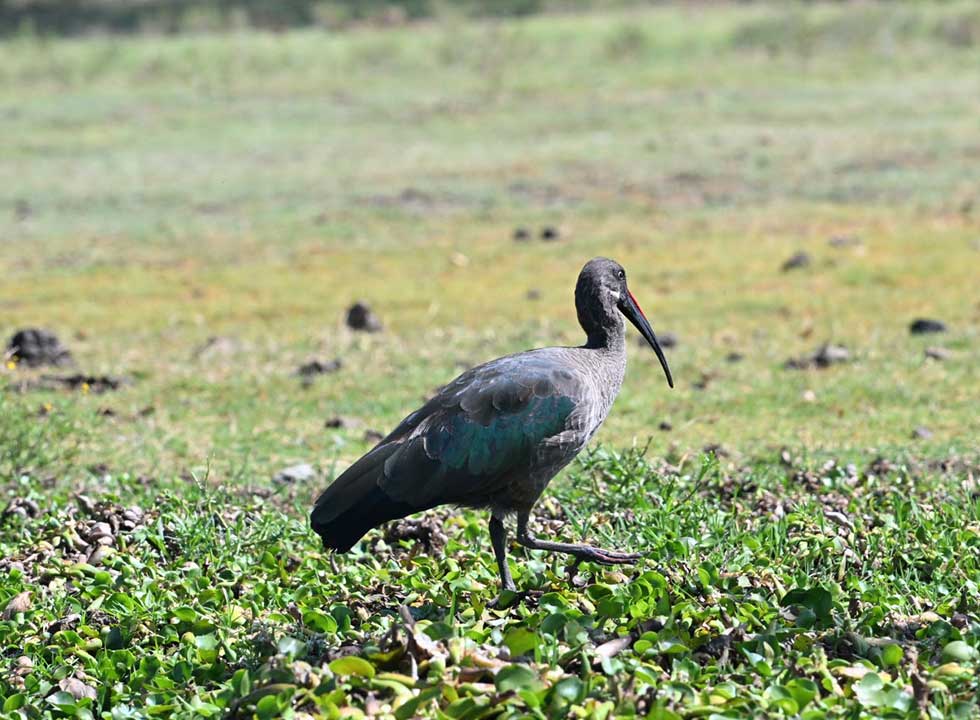

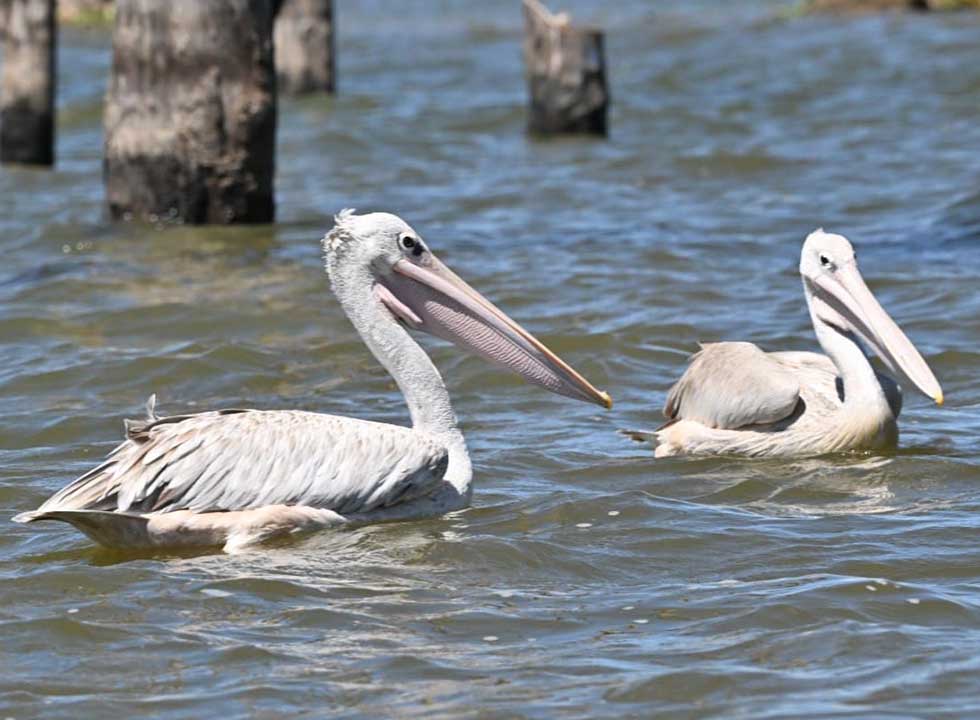
As we drifted back toward shore, the lake came alive with more sightings—flocks of cormorants drying their wings, herons stalking the shallows, and kingfishers darting like bullets across the sky. The water reflected a thousand shades of blue and green, interrupted only by the occasional hippo snort or the plop of a fish.
What struck me most was the contrast yet harmony between the Mara and Naivasha. One roared with raw wilderness; the other whispered with tranquil waters. Yet both were deeply alive, shaped by the same earth, sky, and spirit.
As the sun dipped behind the lake, casting a golden hue across the water, I realized that travel in Kenya isn’t just about destinations—it’s about transitions. From the drama of the savannah to the serenity of the lake, every mile was a memory, every encounter a story.
Back at Eseriani Resort that evening, we sat around the table, sipping our drinks and reflecting on our journey so far. The full moon over Naivasha is absurd—big and bright and shameless.
Kenya has a way of staying with you. It doesn’t just give you memories—it gives you stories.
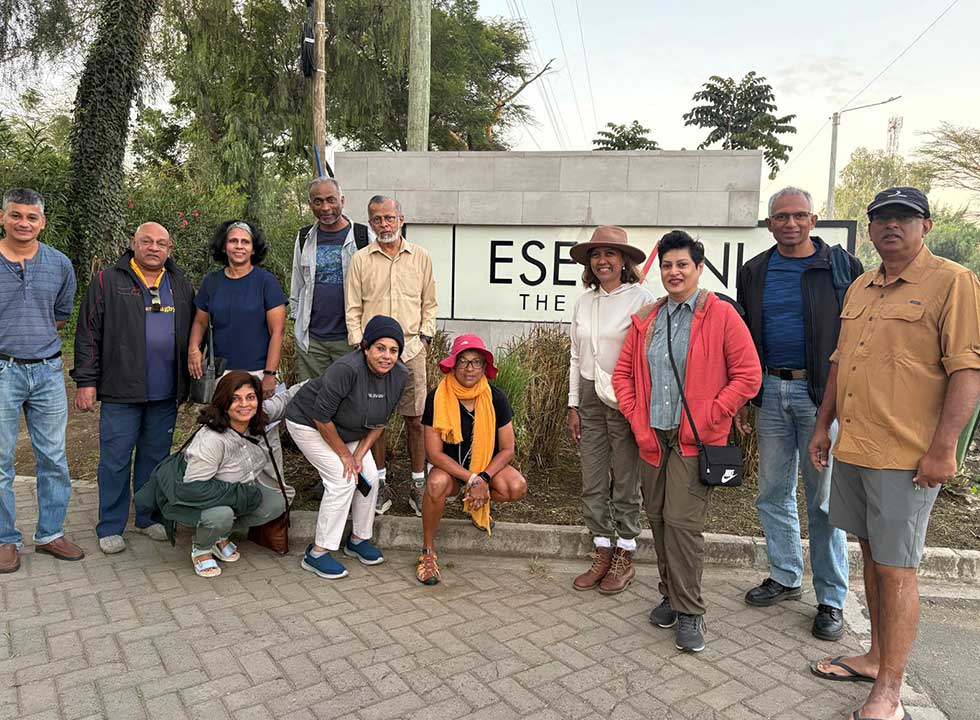
Tomorrow we continue on our journey…to Amboseli.
Have you traveled from Maasai Mara to Lake Naivasha—or explored Kenya’s Rift Valley?
I’d love to hear your experiences! Drop a comment below and share your favorite moment or tip. And if you’re planning a trip, feel free to ask questions—I’m happy to help. Or better yet, come along with me!
Don’t forget to check back soon for the next chapter of this journey as I head to the iconic Amboseli National Park.
FAQs About Traveling from Maasai Mara to Lake Naivasha
Q: How far is Lake Naivasha from Maasai Mara?
A: Lake Naivasha is approximately 230 kilometers from the Maasai Mara. By road, the journey takes around 5 hours depending on traffic and road conditions. It’s a scenic drive through Kenya’s Great Rift Valley, offering picturesque views along the way.
Q: Is a boat ride on Lake Naivasha safe?
A: Yes! Boat rides are guided by experienced local operators who provide life jackets and safety instructions. It’s one of the best ways to spot hippos, birds, and the majestic African fish eagle up close.
Q: What can I see during the Lake Naivasha boat safari?
A: Expect to see hippos, African fish eagles diving for fish, kingfishers, cormorants, herons, and possibly giraffes or zebras if you head to Crescent Island. It’s a photographer’s dream!
Q: What is Crescent Island and is it worth visiting?
A: Crescent Island is a private sanctuary accessible by boat or land, known for its peaceful, predator-free environment. You can walk freely among zebras, giraffes, impalas, and over 200 bird species. It’s absolutely worth the visit for a fee.
 Mihipedia.lk
super
LikeLike
Thanks! More on the way :). And your photos are the bomb!
LikeLike