
Today’s the day we’ve all been looking forwards to—the start of our second cross-country motorbike adventure! After conquering Ladakh last year, this time we’re off to explore beautiful Bhutan—a destination that’s been sitting high on my bucket list for ages.
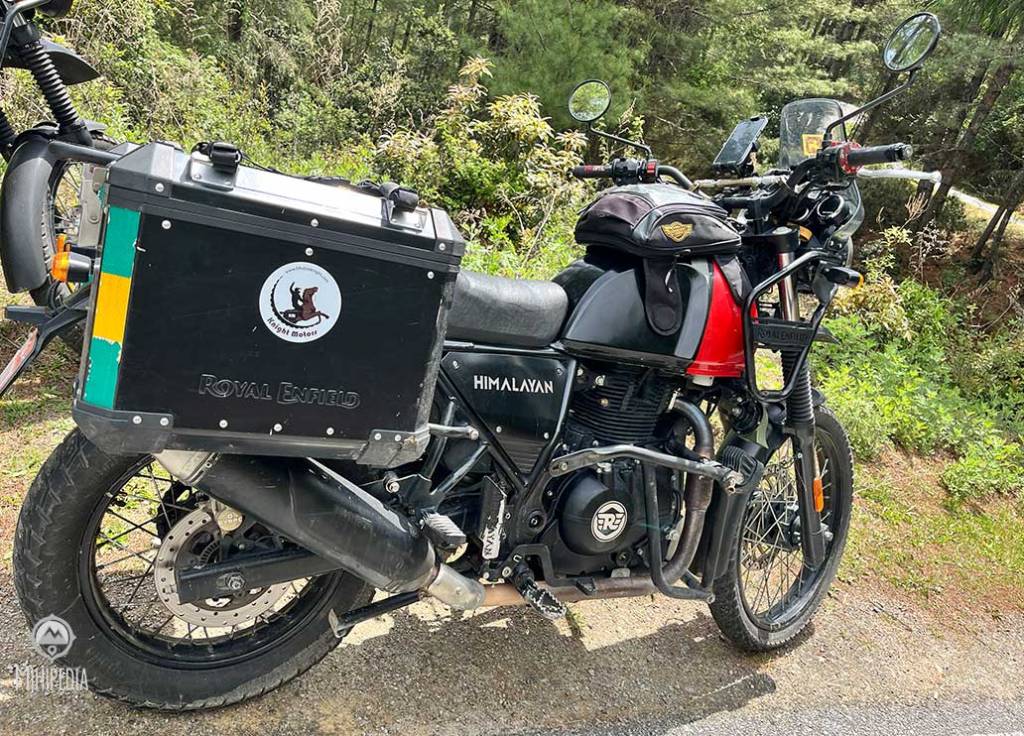
Eight riders have selected their Royal Enfield Himalayan 411cc’s—solid machines built for the mountains, geared up, the engines are revving, the skies are clear, and the excitement is real!
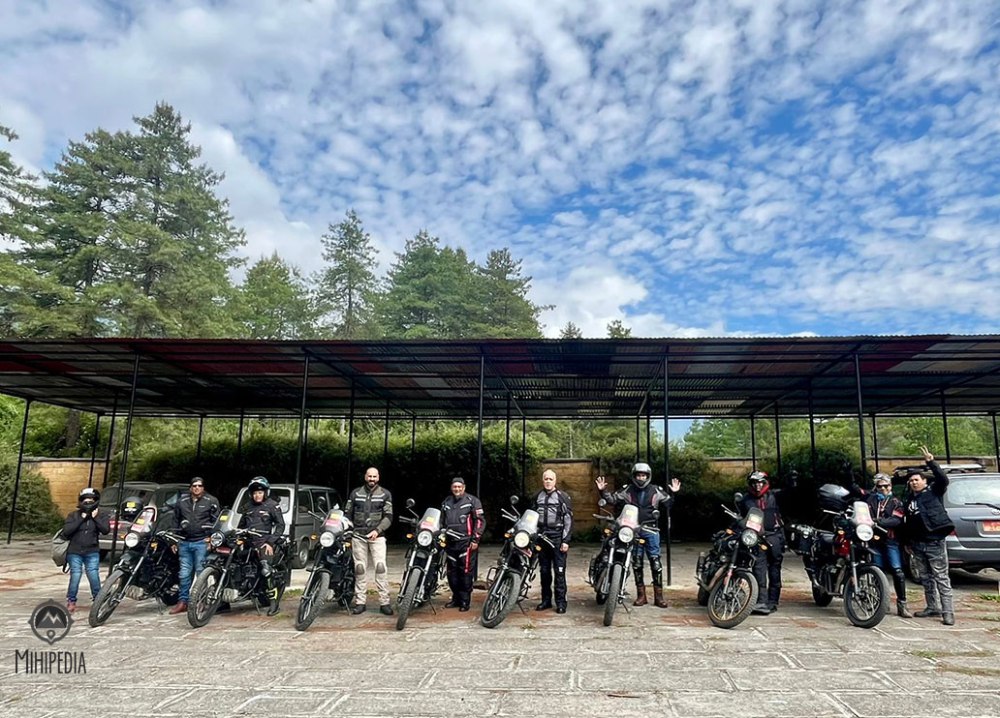
Our biker gang includes Ajith with Krishni, as always on his pillion, Vinod, Tarique, Dammika, Roshan, Adrian, and Graeme—each one bringing their own style and energy to the ride.
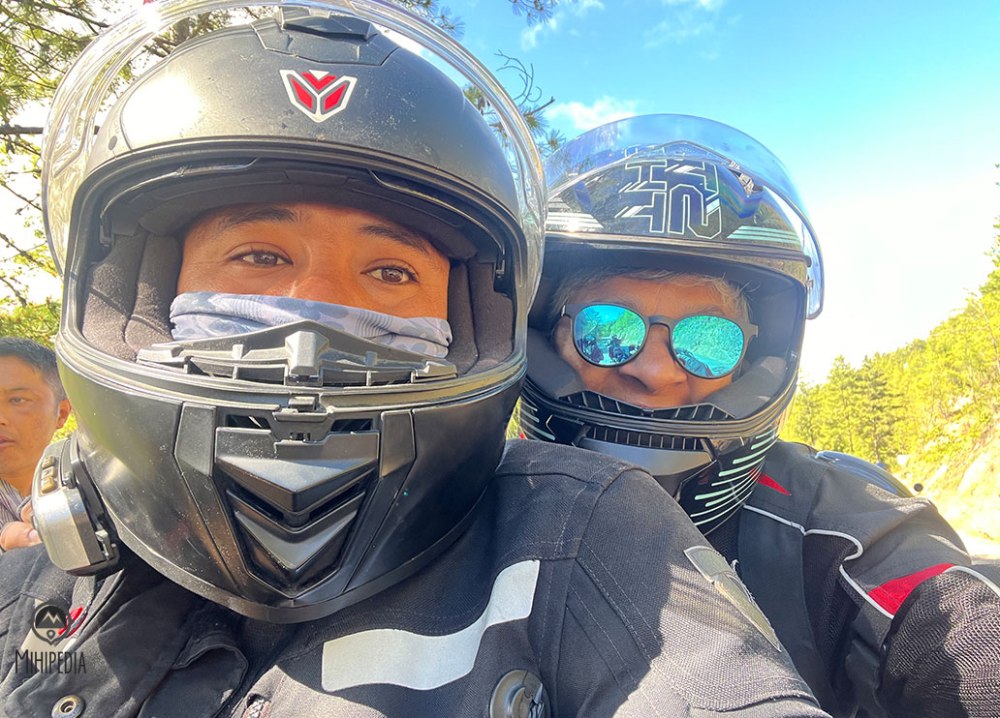
I ride pillion with Himal Thapa—our multitasking, quick-witted convoy captain, with his infectious laugh and effortless charm. Riding with him feels like being on a road trip with a stand-up comedian—jokes at every turn and never a dull moment.
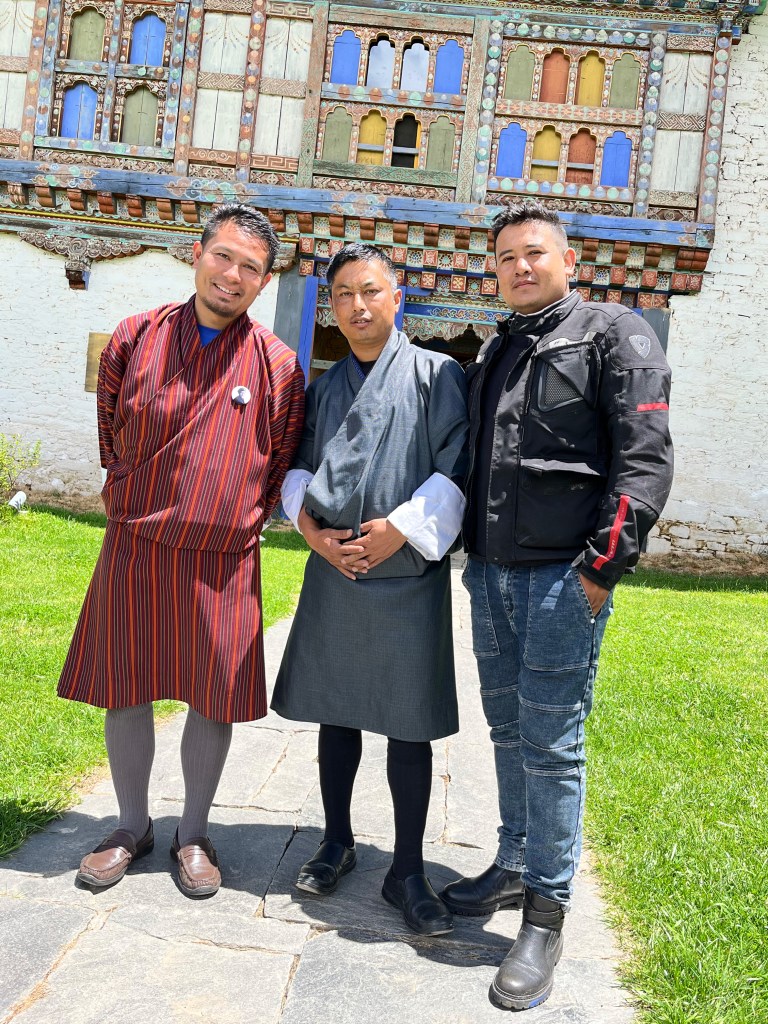
Following us in the support van are two amazing locals—Tshering and Santos. Tshering is soft-spoken, super knowledgeable, and just a lovely human being. Every time he speaks, I feel like I’m learning something new. Santos doesn’t say much, but he’s always there when we need him—carrying bags, fixing things, or simply offering a quiet smile.
We miss a few from last year’s gang but welcome two new faces—Onyalie and Revatha. They’re still figuring us out, but it won’t take long before they get the full Boomer experience: early starts, terrible jokes, and endless “back in my day” stories. Don’t worry, they’ll fit right in soon enough.
We leave the hotel in Paro just after 8 a.m., bikes roaring and spirits high. The temperature is a cool 16C, perfect for riding through Bhutan, which feels like cruising through a dream—pure, pristine air filling our lungs, mountains rising in quiet majesty, and not a trace of pollution in sight. This is the world’s only 100% carbon-neutral country, where the real GDP is measured in happiness.
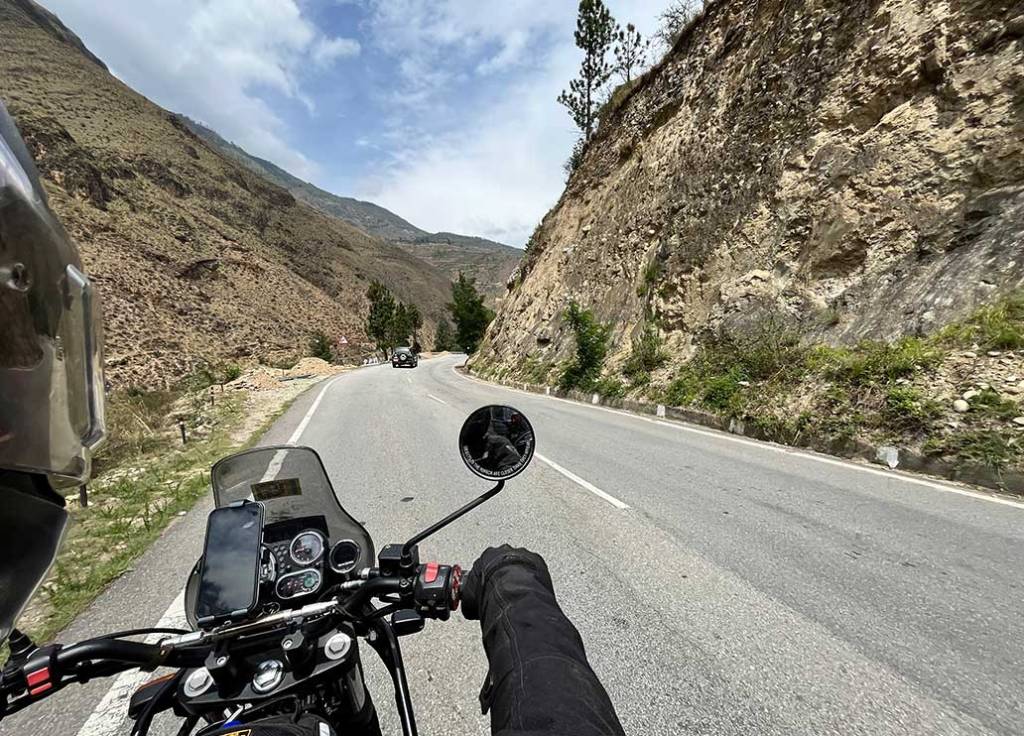
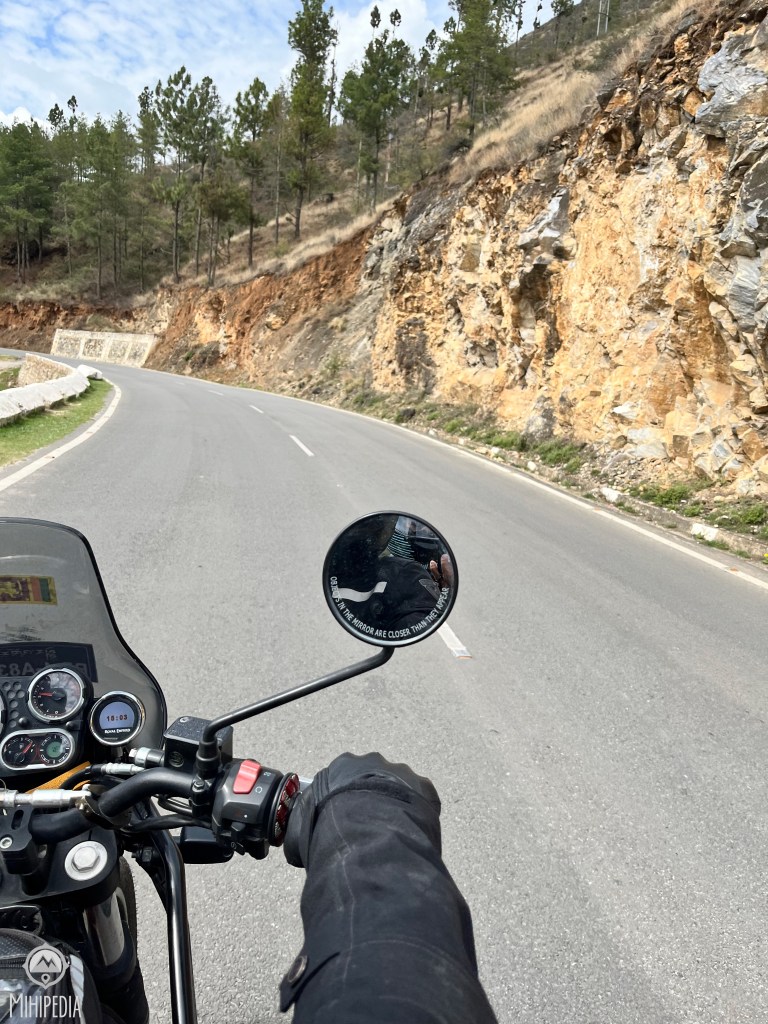

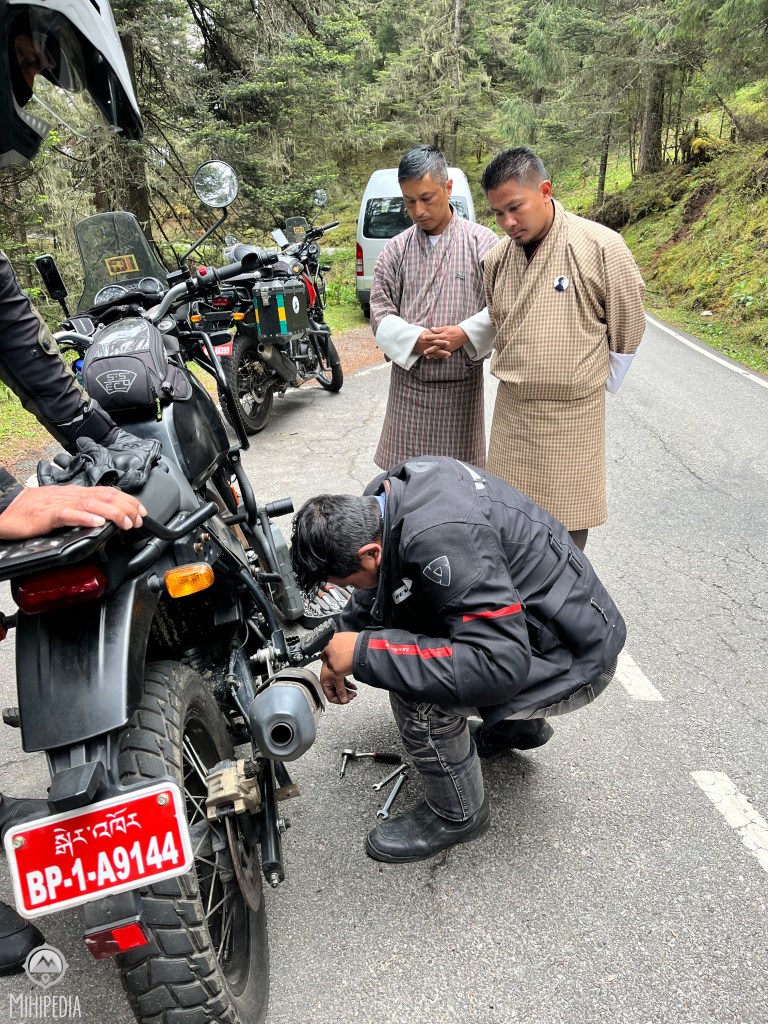
Not long after we leave, Ajith’s bike starts acting up. So we pull over on the side of the road and turn into a mini pit crew. Tools come out, hands get dirty, and jokes fly around while the bike gets fixed.
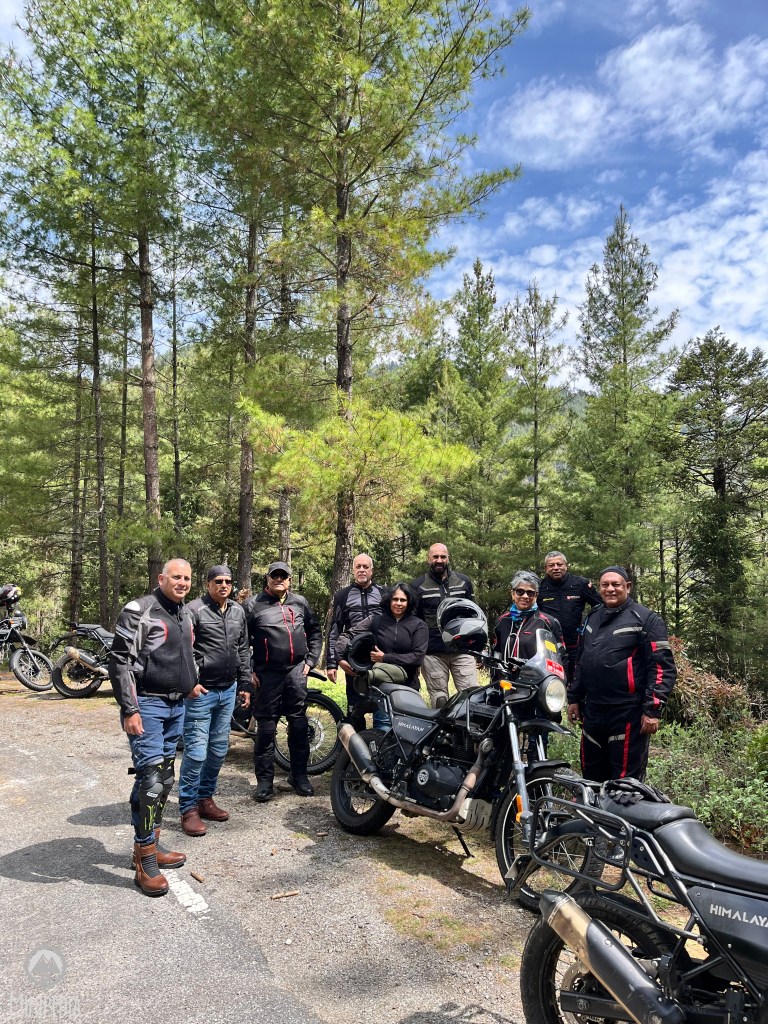
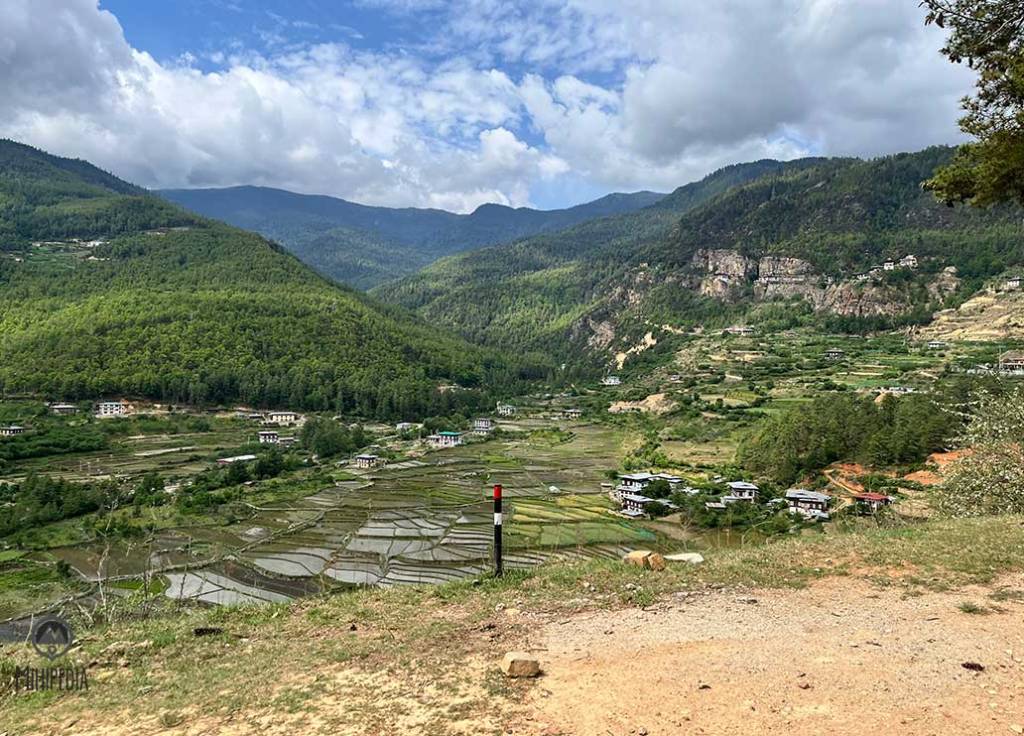

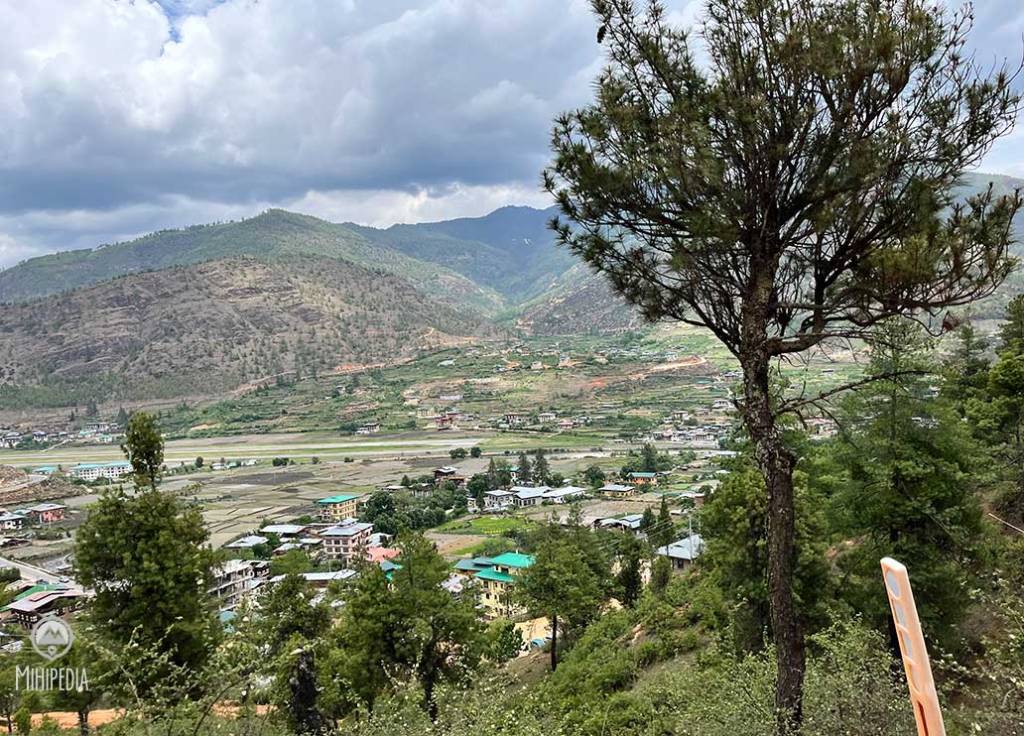
It actually turns out to be a fun little break, surrounded by trees and epic mountain views.

We take a detour up to Haa Dzongkhag, riding along the highest motorable road in Bhutan—Chele La Pass, sitting at a breathtaking 3,988 metres (over 13,000 feet). The air is thin up there, and every breath reminds us just how high we are. But the views? Absolutely unreal. Colorful prayer flags flutter like confetti in the wind, and layers upon layers of misty mountains roll out as far as the eye can see. We stop for a while, take tons of photos, stretch our legs, and just stand there in silence—soaking it all in. It feels like standing on the roof of the world. I have to admit—we seem to turn heads everywhere we go! It’s not every day you see a crew like ours riding through the mountains on a dream adventure!

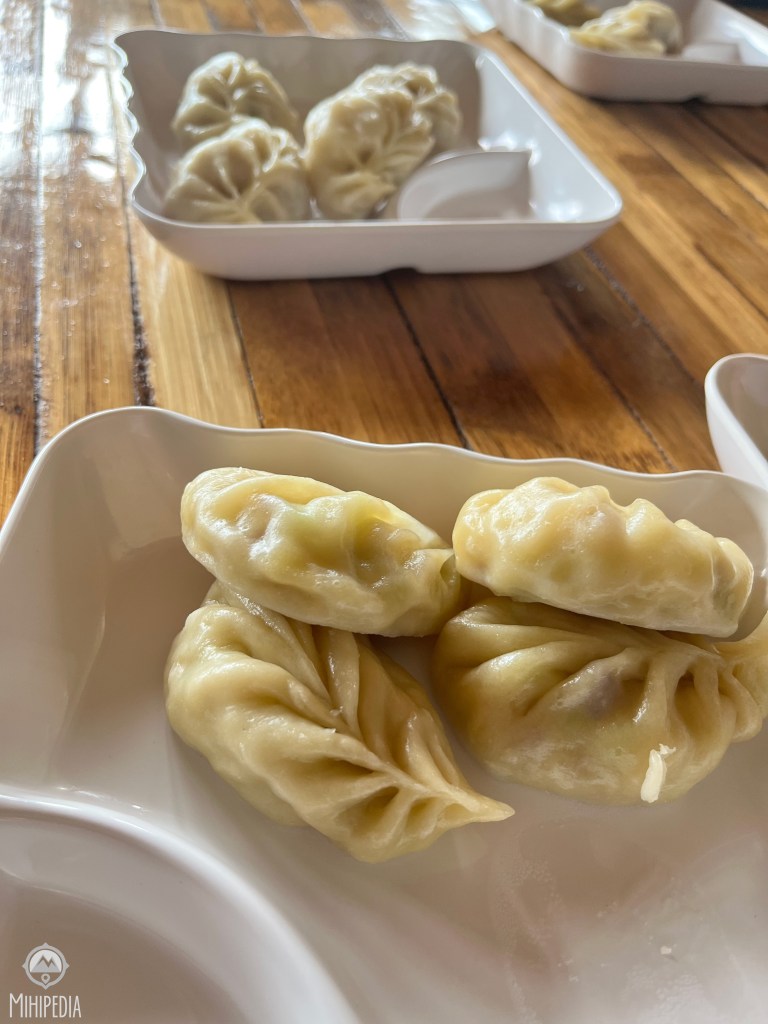
Next stop is Laptsa Restaurant for lunch. This is where we get our first real taste of Ema Datshi, Bhutan’s national dish. It’s basically green chillies swimming in cheese—and wow, is it spicy! We also have yummy momos (dumplings), which are always a hit.
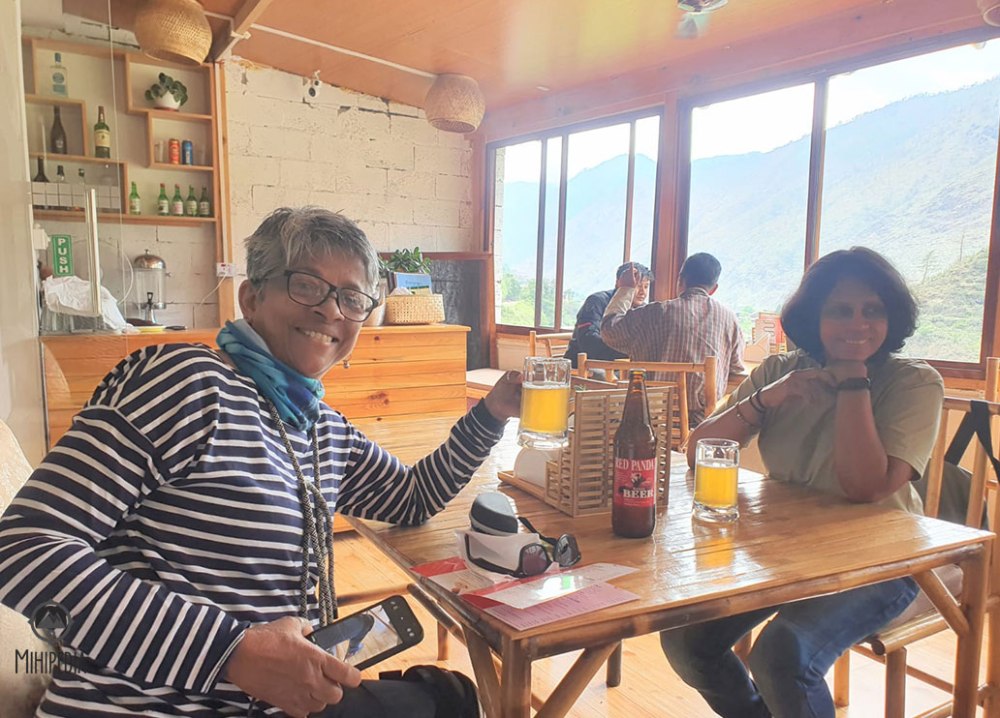
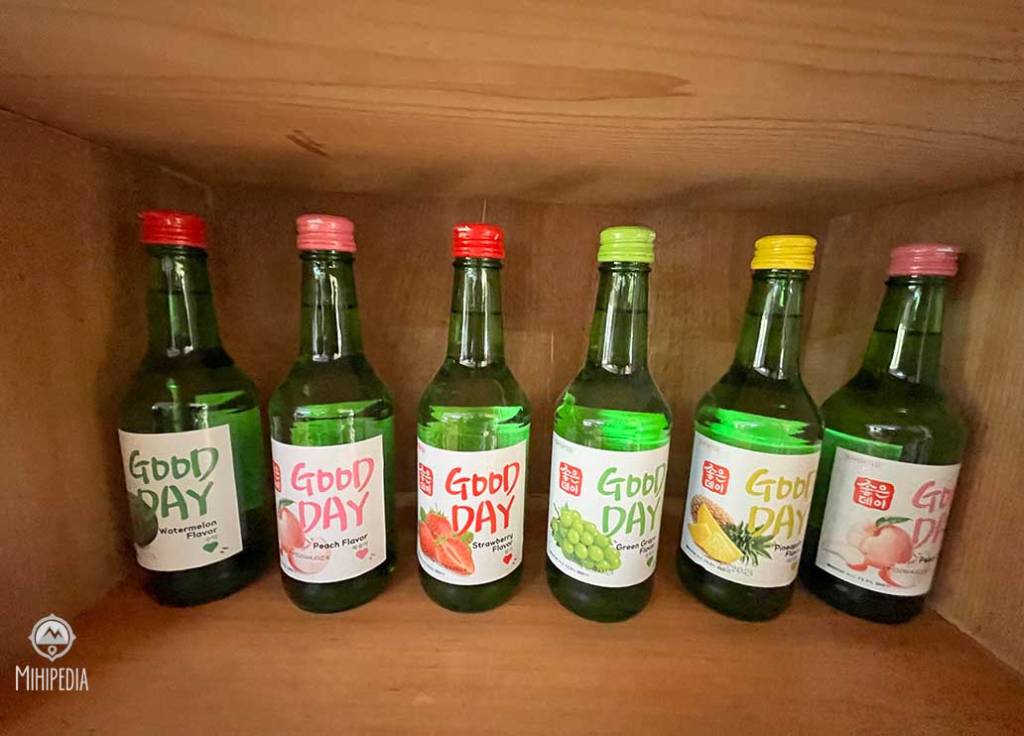
There’s a lot of sweating, laughing, and reaching for water—and for us pillion riders—beer and soju!

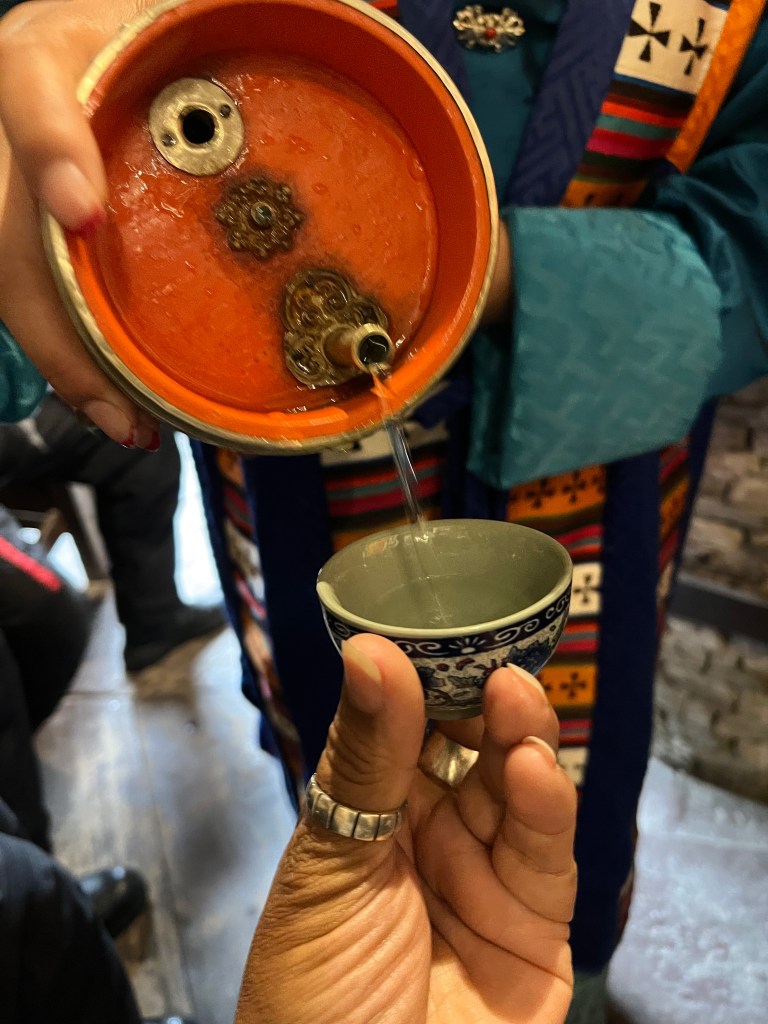
Before heading to our hotel, we visit Simply Bhutan, a cool little museum set up like a traditional Bhutanese village. We are welcomed with a traditional drink called “ara”, a warm, fermented rice spirit often served during special occasions. The welcome area is a small, circular room with portraits of Bhutan’s five kings displayed on the walls. A white scarf, known as a “kadar,” is carefully draped on each frame—below the portraits of those who have passed, and across the top for those still living. The kadar is a symbol of purity and respect, and it plays an important role in Bhutanese customs and ceremonies.
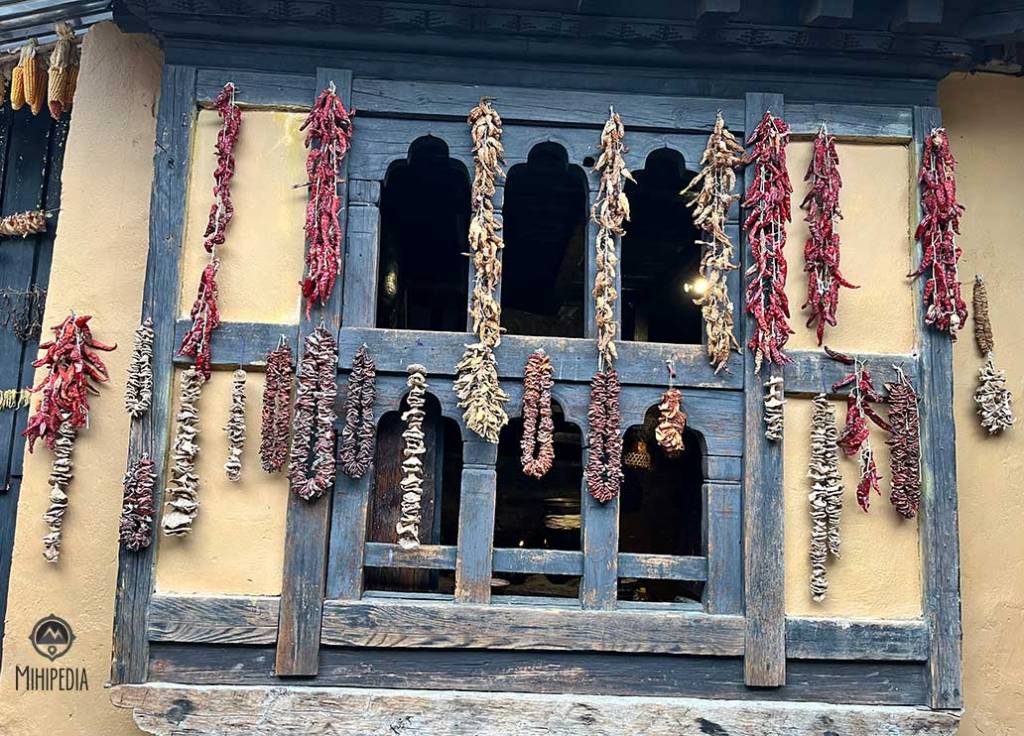

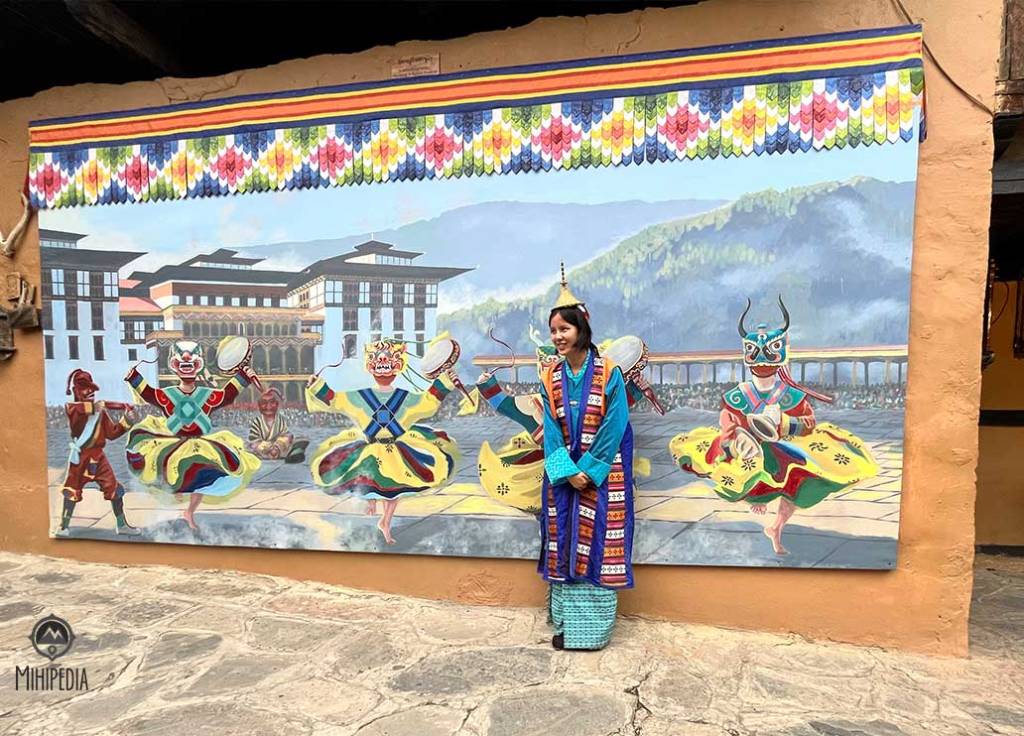
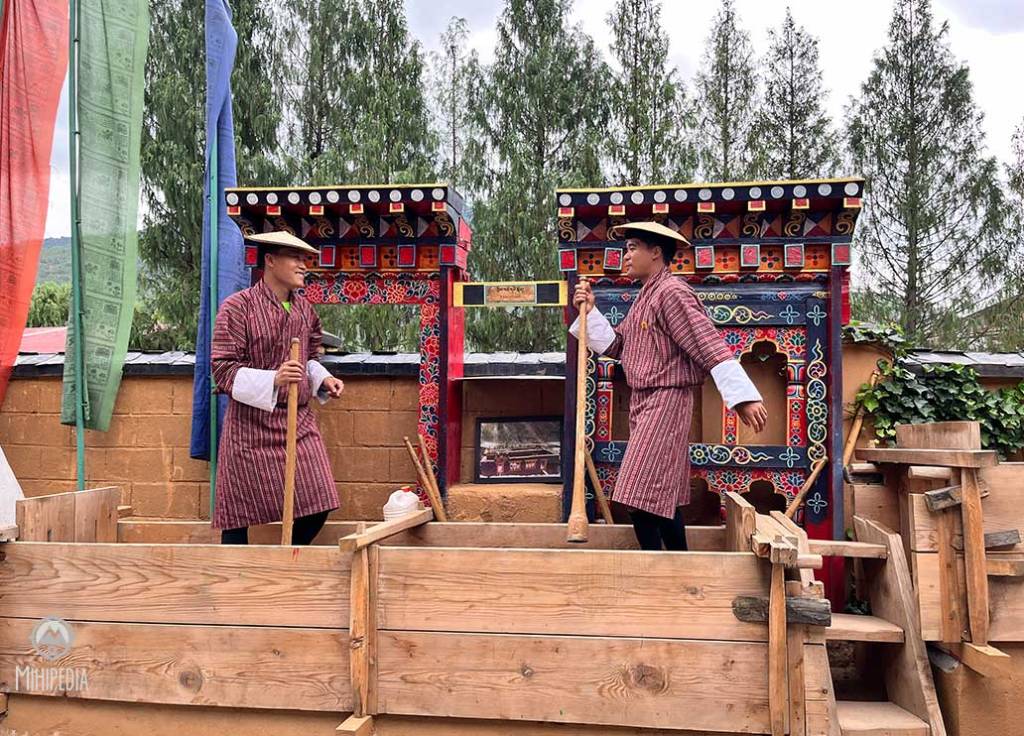
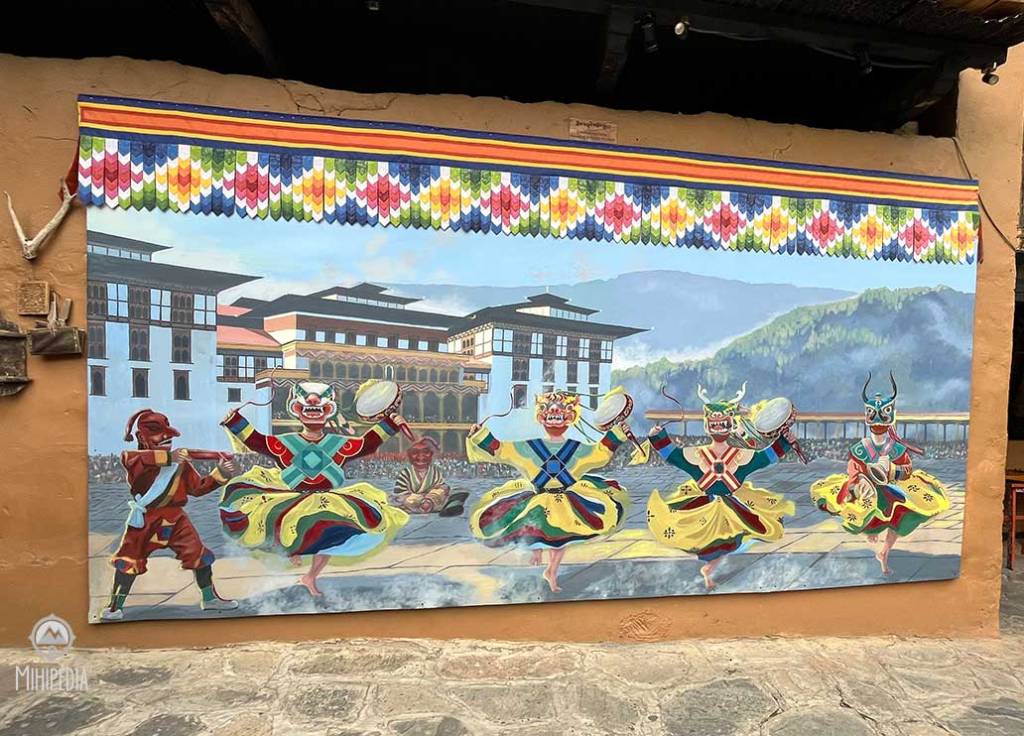
We listen to lore and learn about their history, and even join in their traditional song and dance. (see video at end of blog)
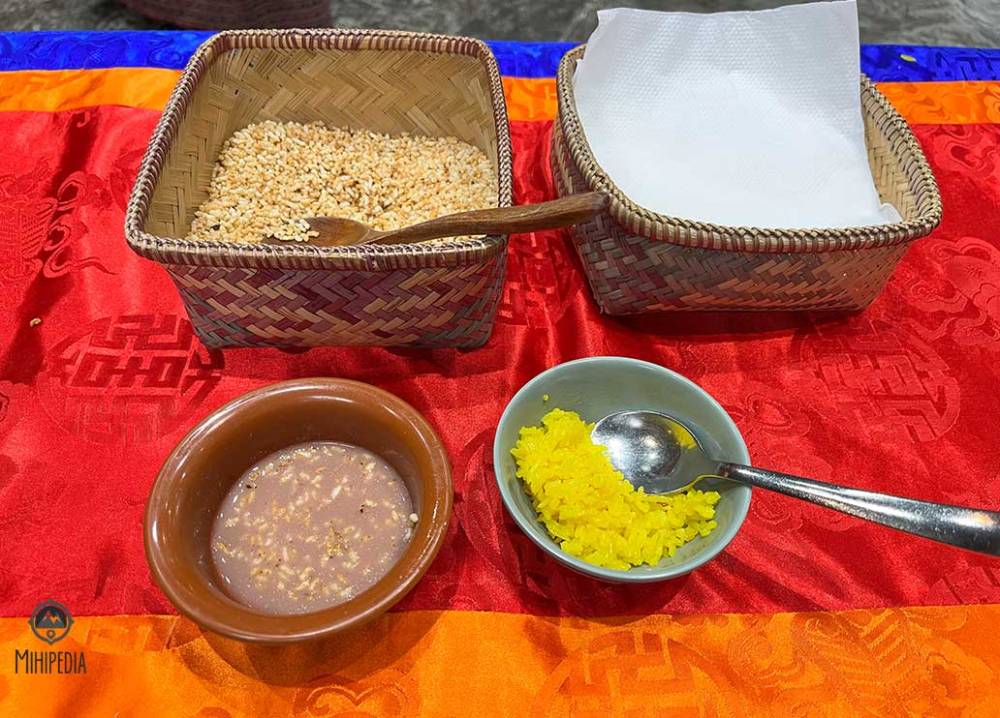
We also taste Suja- butter tea, which is salty and buttery and… well, interesting. Not everyone’s cup of tea, but a must-try while in Bhutan.

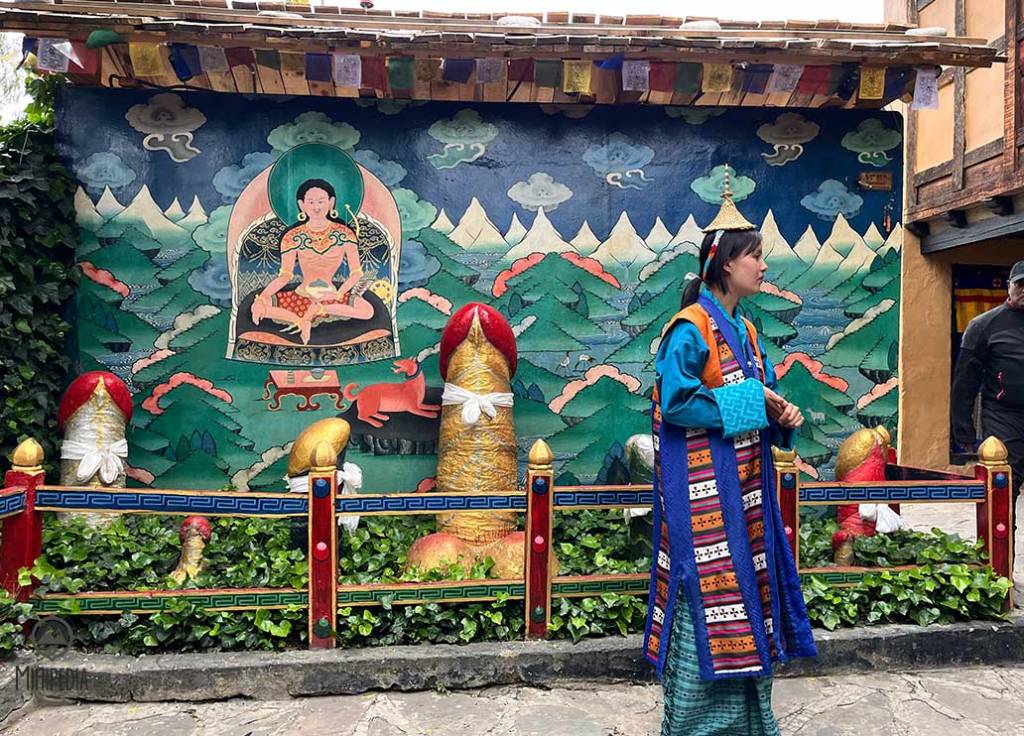
Bhutan’s bold display of phallic symbols—painted on homes and carved into wood—has deep spiritual roots. They’re linked to Drukpa Kunley, the 15th-century monk famously known as the Divine Madman. Irreverent and wildly unconventional, he uses humour, shock, and crude metaphors to teach Buddhist values and challenge hypocrisy. From drinking and womanising to offering sacred scarves draped over his genitals, his antics aren’t just rebellion—they become a unique form of spiritual expression. Today, these symbols are seen as charms for protection, fertility, and good luck.

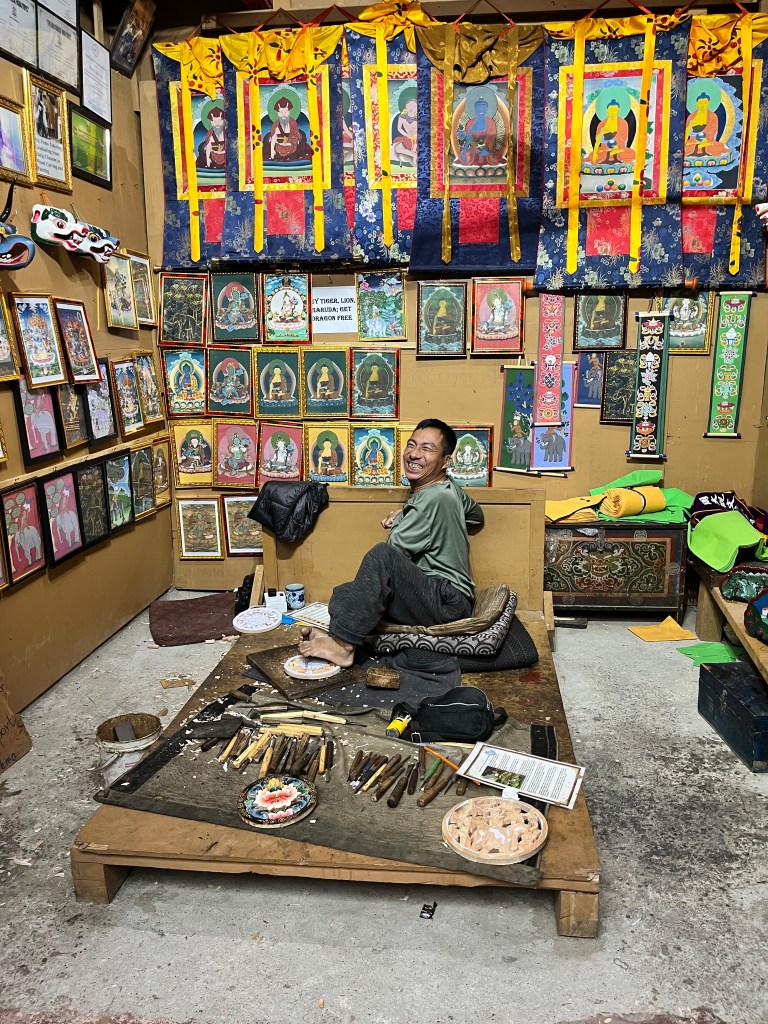
One of the highlights of our visit has to be our meeting with Pema Tshering—joyously working with his tools and smiling generously while focused on his work. He is born with cerebral palsy and has had a tough start in life. After being abandoned by his parents, he was raised by his grandparents in a small village in Mongar. One day, Her Majesty the Queen Mother Tshering Pem Wangchuck happened to visit that village and meets young Pema. Touched by his situation, she stepped in and sponsored his education at an art school.
That changed everything. Pema learned painting and carving, and today he makes a living doing what he loves. His work is not only beautiful—it’s also been recognised internationally. Seeing him there, creating with so much calm and skill, is truly inspiring.
And of course, some of us can’t resist trying our hand at archery, Bhutan’s national sport. Let’s just say… hitting the target isn’t as easy as it looks! But for those who manage to land a shot—the reward is priceless: a burst of song and dance from the locals, complete with cheers and wide smiles. It’s all in good fun and full of that warm Bhutanese spirit.
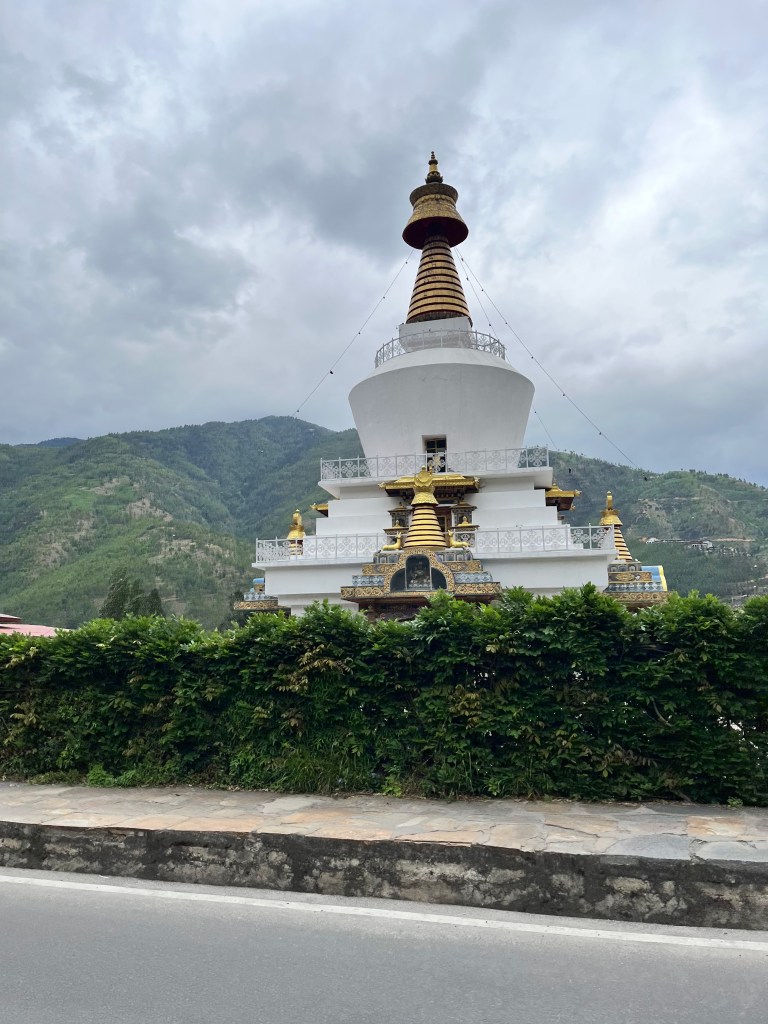
Menwhile, we pass by many stupas and chortens. The National Memorial Chorten is one of the most striking landmarks in Thimphu. Painted in pristine white and topped with shimmering golden spires, this beautiful stupa is built in 1974 to honour His Majesty Jigme Dorji Wangchuck, Bhutan’s third king—fondly remembered as the Father of Modern Bhutan. Located on Doeboom Lam, not far from the city’s main roundabout and the Indian military hospital, the chorten stands as a powerful symbol of Bhutanese faith, culture, and national pride.
We reach Thimphu in the late afternoon—Bhutan’s capital city today, but that’s a fairly recent change. Until the 1950s, it is just a quiet valley with a few small villages and farmland along the banks of the Wang Chhu River. In 1955, the third king, Jigme Dorji Wangchuck, decides it is time for a new capital and makes Thimphu the official seat of government, replacing the ancient city of Punakha.
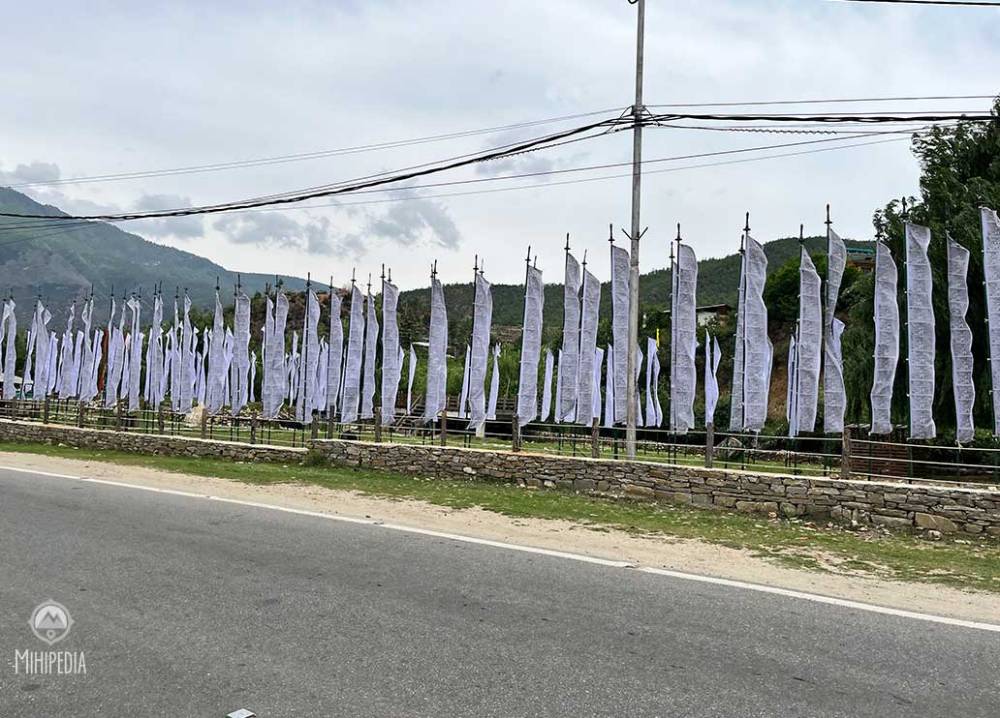
Since then, Thimphu grows but keeps its special charm. There are no traffic lights—only a traffic policeman who directs vehicles with hand signals that almost look like dance moves. It’s a city where tradition meets modern life: locals wear their national dress—the gho and kira—while chatting on smartphones or sipping coffee at trendy cafés. Monasteries sit next to modern buildings, and colorful prayer flags flutter above government offices.
Everywhere I go, I feel the deep respect and love the Bhutanese have for their king. Photos of Bhutan’s Dragon King, King Jigme Khesar Namgyel Wangchuck—often alongside his wife and their three young children, the eldest already named Bhutan’s sixth king—grace shops, homes, and public spaces. He’s not just admired as a leader, but truly cherished for his humility, wisdom, and warmth.
We check into Asura Hotel, a cozy and comfy spot to rest after the long ride. After freshening up, we all hang out in the lounge, sharing stories, tasting more Bhutanese brew, and already looking forward to tomorrow.
Total Distance: 120 km | Total Time: 8 hours | Total Fun: Off the Charts



Need more info on my trip, get in touch via email. Need to do your own trip, contact https://www.viktorianz.com
 Mihipedia.lk
So many memories.
LikeLike
Absolutely. Such good times.
LikeLike