
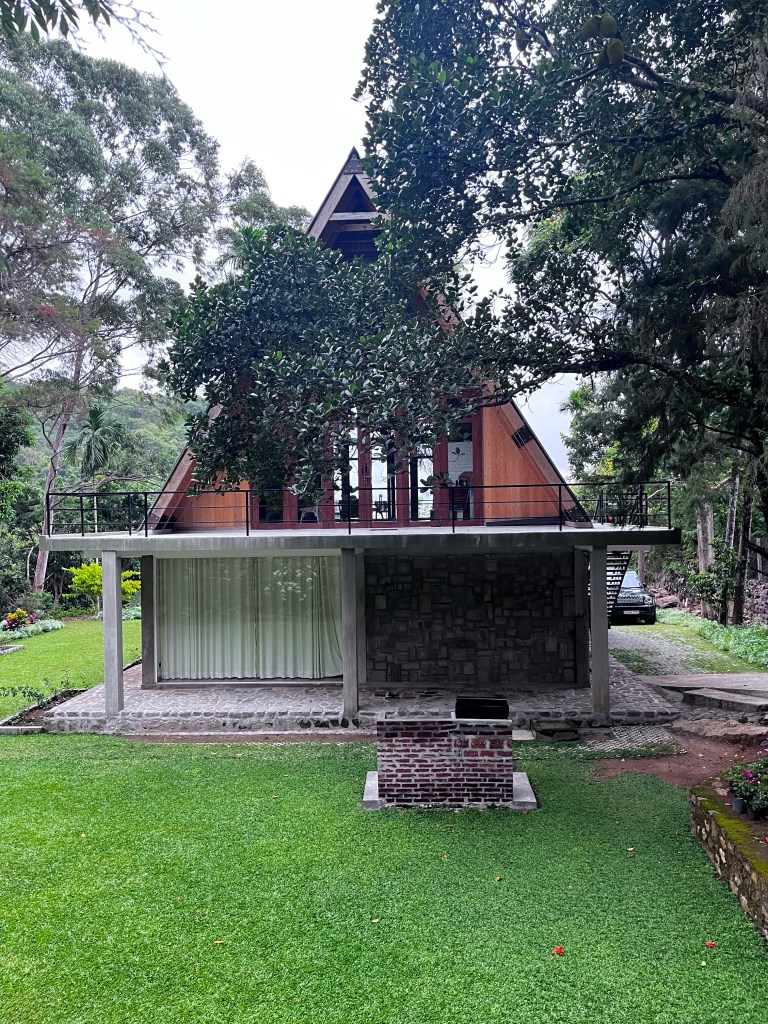

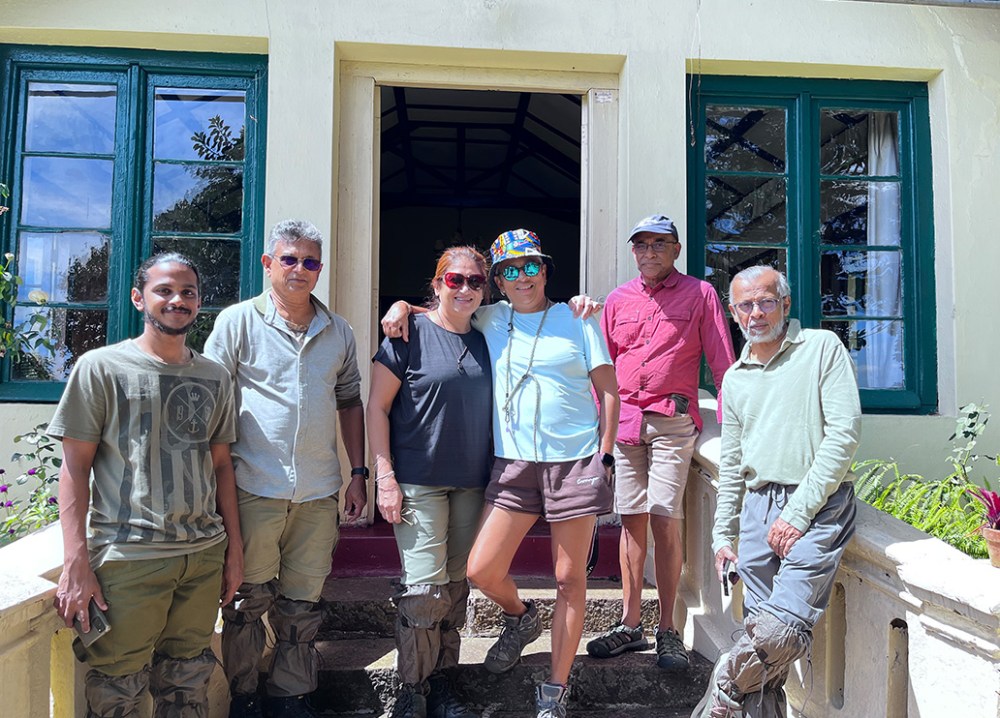
There’s a quiet kind of magic in leaving the familiar behind. For six friends seeking to shed city rhythms on another Mihipedia Getaway, Beragala offered exactly that – rolling mists, emerald tea slopes, and the comforting feeling of being slightly lost in time. Our home for two nights was a beautiful hillside house belonging to a friend, where wide verandas framed mountains that seemed to stretch forever and a high ceiling that gave off subtle Christmas vibes. It was the sort of place that made you slow down without realizing it.
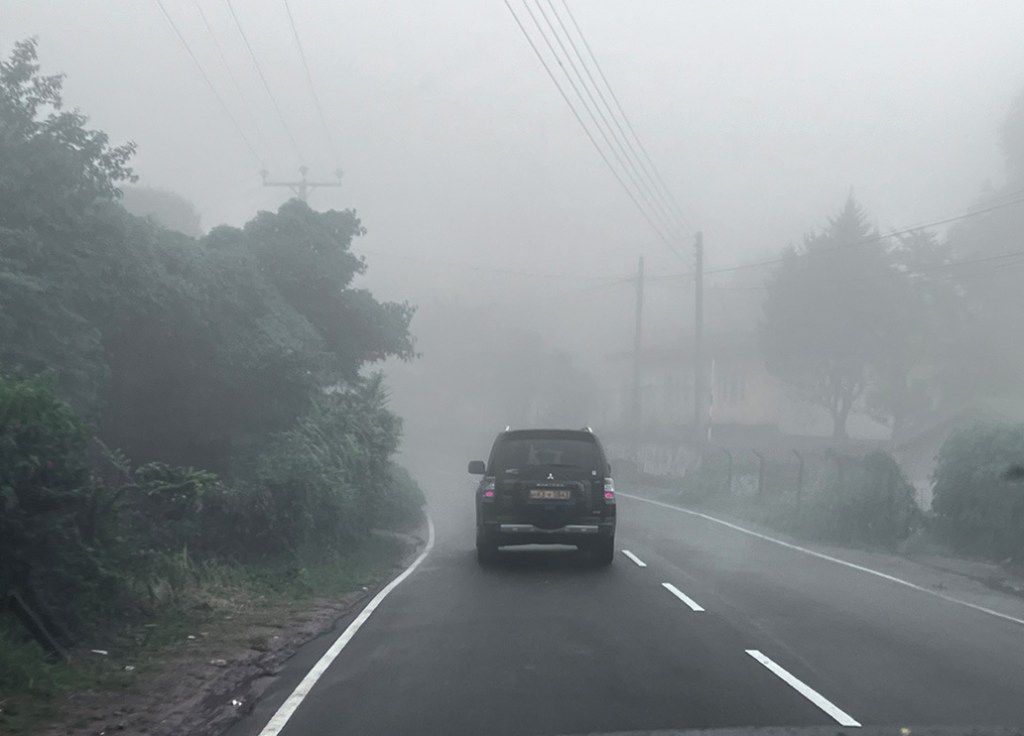
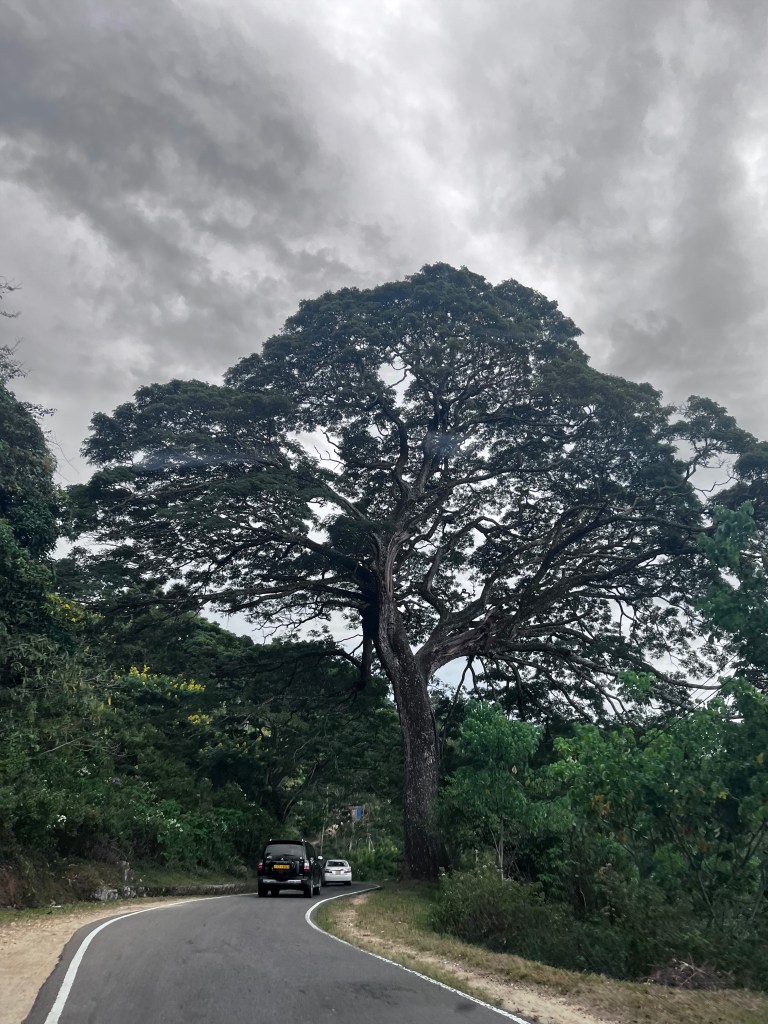
As we wound through the Beragala Pass, the hills rose in stitched layers of green and brown, mist curling over ridges and valleys. The road was nearly silent, broken only by the occasional rattle of a bus descending toward Wellawaya. By the time we reached the house, the sun was brushing mountaintops with the forecast of late afternoon showers.
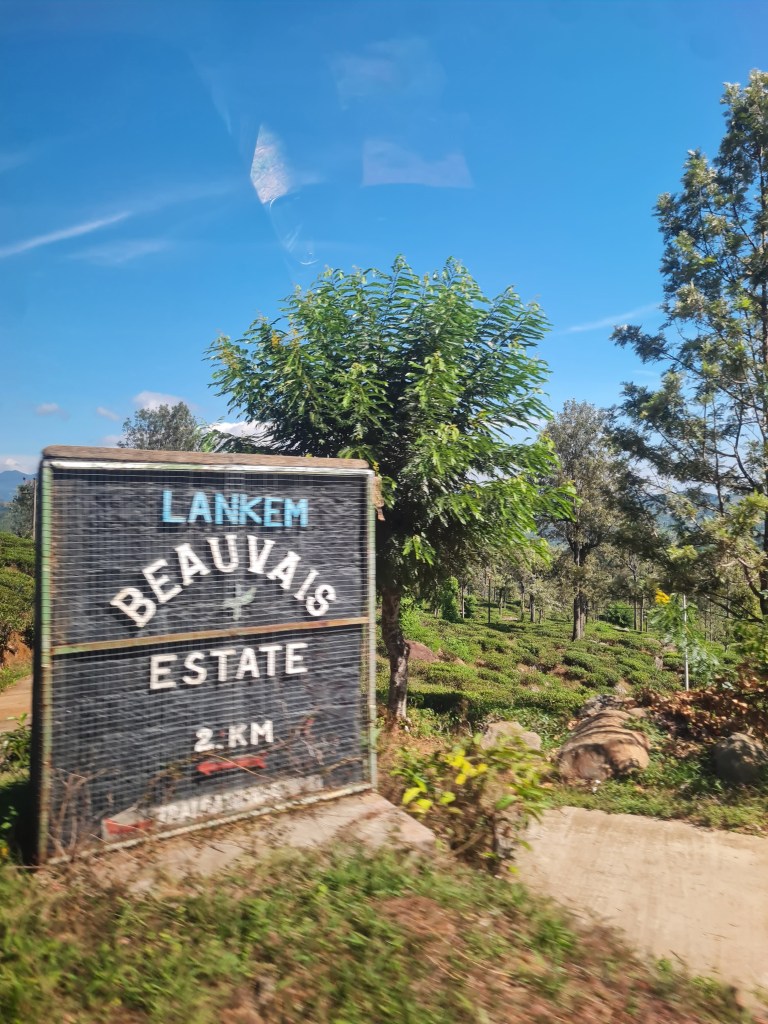
Sunday morning arrived with a chill that seeped into the bones. Our first stops were Glenanore Tea Estate and Beauvais Estate, two plantations that still whisper of Ceylon’s colonial tea legacy. We were here to meet with the Superintendent who was eager to show off his teas to Avi. Glenanore, established in the early 20th century, retains its superintendent’s bungalow, stone pathways, and a disciplined aura shaped by decades of tea production. Beauvais, smaller but equally lush, offered sweeping views of neatly clipped tea bushes cascading down the hillsides, each row a testament to human patience in the mountains.
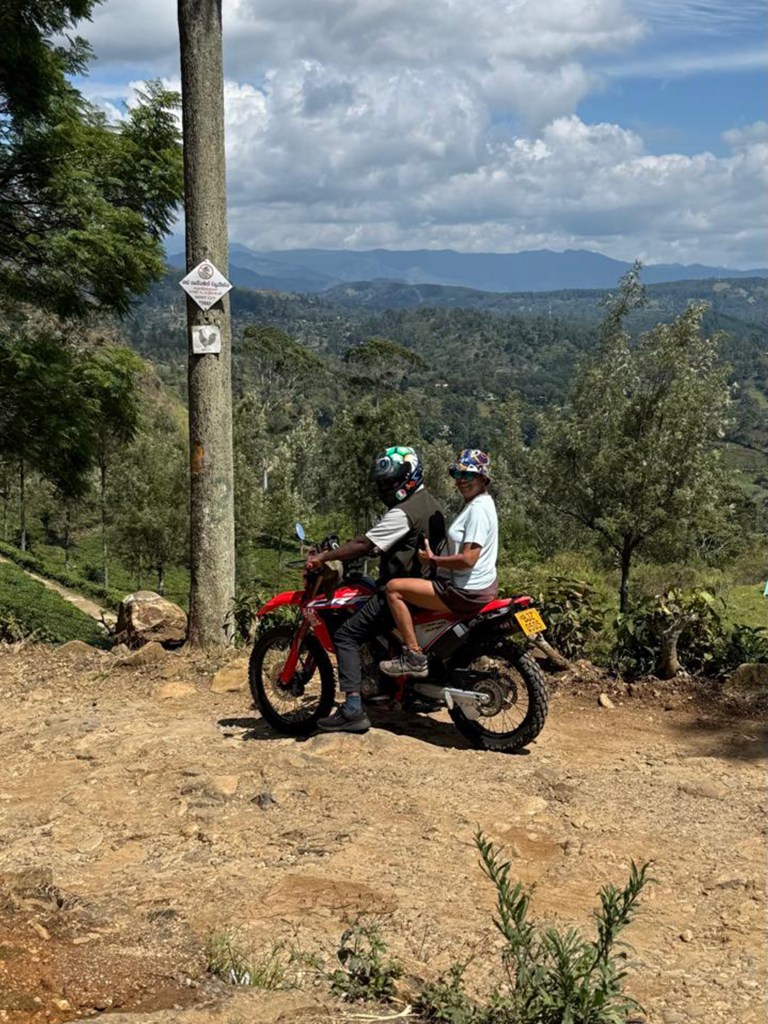
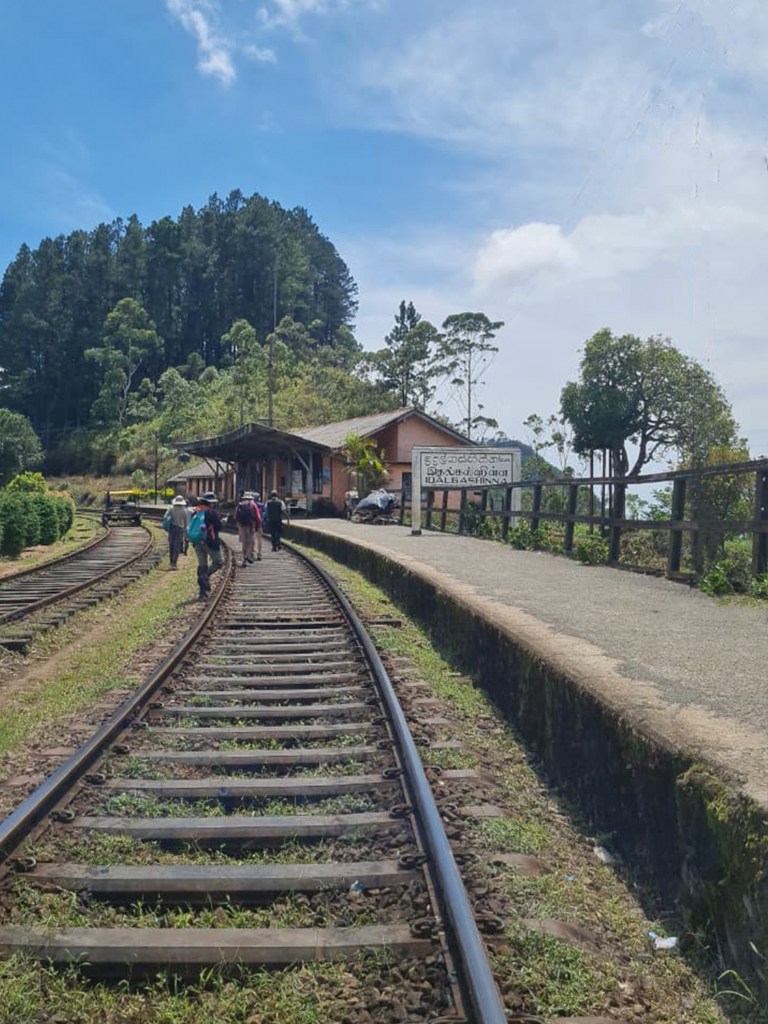
After soaking in the views and a round of freshly brewed tea and my favorite coconut and treacle wrapped in a pancake, we made our way to Idalgashinna Railway Station, often described as one of Sri Lanka’s most scenic stops. Built by the British to conquer the highlands with steel, timber, and sheer determination, the station perches above valleys, surrounded by pine forests and tea slopes. I opted for a pillion ride with the assistant superintendent, who skillfully maneuvered the bike over rocky paths and sharp precipices, a thrilling prelude to the trek ahead.
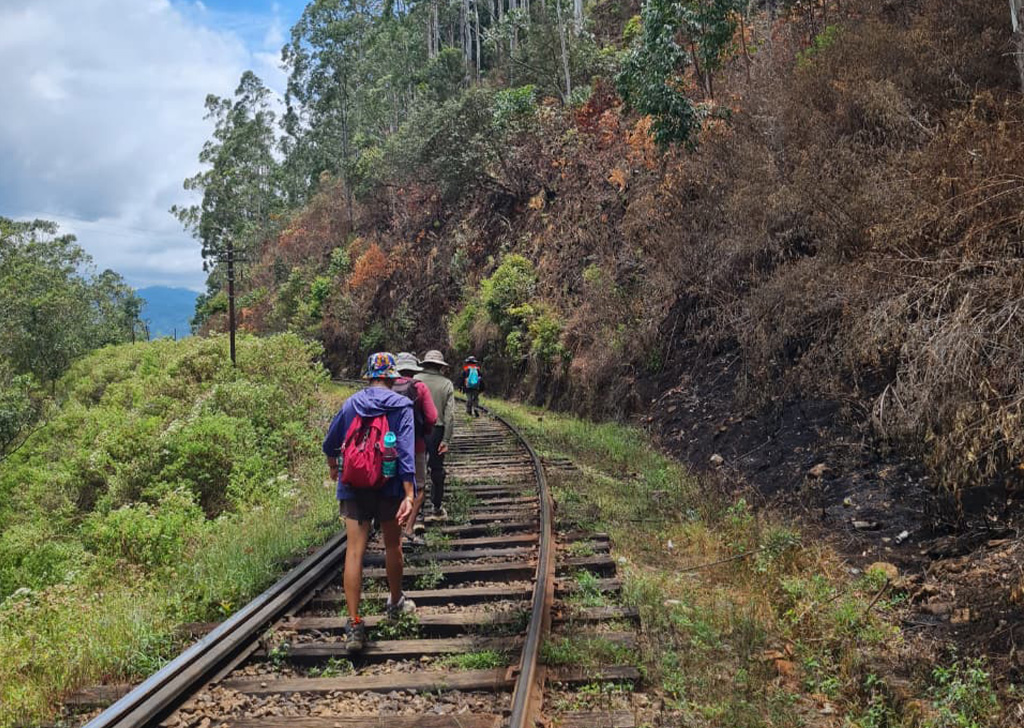
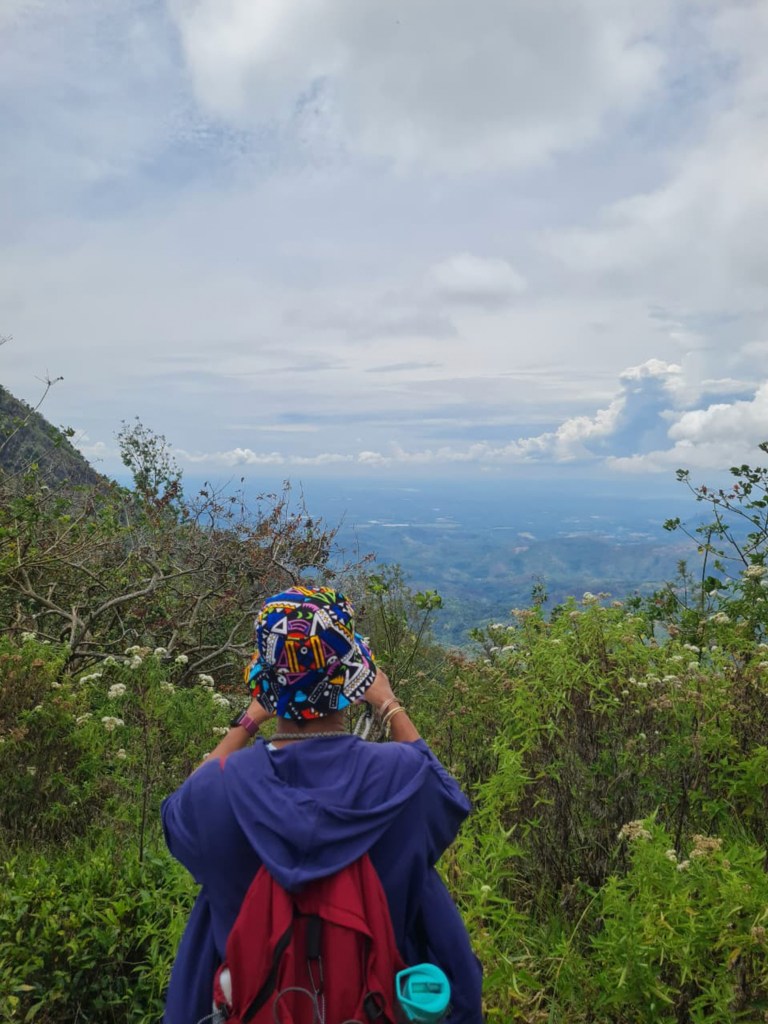
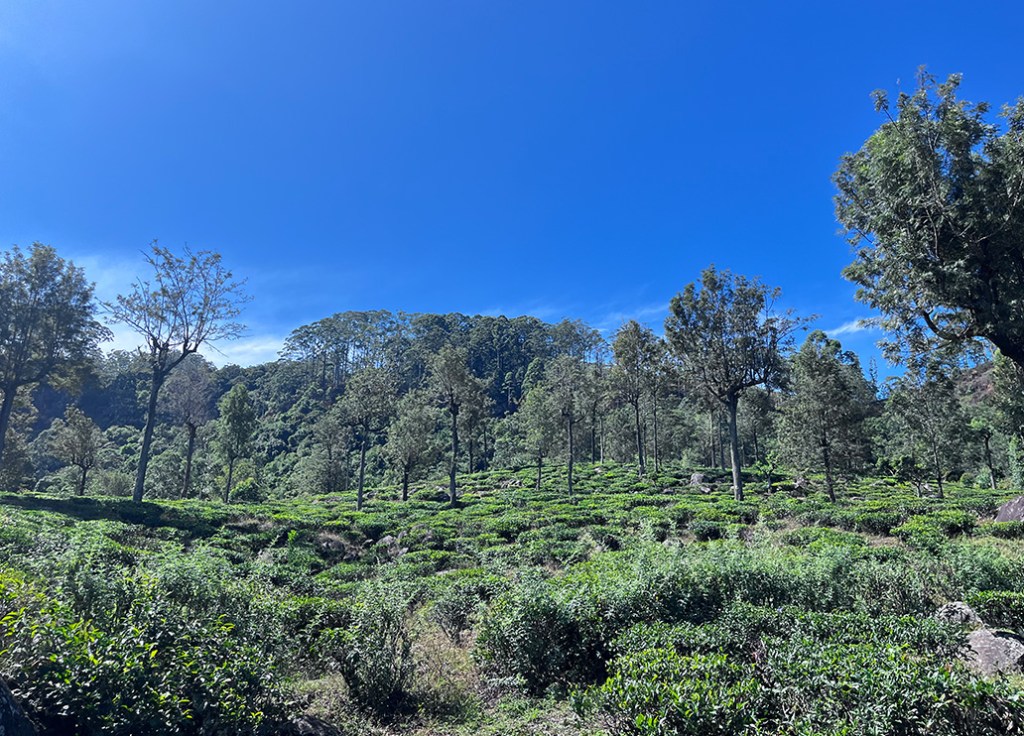
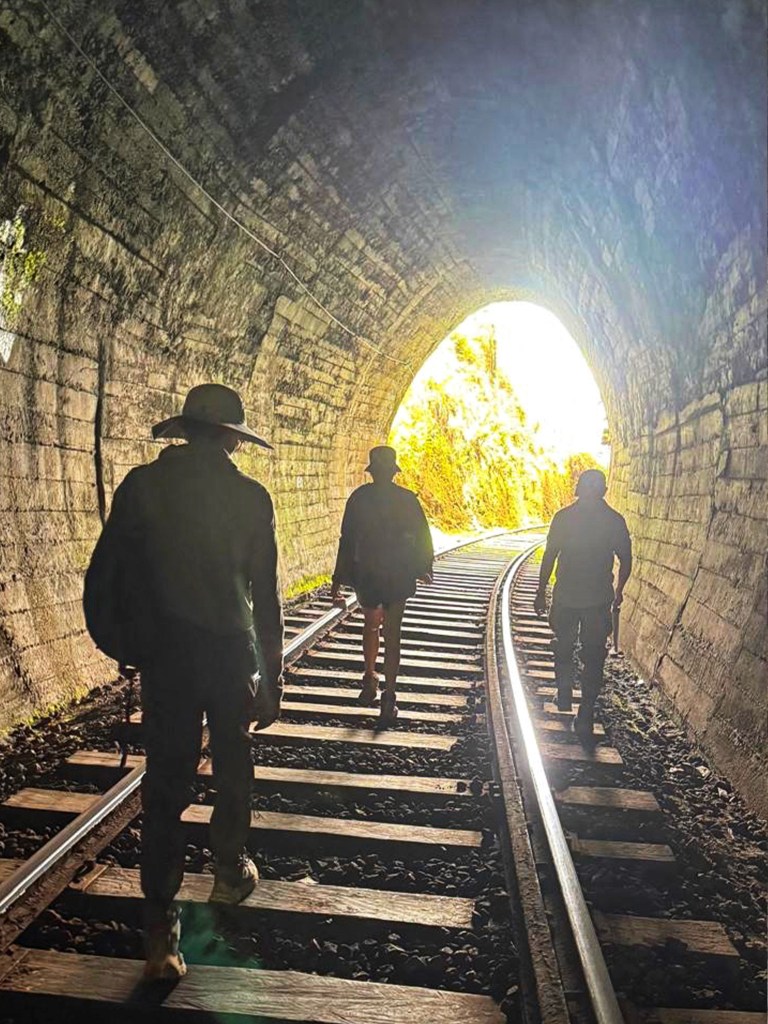
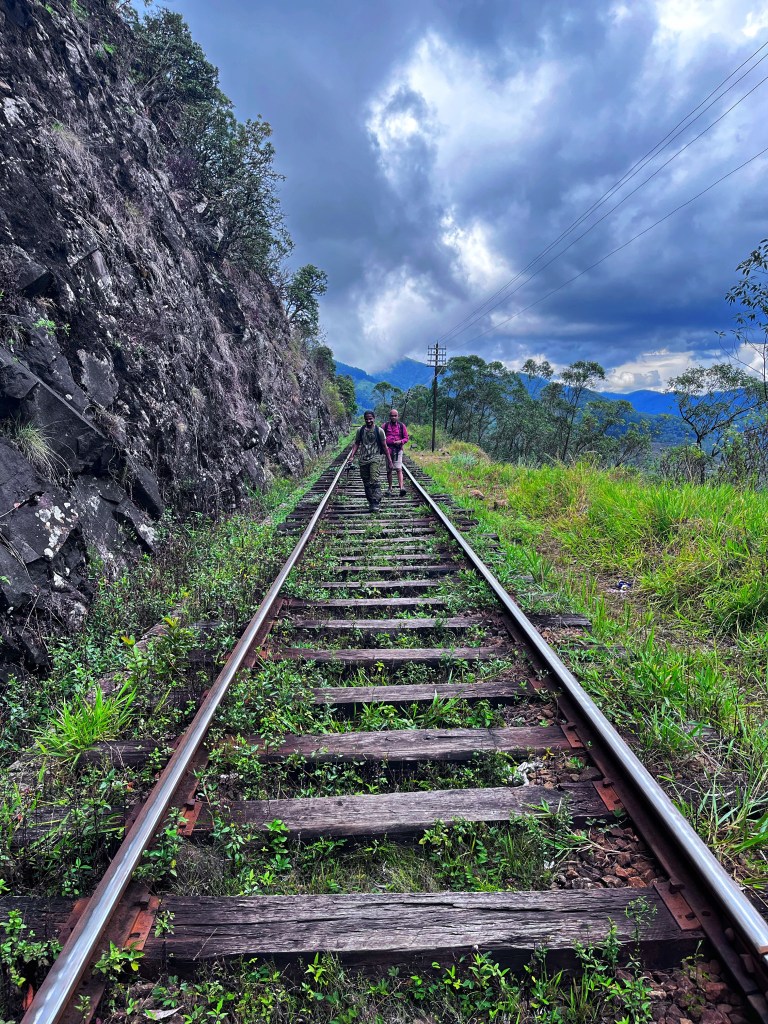
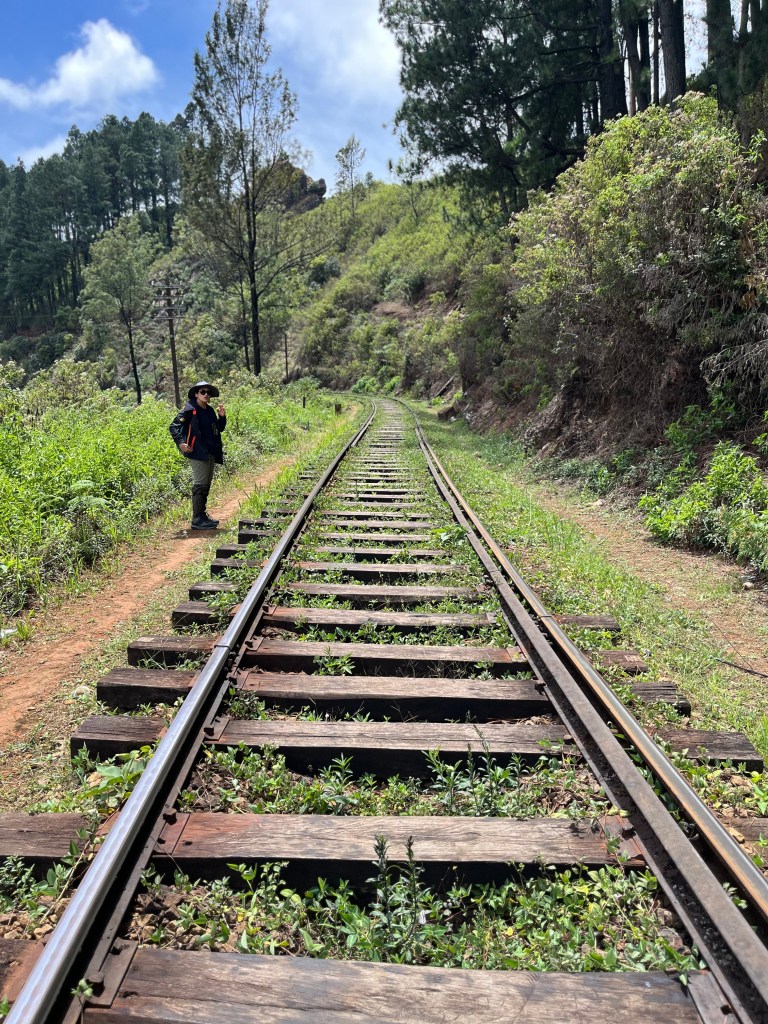
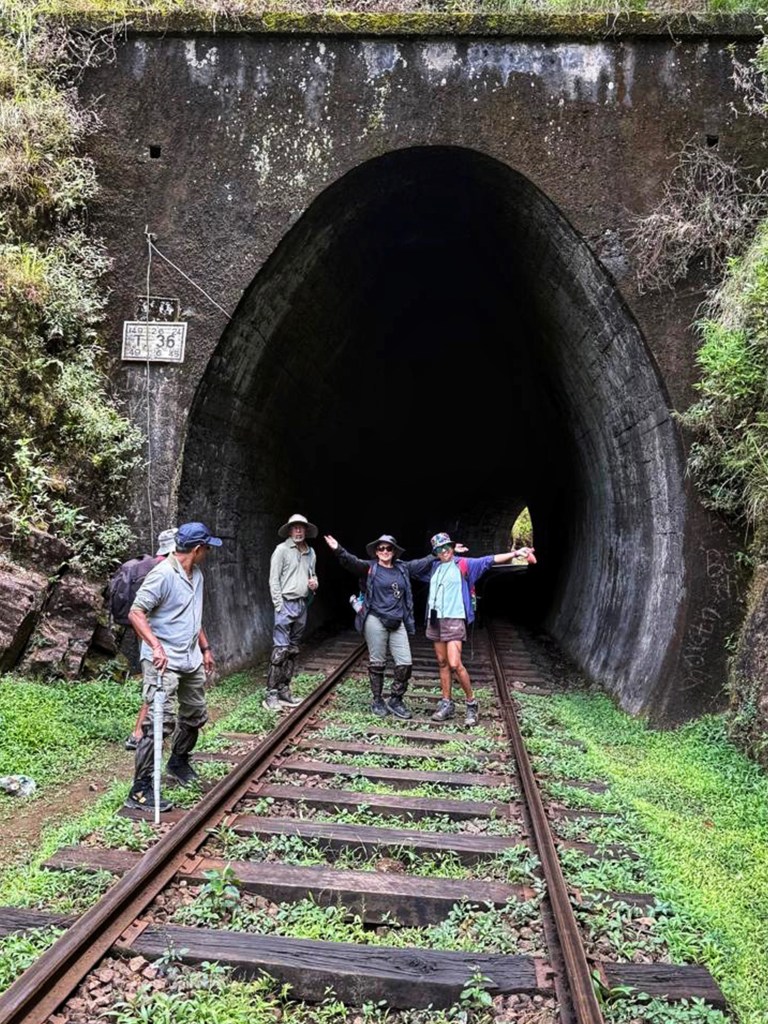

From Idalgashinna, we began our 2 km trek along the railway tracks to Glenanore. The trail was deceptively simple but mesmerizing. Each curve revealed tea slopes, pine groves, and, occasionally, a train thundering past, shaking the earth beneath our feet. Kiran and Buddhil paused to photograph birds and insects, I peered at the most dainty and deceptive wildflowers. Dark clouds chased us intermittently, threatening rain.. We managed to stay dry, though barely, and the thrill of narrowly escaping a downpour made the trek even more vivid.
The British introduced railways to Sri Lanka’s hill country in the late 19th century to transport tea from remote estates to Colombo’s ports. These tracks, now part of one of the world’s most scenic train routes, have silently witnessed a century of change: empire, independence, and now, wandering travelers like us.
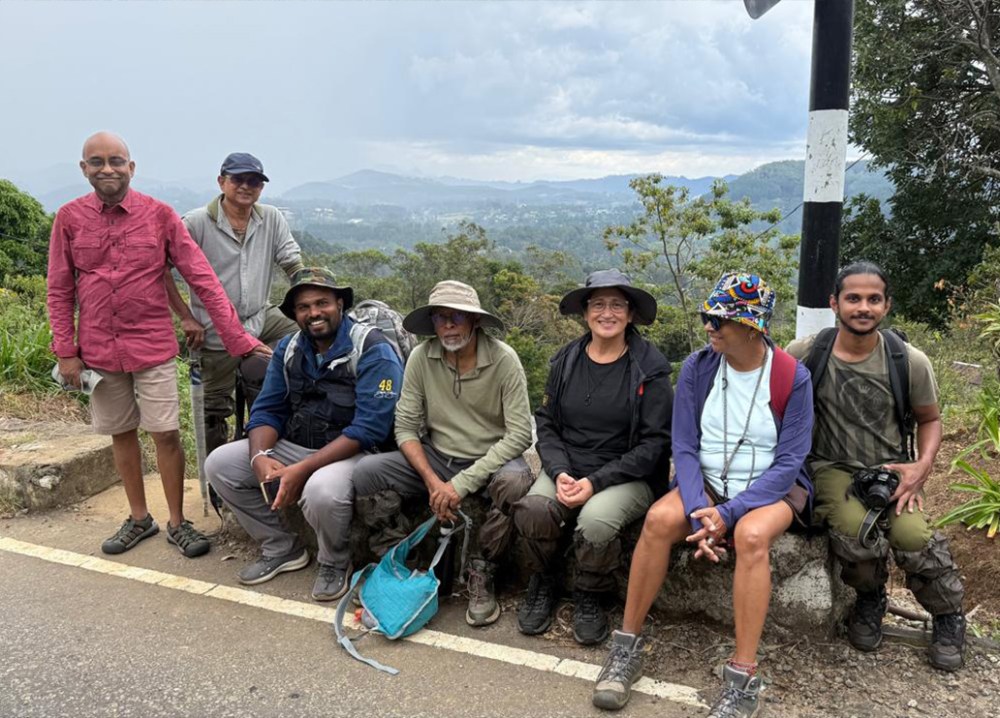
By the time we arrived at Glenanore, our legs were tired but our spirits high. A tuk-tuk ride whisked us back to the Superintendent’s bungalow, where a homemade lunch awaited: steaming rice, fragrant curries, and the comfort of food prepared with care. History lingered in the walls, in the old furniture, and in the centuries-old tea bushes outside—silent witnesses to war, independence, and modernity.
Back at Beragala that evening, we surrendered to leisure. Endless rounds of Code Names, laughter, many refills of G&Ts, and the quiet satisfaction of being fully present – the kind of moments that make you realize travel isn’t just about places, but about shared pauses in time.
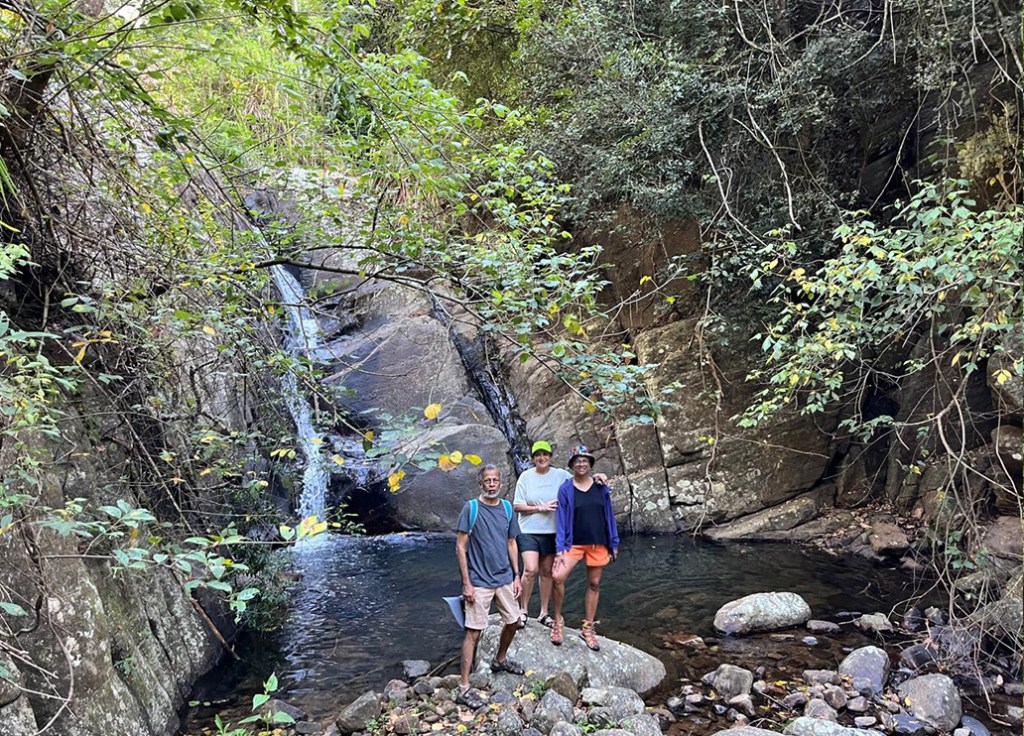
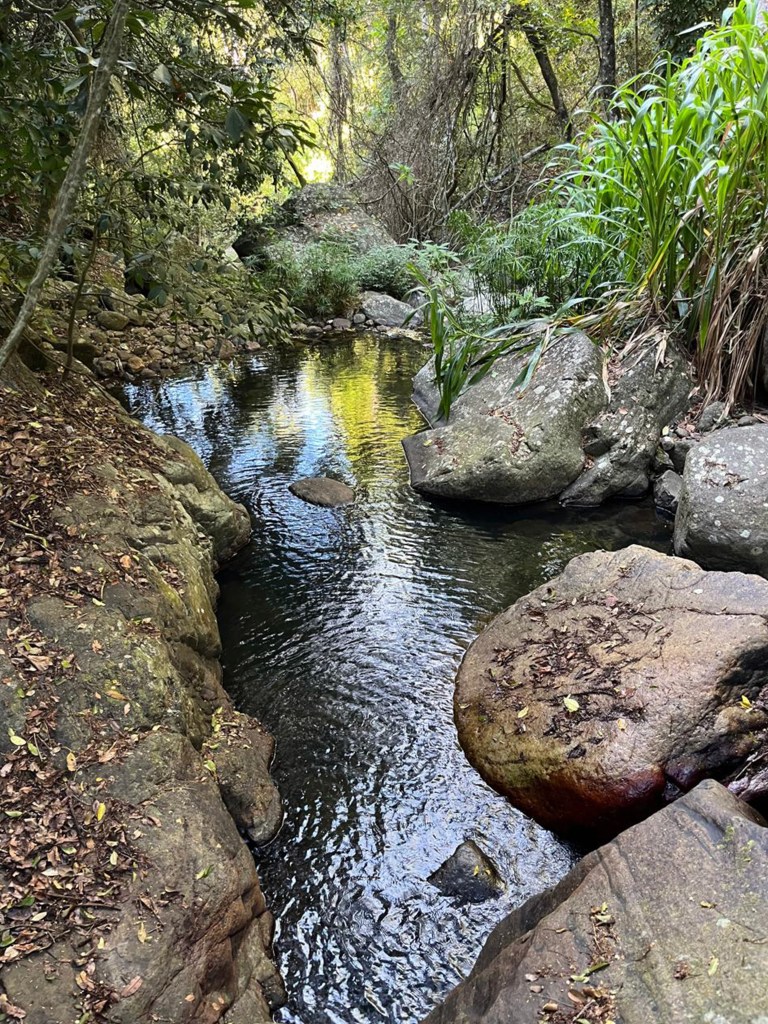
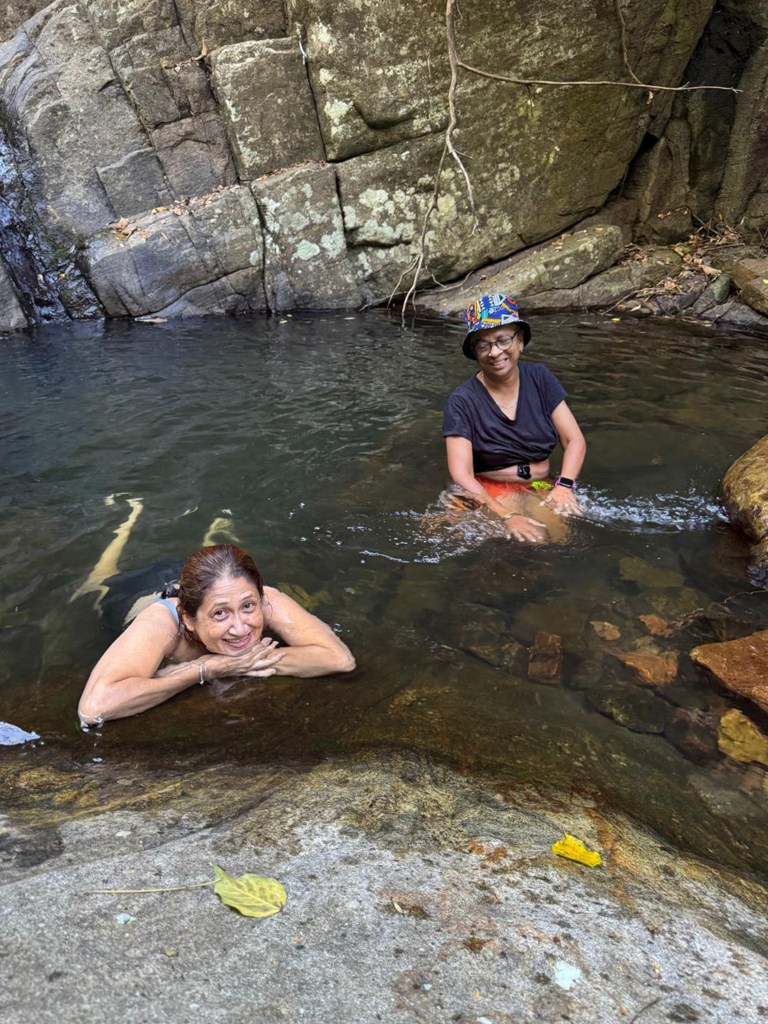
Monday morning, a Poya holiday in Sri Lanka led us to a hidden natural rock pool nearby. A short scramble down a forest path revealed clear water glistening under the early sun. The icy plunge was exhilarating, reminding us that adventure often comes in small, sharp bursts. Afterwards, we returned for a hearty breakfast and packing up to leave.
On the way back to Colombo, we stopped at Buduruwagala, a 10th-century rock temple near Wellawaya. Seven massive figures carved into stone tower above the forest floor, striking examples of Sri Lanka’s Buddhist heritage. These silent stone guardians have watched centuries of kings, pilgrims, and travelers pass by, a tangible link to a world far older than our fleeting footsteps. Standing before them, mountains behind, it was impossible not to feel small—and profoundly grateful to witness history in motion.
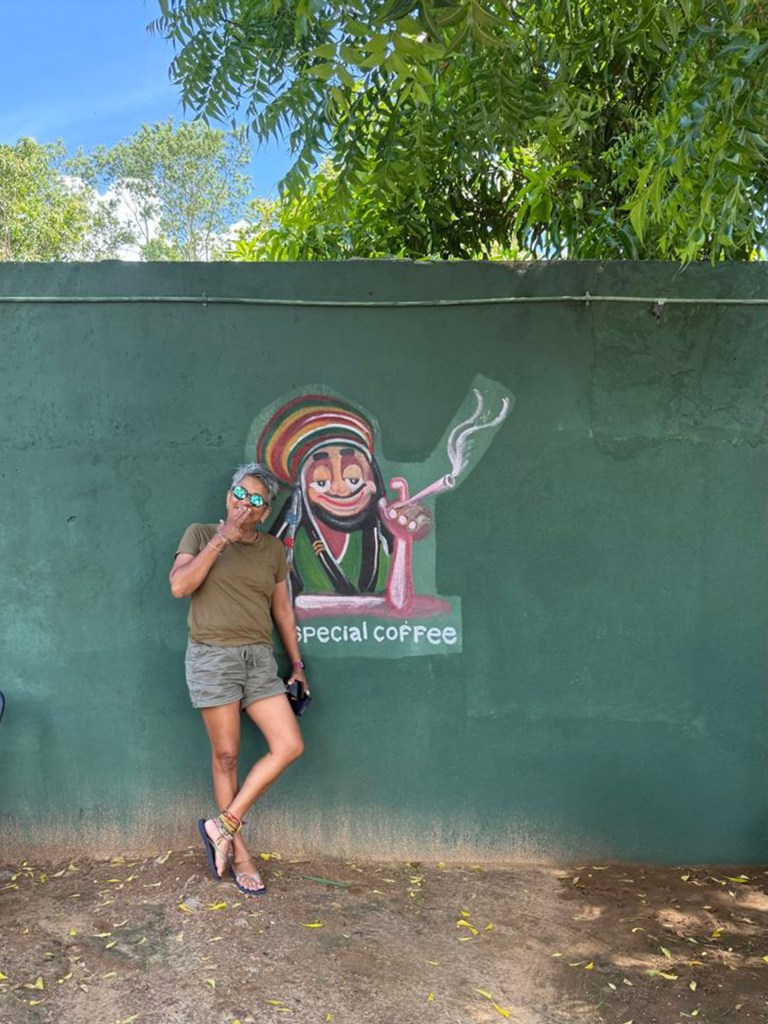
Our final stop was a coffee break at Gami Gedera in Thanamaliwila, where a perfectly brewed cup paired with a signature punch offered a final thrill for tired travelers. The road home wound through hills now bathed in late morning light, leaving us with the quiet exhilaration of mist, tracks, tea, and stone, a reminder that Sri Lanka’s hidden corners hold layers of stories for those willing to wander.
For six friends, it was laughter and silence, adventure and reflection, a few days suspended between past and present. Beragala doesn’t demand attention—it earns it. And for those willing to wander, it leaves marks that linger long after the last train has passed.
 Mihipedia.lk
So gorgeous!!!
LikeLike
Thanks Susan. I’m still awaiting your visit 🙂
LikeLiked by 1 person
Thanks for sharing Mihiri !
Kind regards | Vinodh Wijetunga
LikeLike
Thanks Vinodh. This trip on a bike would be as wonderful 🙂
LikeLike