
On a cool, mist-shrouded morning in Kandy, just steps from the rhythmic drums of the Temple of the Sacred Tooth Relic, stands a building that breathes history. The 400-year-old Ehelepola Walawwa has seen the best and worst of humanity. Once the grand residence of a Kandyan nobleman, later a colonial prison, it is now reborn as Sri Lanka’s first international-standard wax museum, housing the spirit of an entire kingdom.
Entering it means walking through its scars. The first passage is the old Prison Arcade. What were once forty windowless cells where the British imprisoned 53 Kandyan chieftains and monks after the 1818 rebellion, have now been converted into a sleek shopping corridor called Shop on Parole. Heavy iron doors and thick whitewashed walls that once broke the spirits of men like Keppetipola Disawe have become glass-fronted boutiques selling silk, tea, brass, and hand-painted pottery. The contrast is jarring.
At the ticket counter, two warm, knowledgeable locals guide me. Each wax figure is paired with a QR code that reveals the full story behind the person, place, and moment.
Inside, the first thing that hits me is stillness. The air is faintly chilled, carrying old wood and a trace of incense. History is frozen in wax, but with such finesse that it feels alive. Up close, I notice details invisible from the doorway: a crease at a king’s eye, uneven fingernails, veins blooming faintly beneath translucent skin, a monk’s chest rising as if mid-breath. I honestly feel that these figures might blink if I look away too long.
The Spiritual Heart
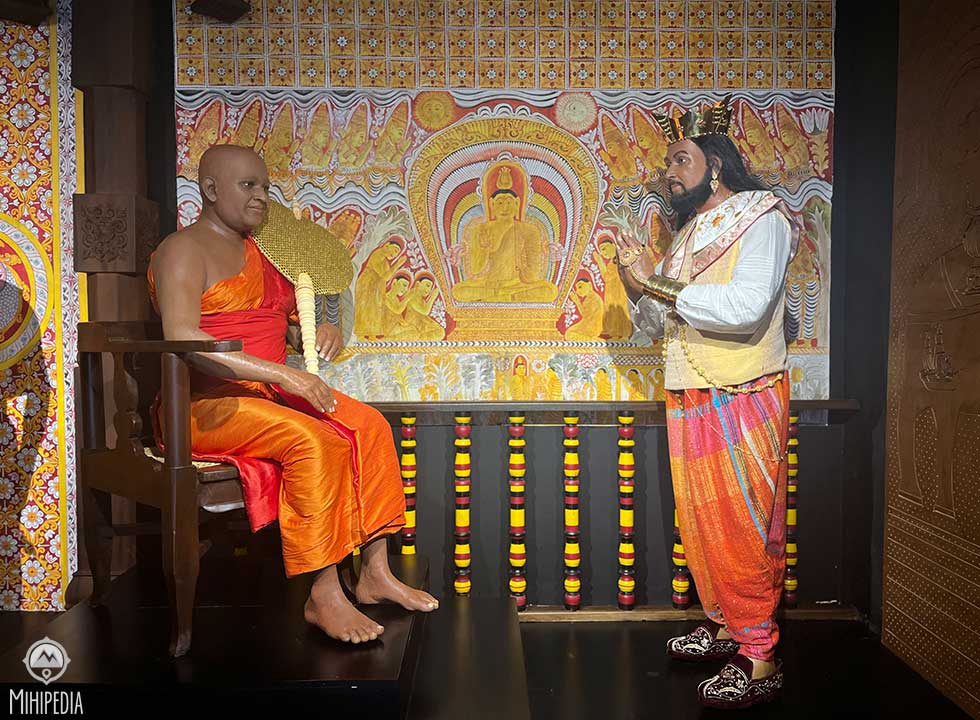
I meet Ven. Weliwita Sri Saranankara Sangharaja Thera, reviver of Buddhism in Sri Lanka. At a time when ordination lineages had collapsed and temples lay abandoned, he restored Upasampada by inviting monks from Siam in 1753. The palm-leaf manuscript before him is warped by centuries. His fingers are faintly ink-stained.
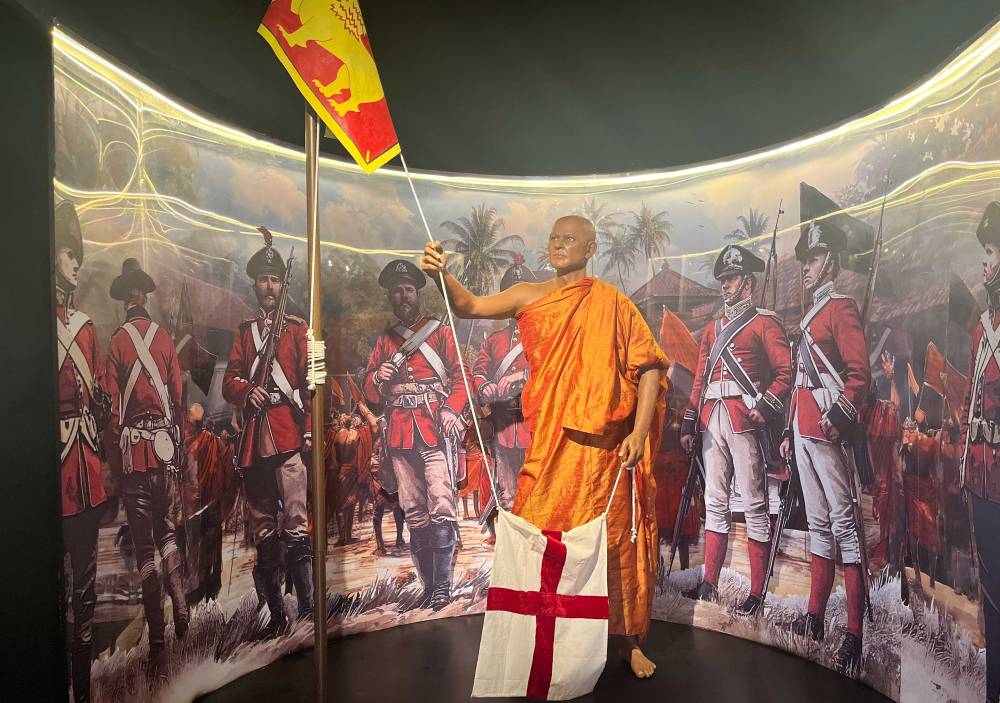
Nearby stands Ven. Wariyapola Sri Sumangala Thera, frozen in the legendary moment of 1815, reaching to tear down the British flag before the Kandyan Convention. Tendons taut, lips parted in breath, he is motion itself. Later, he will rally resistance in 1818.
The Kings and Queens
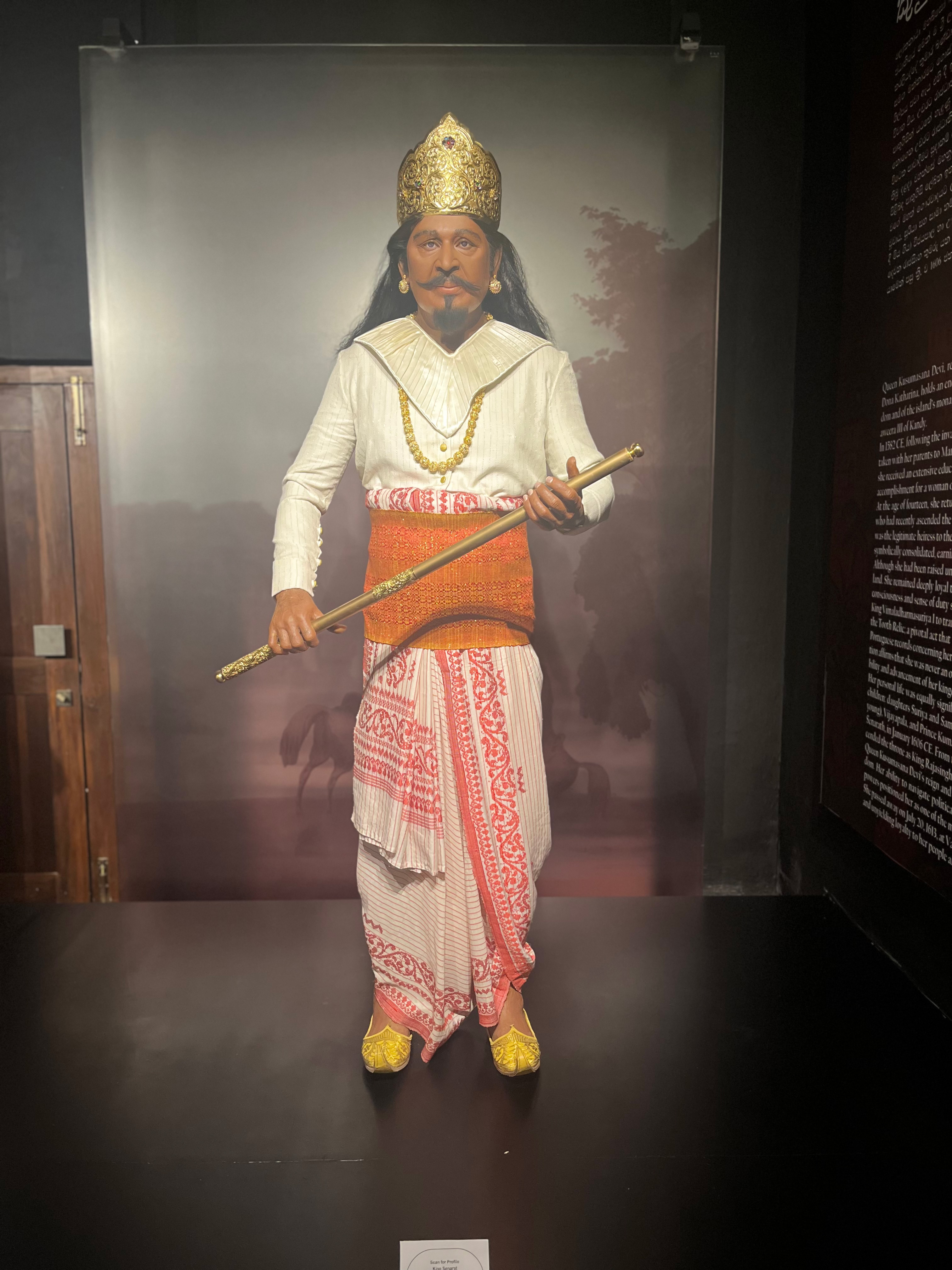
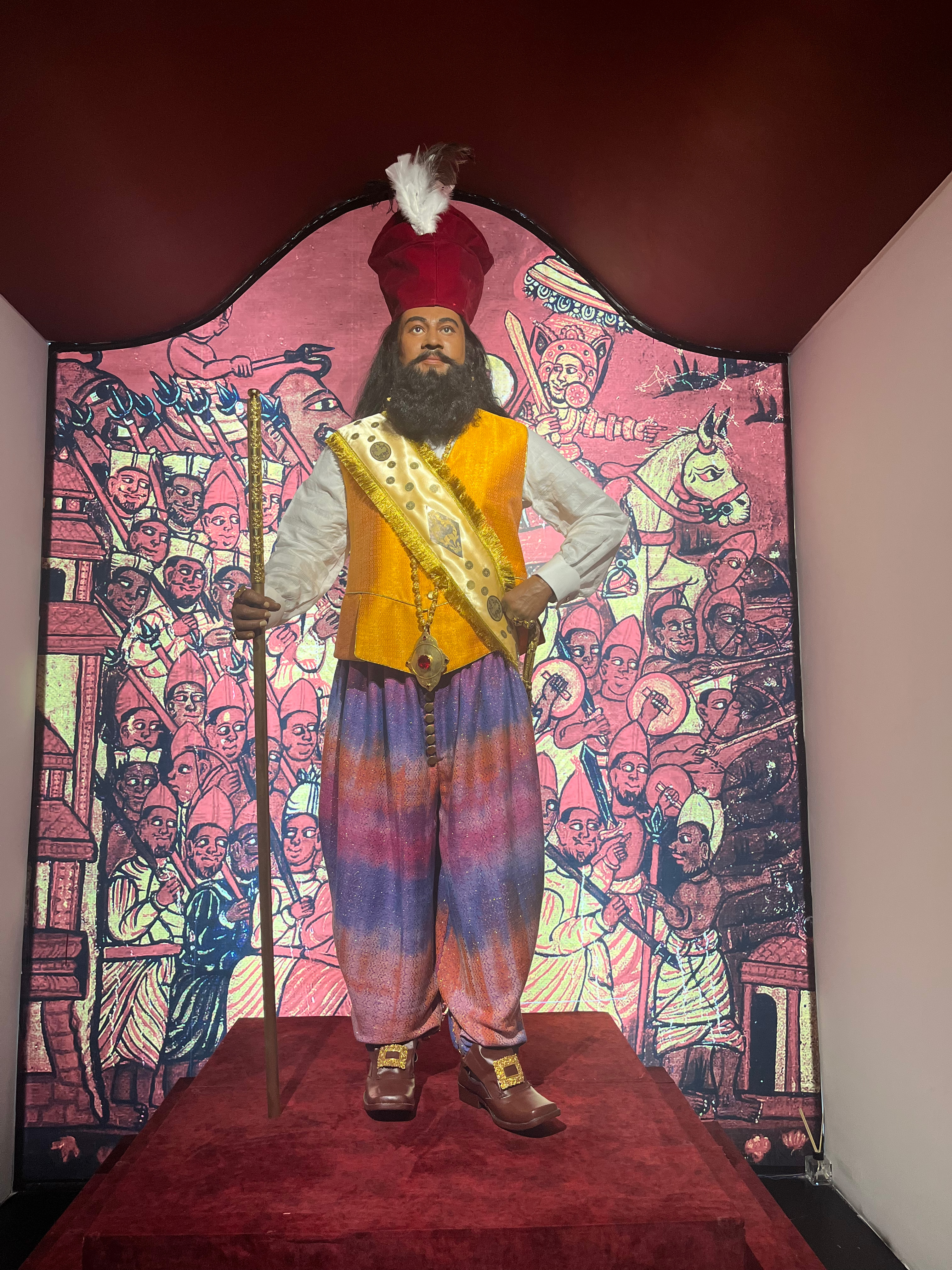
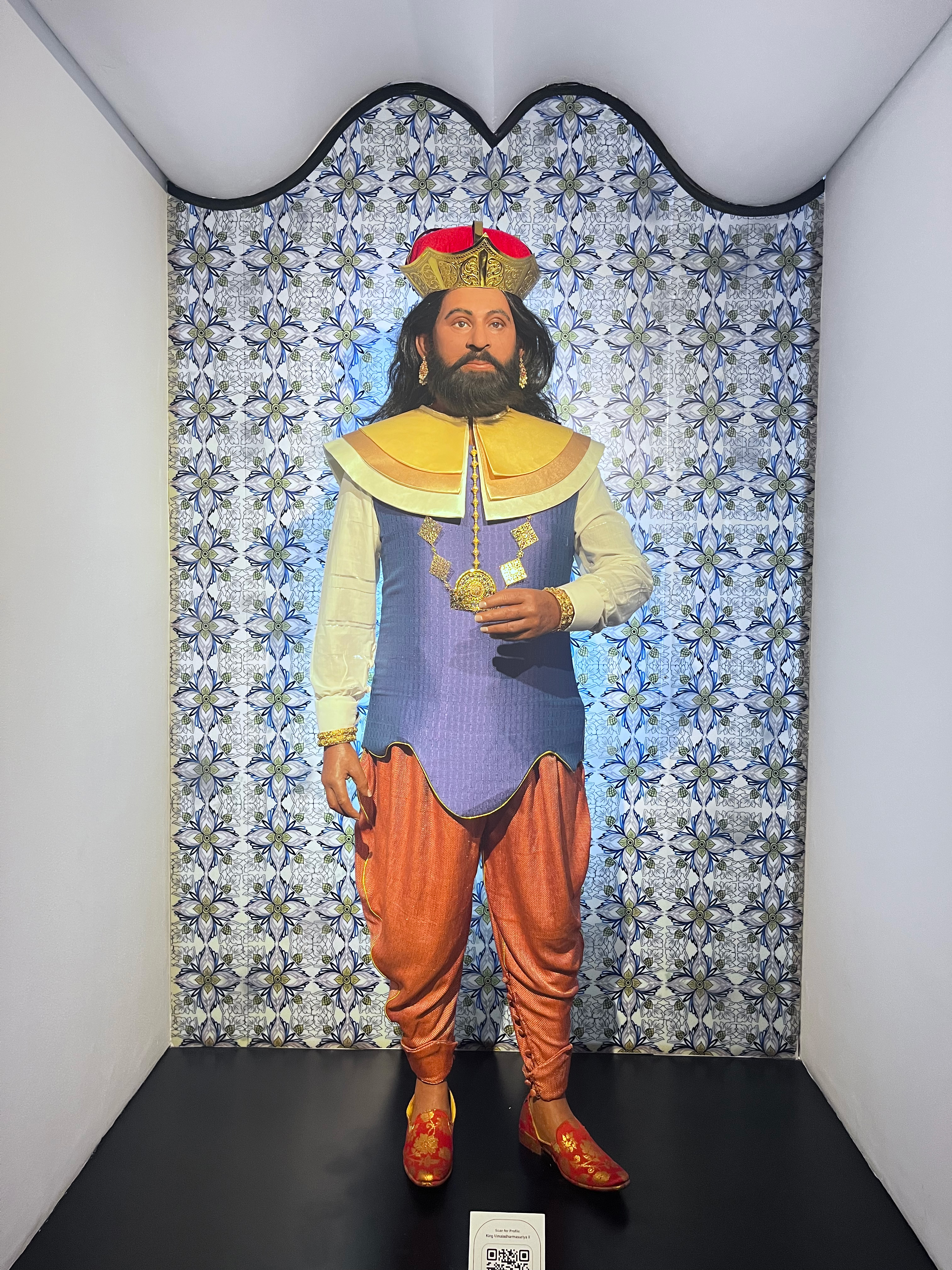
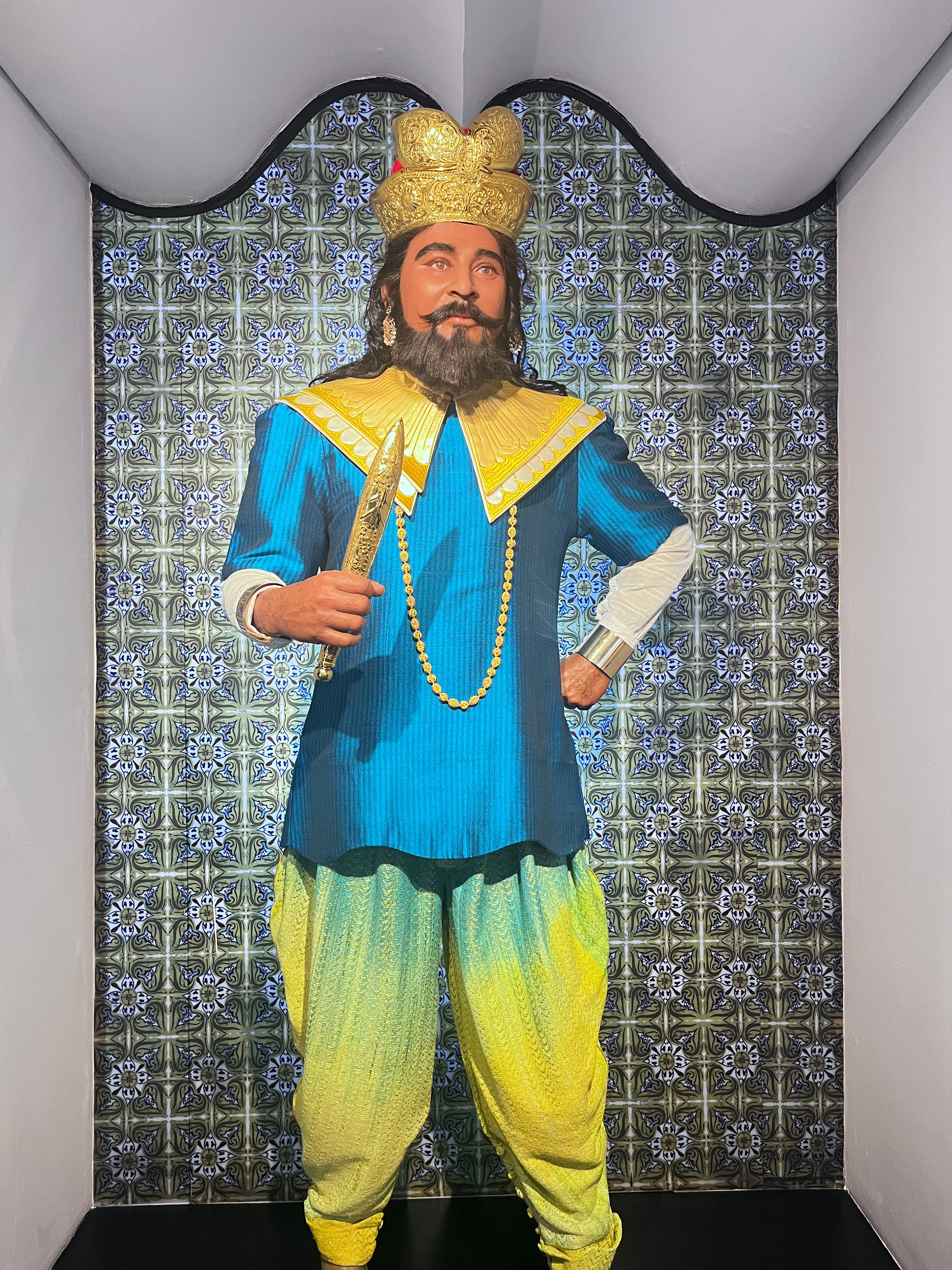
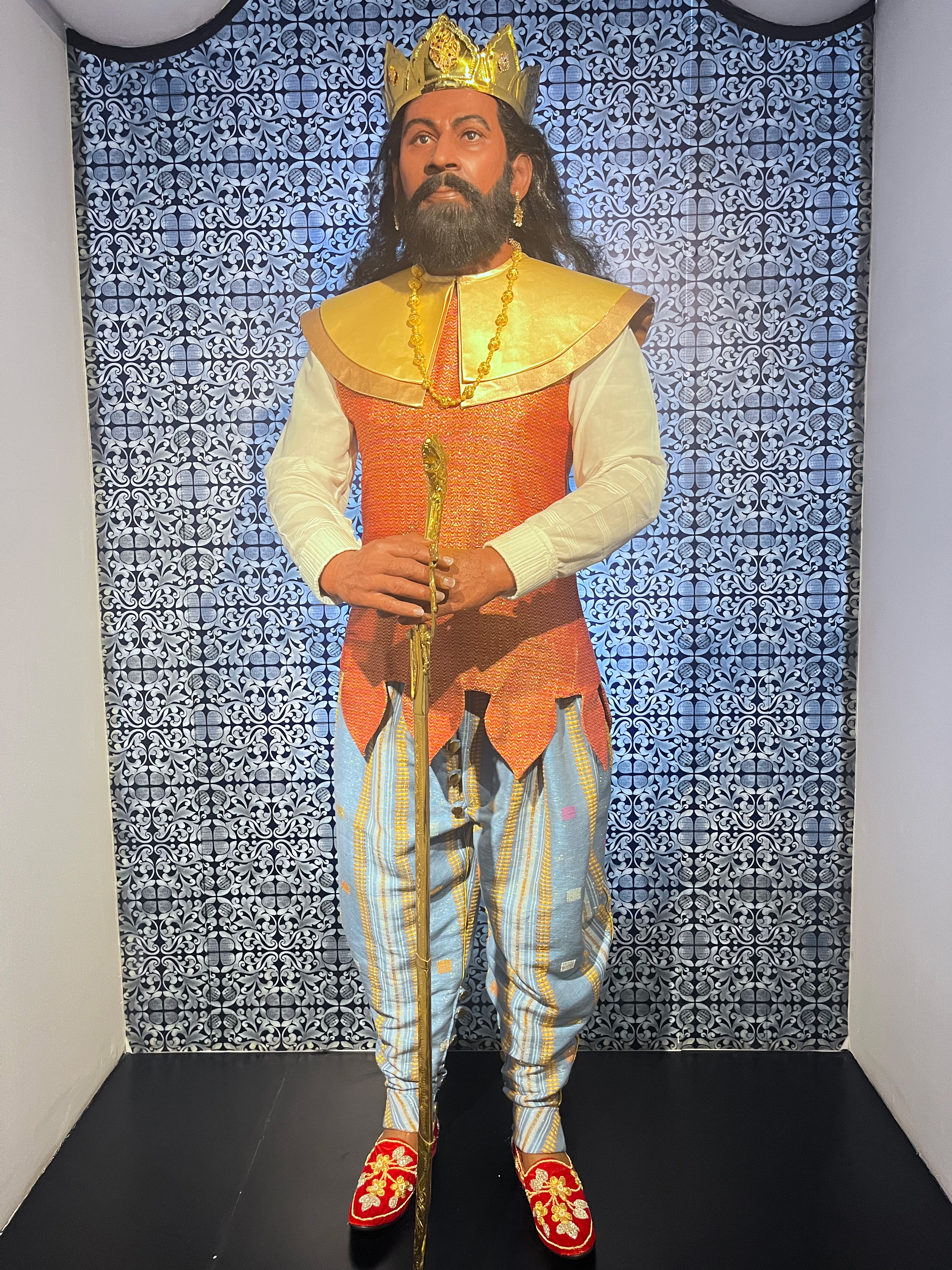
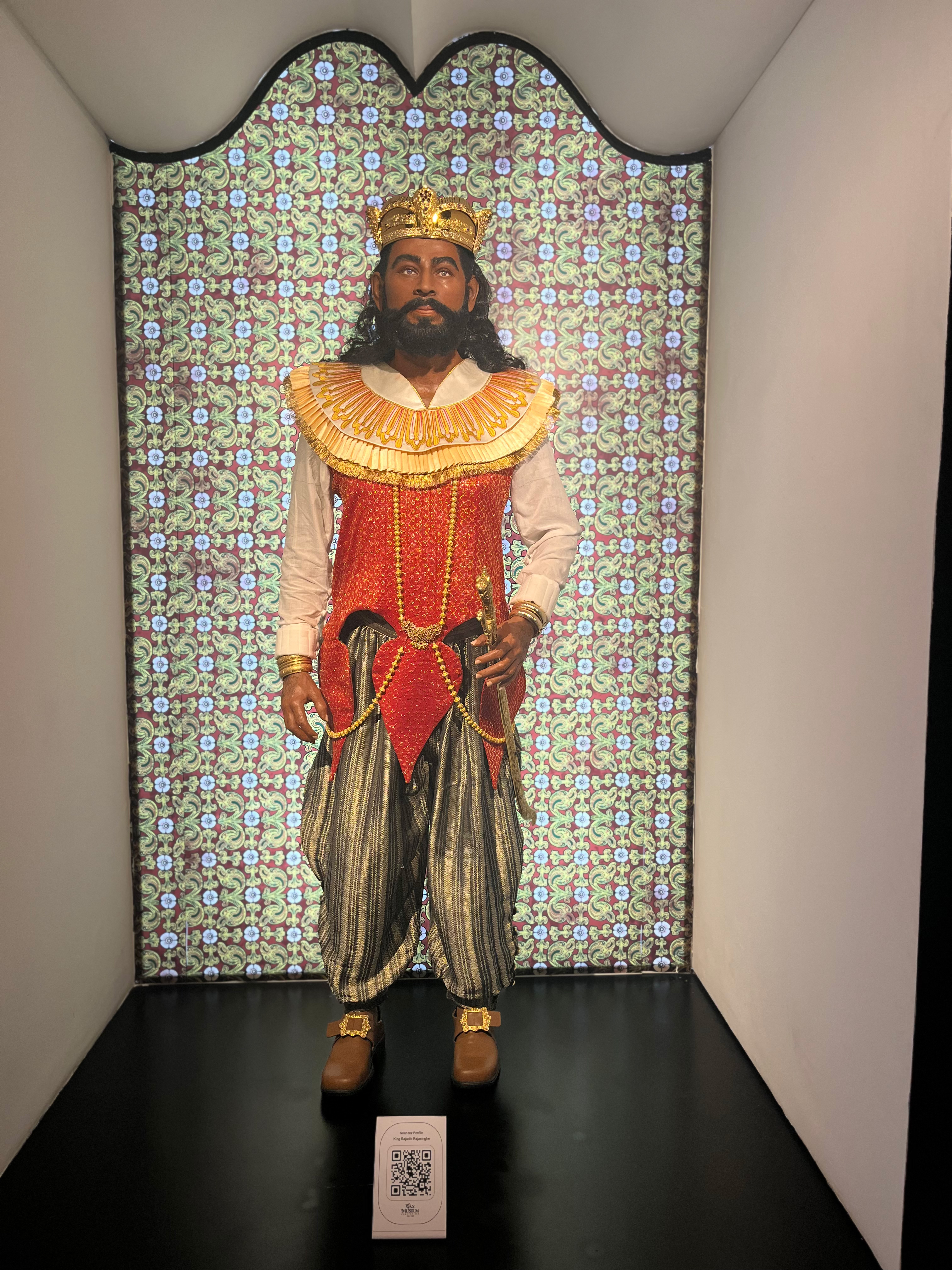
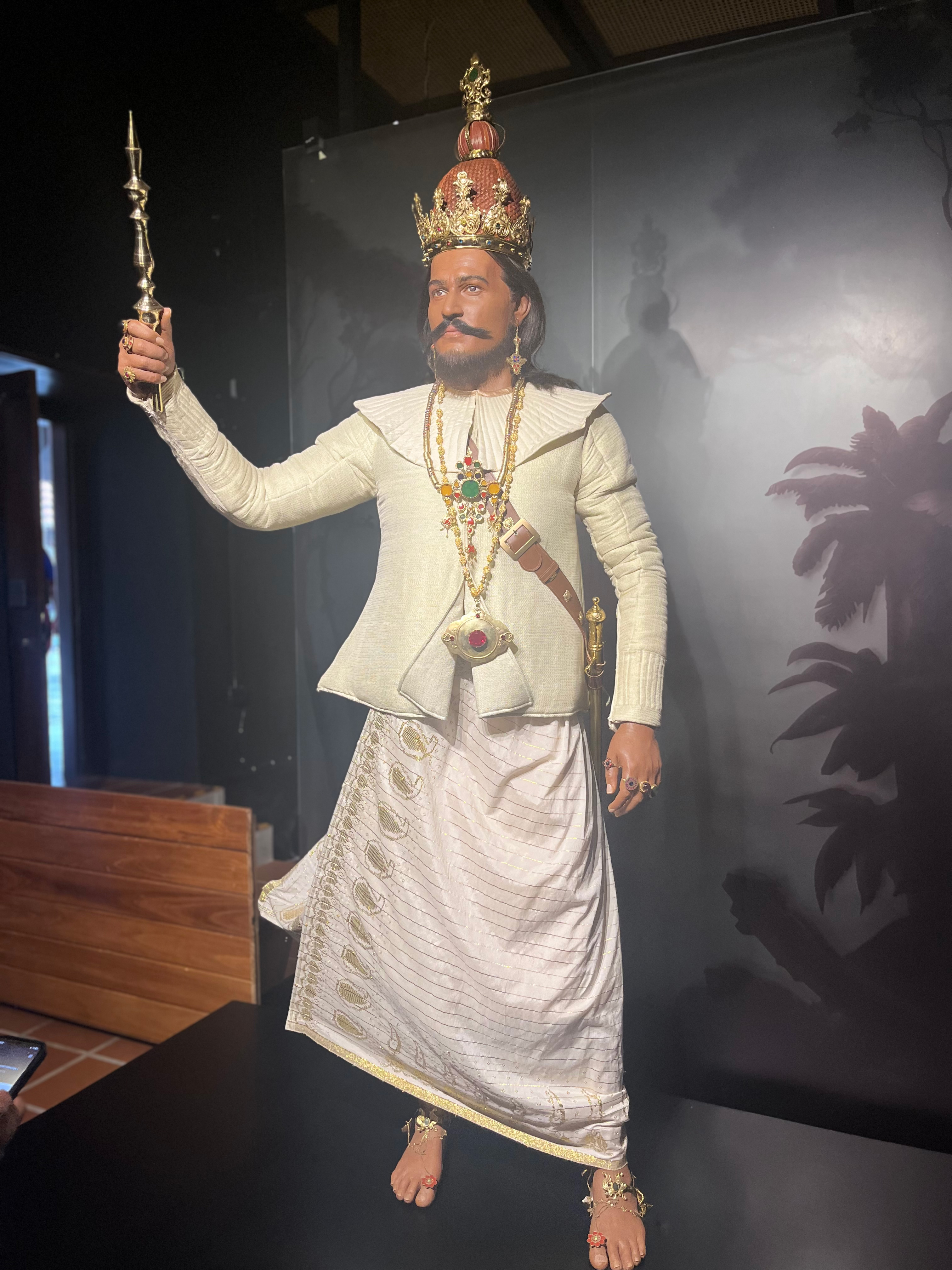
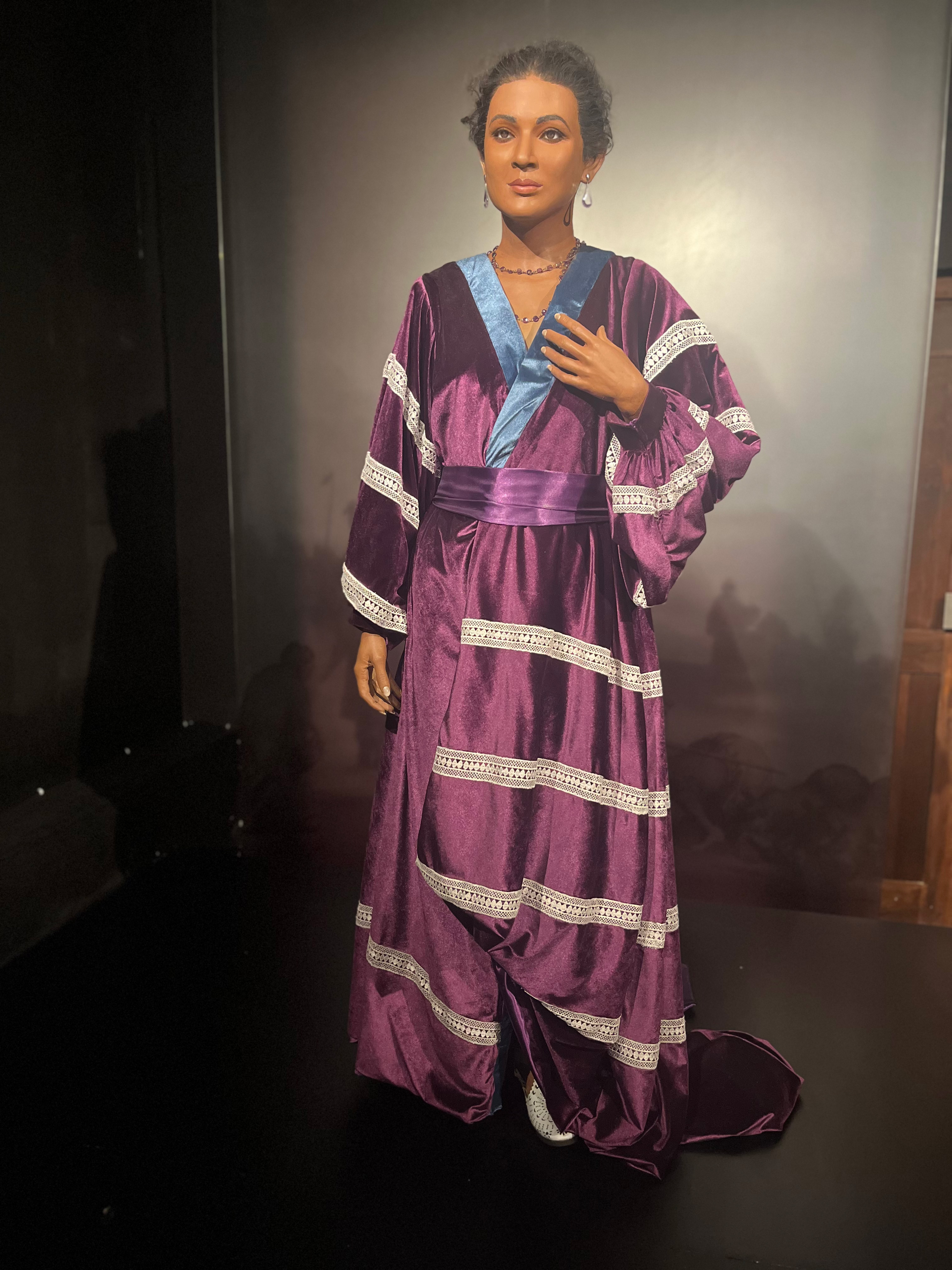
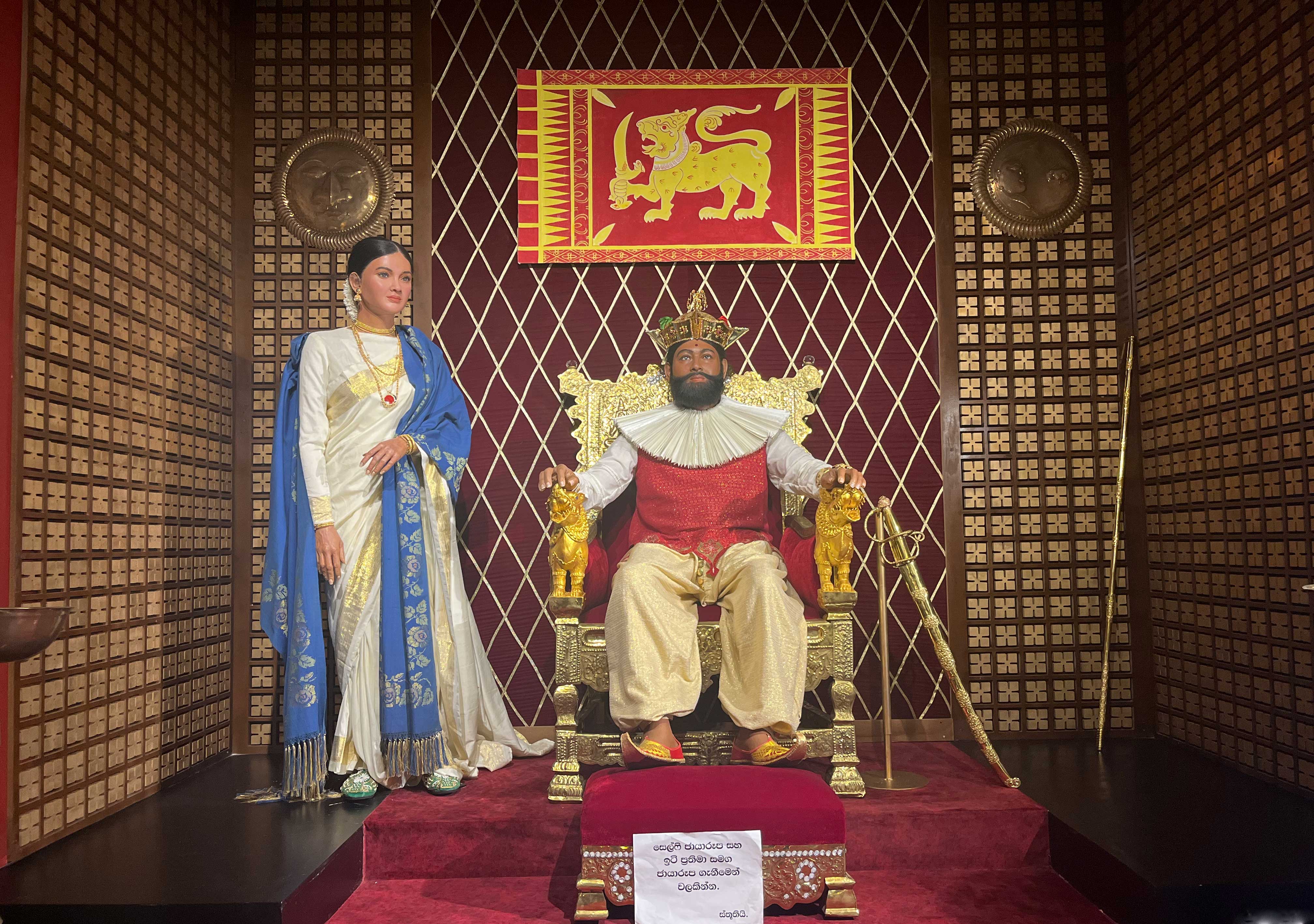
Then come the kings. Vimaladharmasuriya I stands broad and grounded. By restoring Buddhism and bringing the Sacred Tooth Relic to Kandy, he transformed this hill city into the island’s spiritual heart. His crown looks heavy; his shoulders seem to know it. Beside him is Queen Kusumasana Devi, born Kandyan, raised Portuguese, her beauty restrained, her gaze distant, belonging fully to neither world.
King Senarath follows, a former monk turned ruler, navigating survival more than conquest. Then, there is King Kirti Sri Rajasinha, remembered for preservation, temples restored, rituals revived. Then, King Sri Wickrama Rajasinghe, the last king of Kandy. Often reduced to a tyrant, here he is complex: ornate, isolated, watchful. Brilliance and paranoia share his posture.
Royal consorts and court ladies surround them, draped in fine Kandyan textiles, hair oiled and coiled, jewellery heavy at the throat. These women carried dynasties forward, restoring gender to a history often told only in male voices.
Resistance and Rebellion
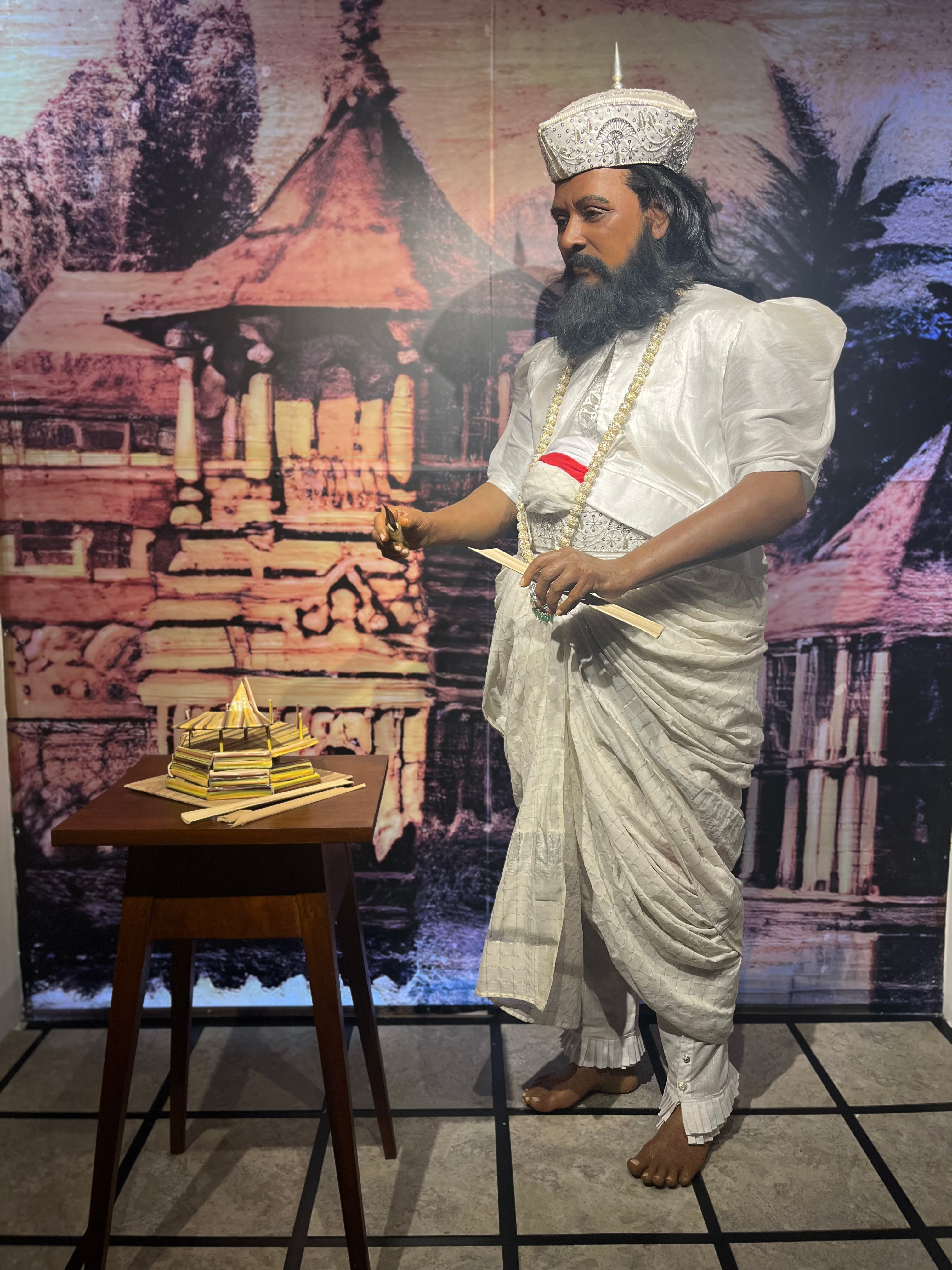
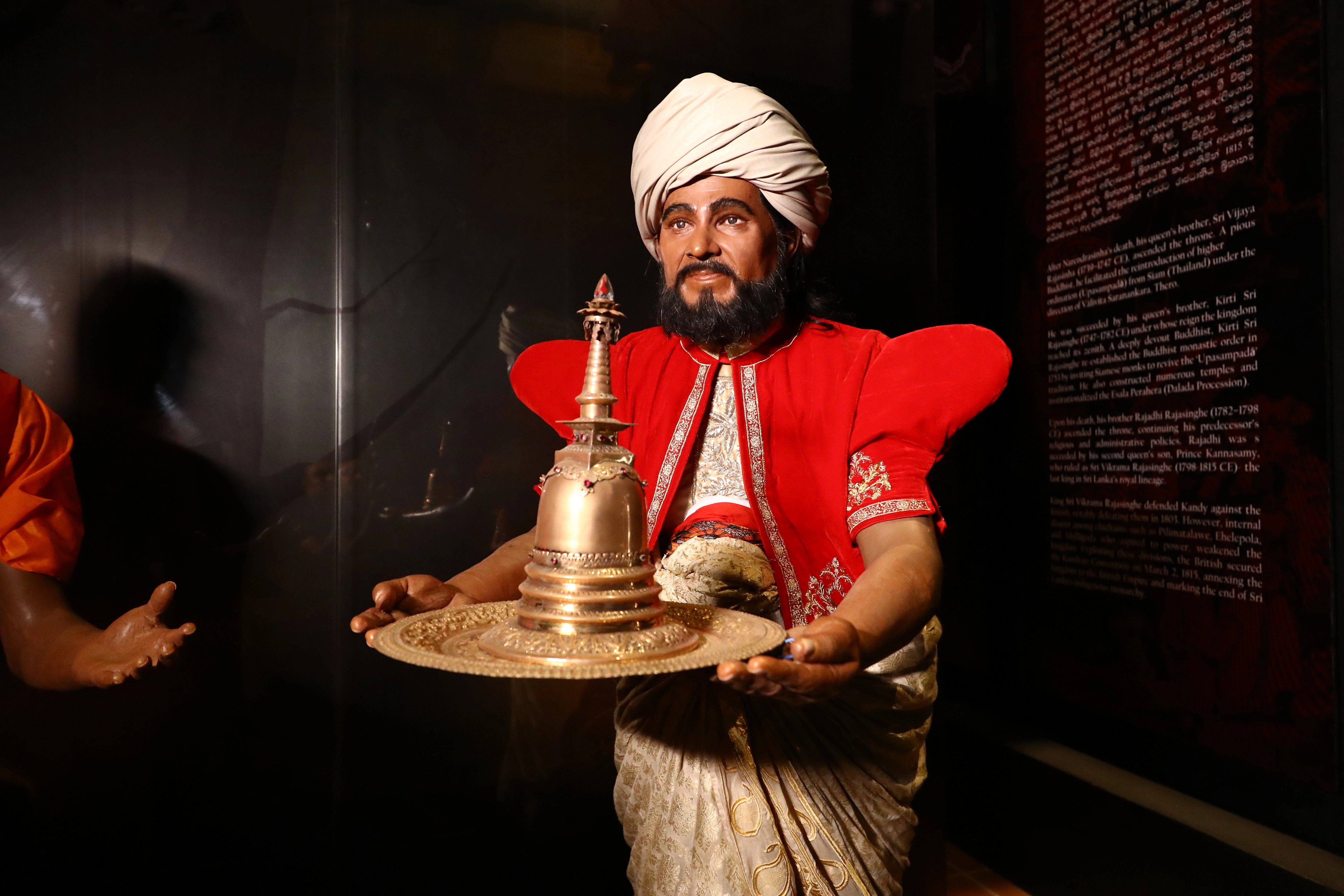
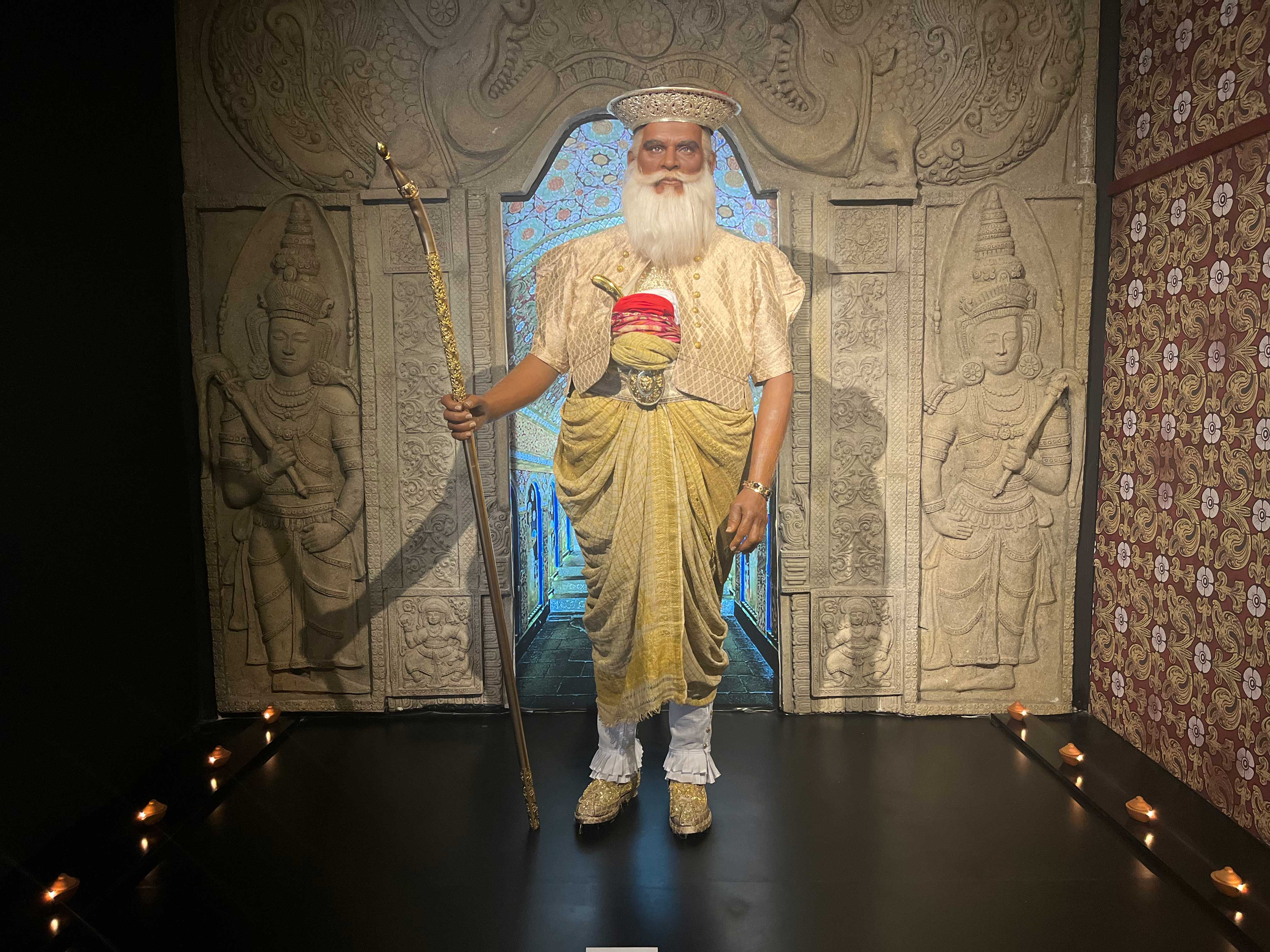
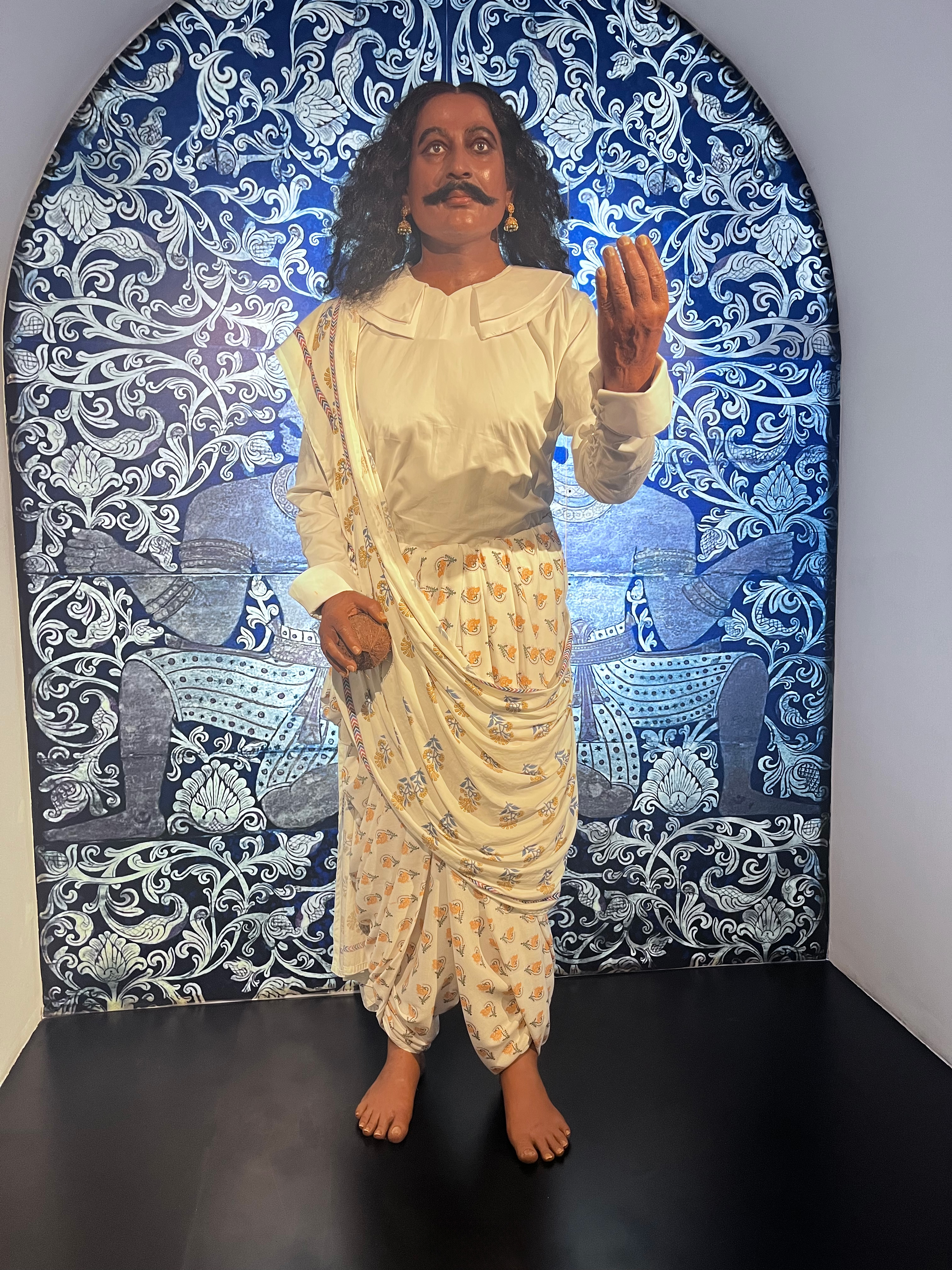
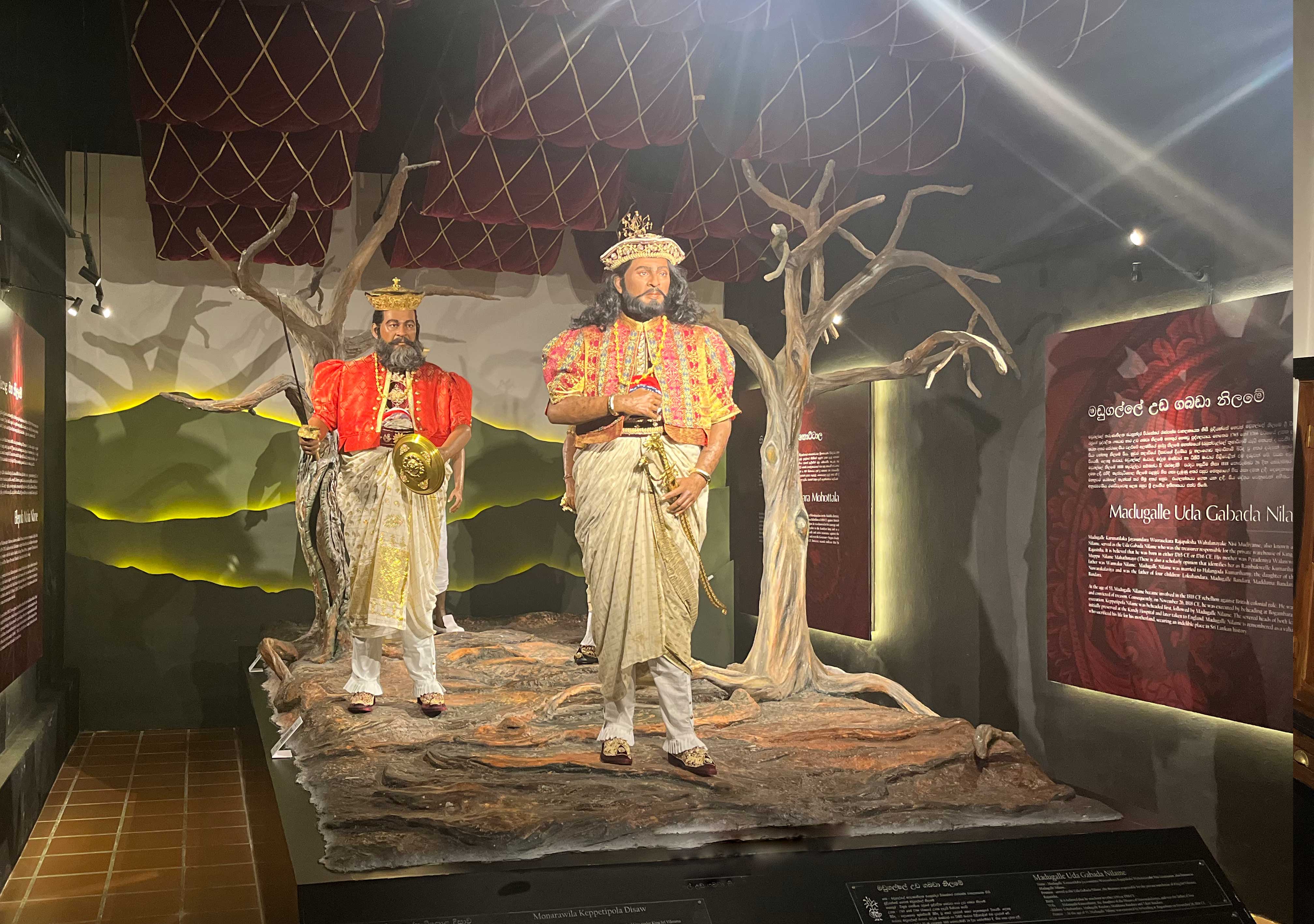
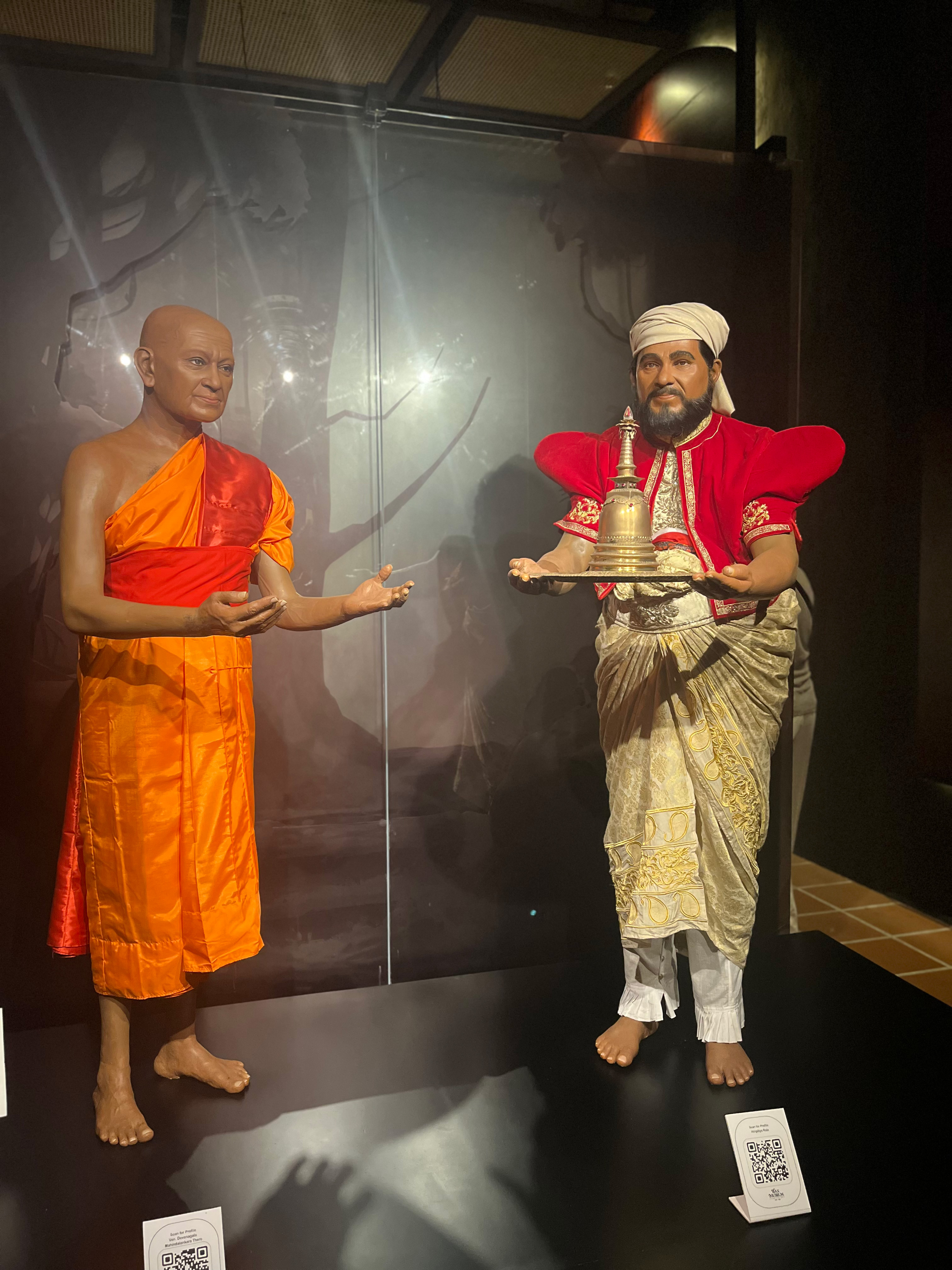
The mood shifts. Monarawila Keppetipola Disawe stands in quiet dignity. Appointed by the British to suppress rebellion, he defects, returns their weapons, and raises Uva. Captured and executed, he refused clemency. His tuppottiya is folded in the precise 64-fold Uva tradition. His chin lifts not in defiance, but in acceptance. His eyes do not plead. They remember.
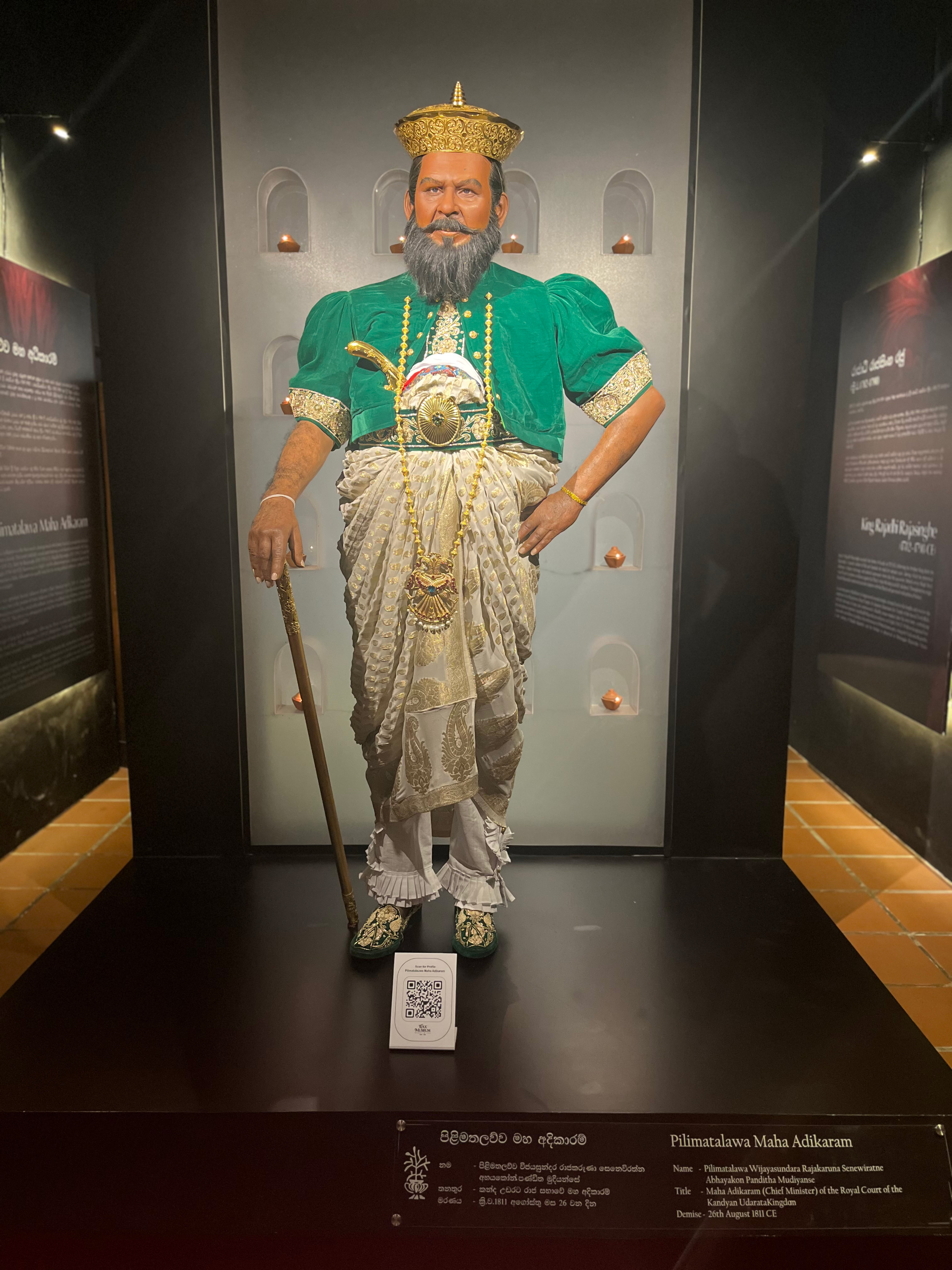
The Adikarams, prime ministers of the Kandyan court, become a study in politics. One leans forward in loyalty. Another tilts back, lips tight, eyes calculating. Their pinnacle hats cast shadows across their faces. Empires do not fall in one blow. They erode through human choices.
The Colonial Shift
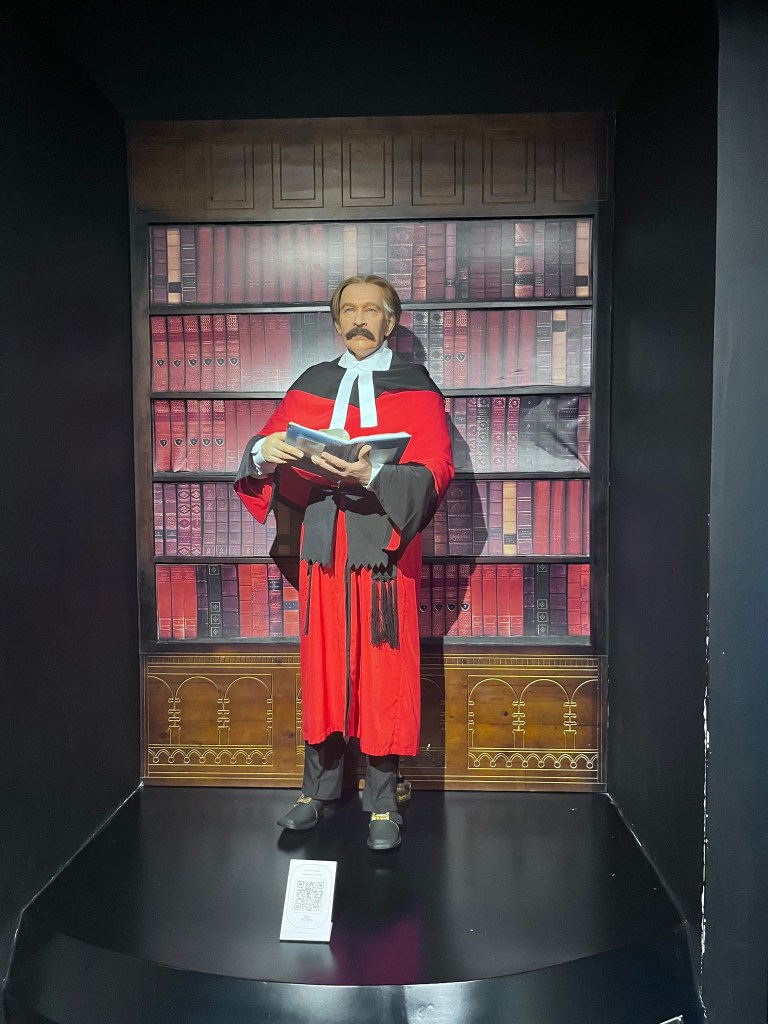
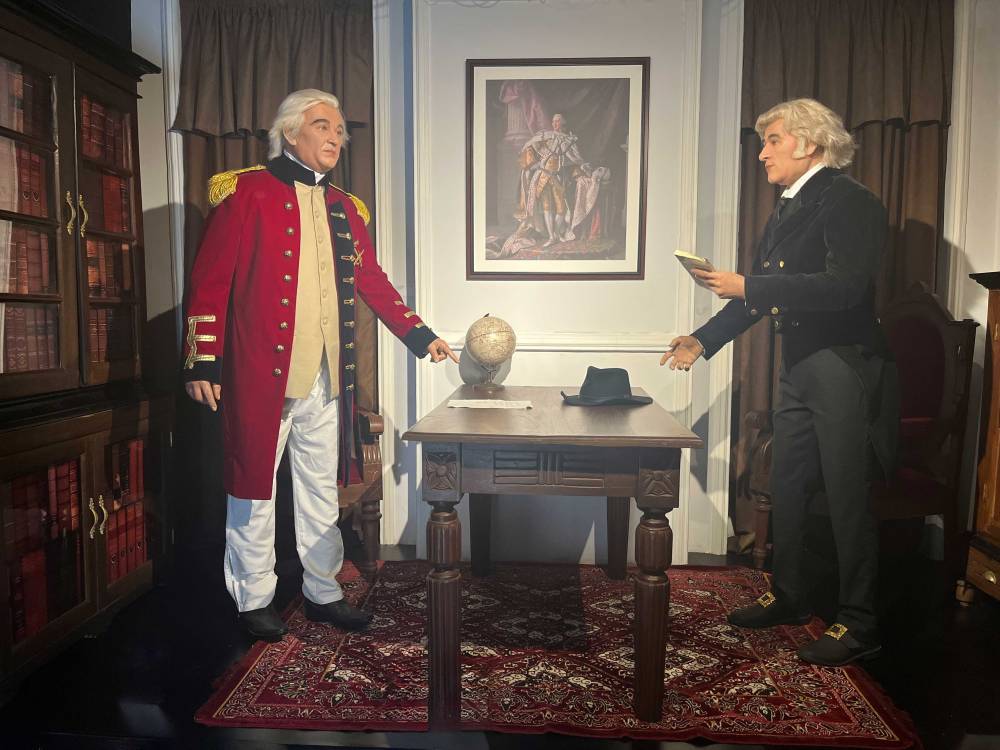
Governor Robert Brownrigg stands in scarlet wool and brass, pale among silks, the architect of British control, orchestrator of the Kandyan Convention, crusher of the 1818 rebellion. His face is administrative neutrality: a man who ends eras with paperwork.
Beside him is John D’Oyly, British Resident in Kandy (1815–1824), quietly powerful, fluent in Sinhala, fluent in courtly nuance. His diplomacy and alliances pave the way for 1815. In wax, he appears courteous. History knows him as the man who ended a kingdom without firing a shot.
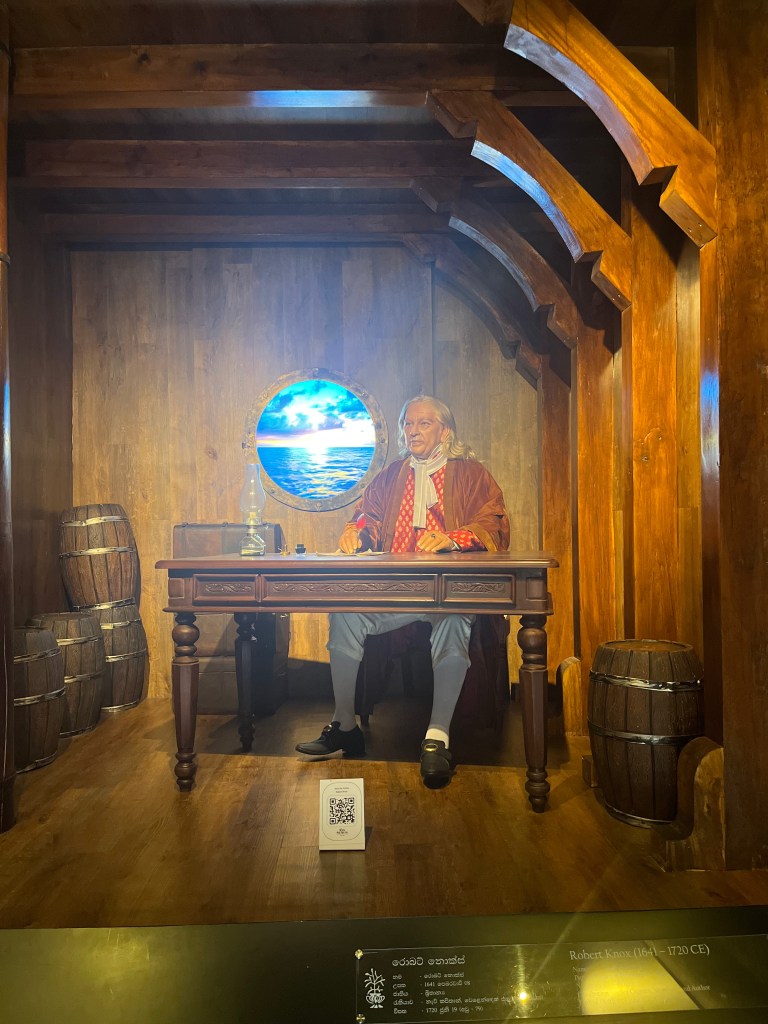
One figure carries the weight of an outsider who became an accidental chronicler of this world- Robert Knox. A British sailor captured by the Kandyan court in the 17th century, Knox spent nearly twenty years in captivity, moving through villages, markets, forests, and courtly spaces that no European had documented from within. His Historical Relation of Ceylon remains one of the most detailed records of pre-colonial Kandyan life; its laws, agriculture, rituals, and rhythms. In wax, he stands not as a conqueror but as a witness. His presence reminds me that much of what we know about this kingdom survives because a prisoner learned to observe, to listen, and finally, to write. Even today, historians and researchers lean on his words to reconstruct a world that might otherwise have vanished.
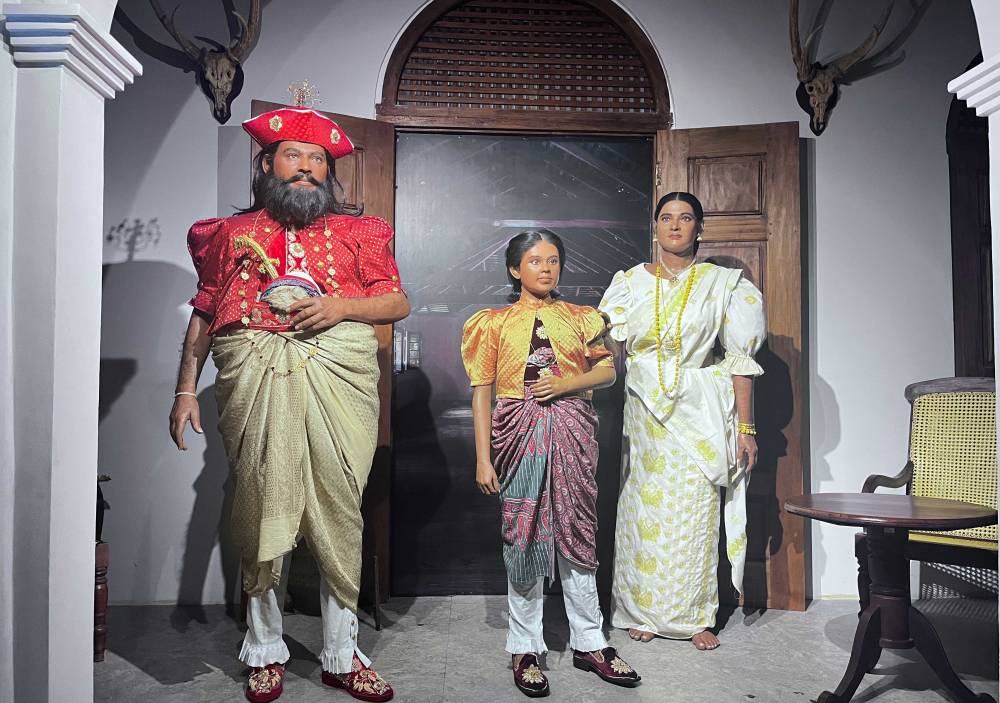
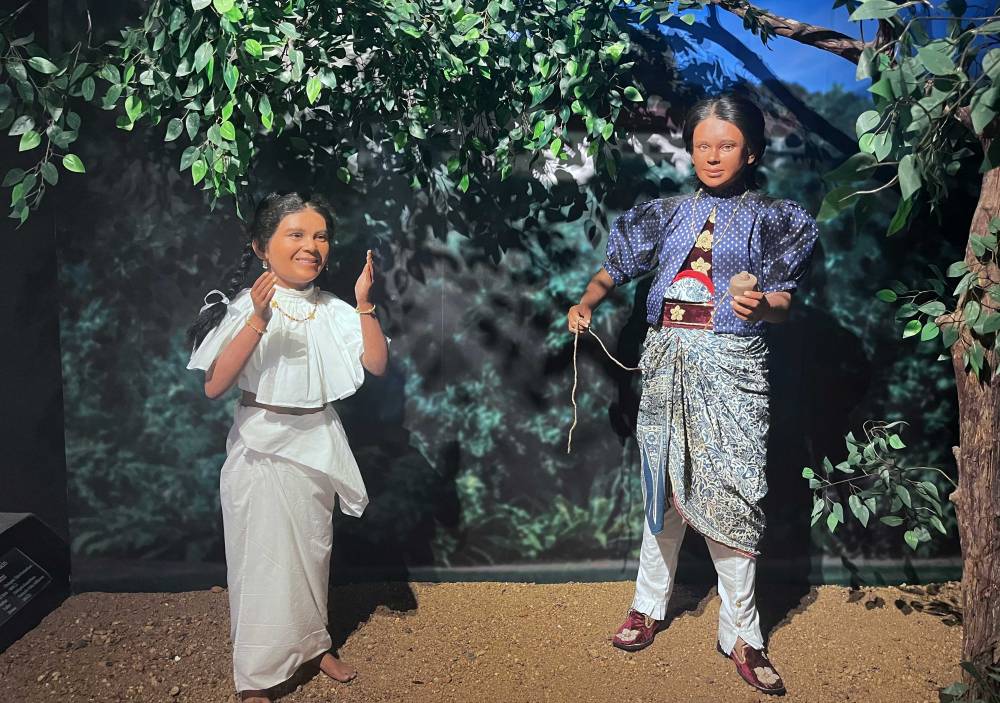
At the heart of the mansion, the air changes. Ehelepola Maha Adikaram stands in courtly splendour, yet burdened. After defecting to the British, his family pays the price. Ehelepola Kumarihami stands with her children. Their skin is softer than any royal figure’s. Fine baby hair glows under gallery light. Knowing King Sri Wickrama Rajasinghe ordered their execution makes this room unbearably heavy – with retrospection.
Together, they all form a living hierarchy: monks who preserved belief, kings who embodied sovereignty, nobles who governed, rebels who resisted, artisans who sustained, and common folk who endured. This is not a gallery of crowns. It is a civilisation reconstructed.
I exit, struck by the precision and near-perfection etched into every larger-than-life figure. This chapter of the nation’s history is steeped in treachery, chaos, and defection—and yet, it is also threaded with immense grandeur.
A University of Moratuwa team comprising Prof. Virajini Karunaratne, Prof. Gayathri Ranathunga, and Dr. Prabod Munasinghe, spent over a year reconstructing Kandyan sartorial culture. Bengali muslin. South Indian chintz. Persian brocade. Woven anew by Central Province artisans. Each king is dressed uniquely, based on temple murals and colonial records. This is as much academic triumph as artistic one. The project’s historical coordinator was Prof. Rohitha Dasanayake of the University of Peradeniya, the main collaborator behind this impressive outcome.
All 35 figures are the work of a single artist, Athula Herath, a former airman who spent seven years teaching himself wax sculpture in his home in Gampola. His figures carry a “blood-under-skin” warmth. Hair is inserted strand by strand. Eyes are medical-grade glass. His son, architect Mahima Herath, designed the museum’s flow so each room beats like a chronological heart.
The Ehelepola Wax Museum is not a stop on an itinerary. It is a must-visit for anyone drawn to history, tragedy, craftsmanship, defiance, and quiet resilience.
 Mihipedia.lk
Top class stuff A’M 👌 didn’t know much about the history behind the wax works. Thank you muchly.
LikeLike
Thank you U’M. Next time you go over to Kandy, make sure to visit this museum. You will not be disappointed.
LikeLike