

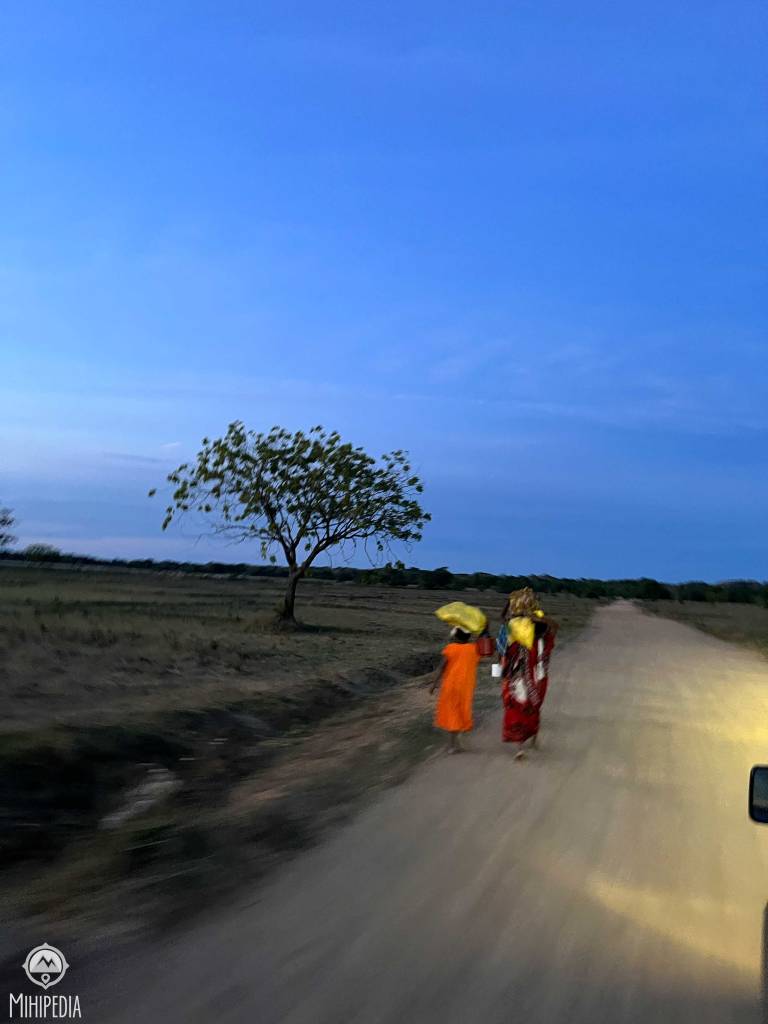
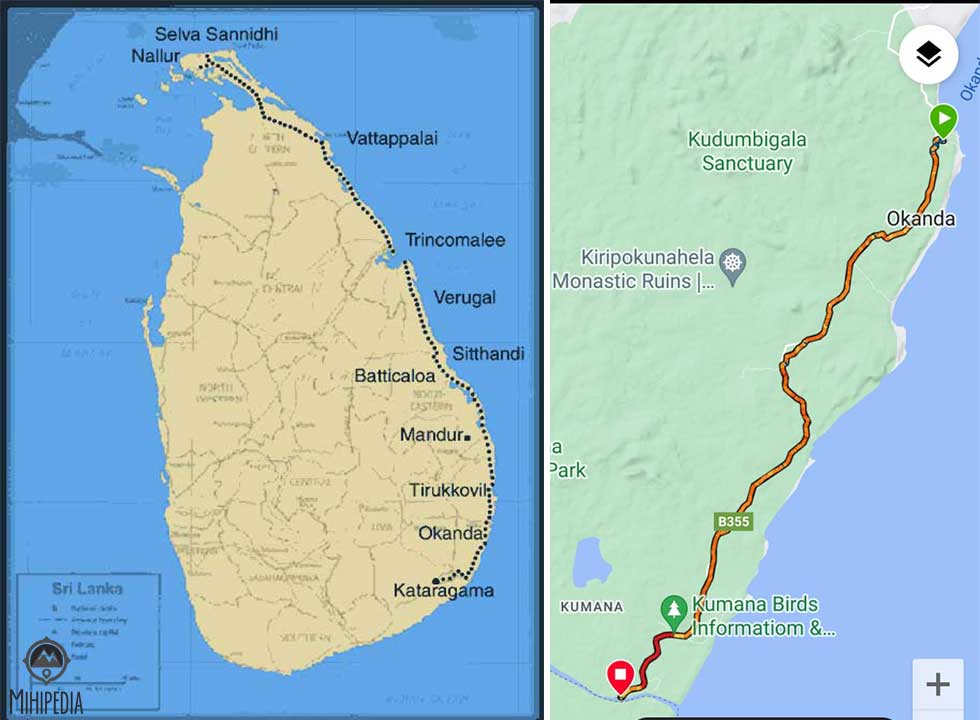
It’s 4:30 in the morning, and Arugam Bay, located in Sri Lanka’s southeast coastline is cloaked in the pre-dawn darkness. The air is filled with a mixture of anticipation and quiet resolve as we gather our belongings. Ashan, from Little Adventures, the inspiration and organizer of this walk has arrived to pick us up. Our purpose: to walk a part of the Pada Yatra. Our destination: the sacred grounds of the Okanda temple, the beginning of our 22-kilometer walk to Kuda Kebilitta, and then onward to Kumbukkan Oya.
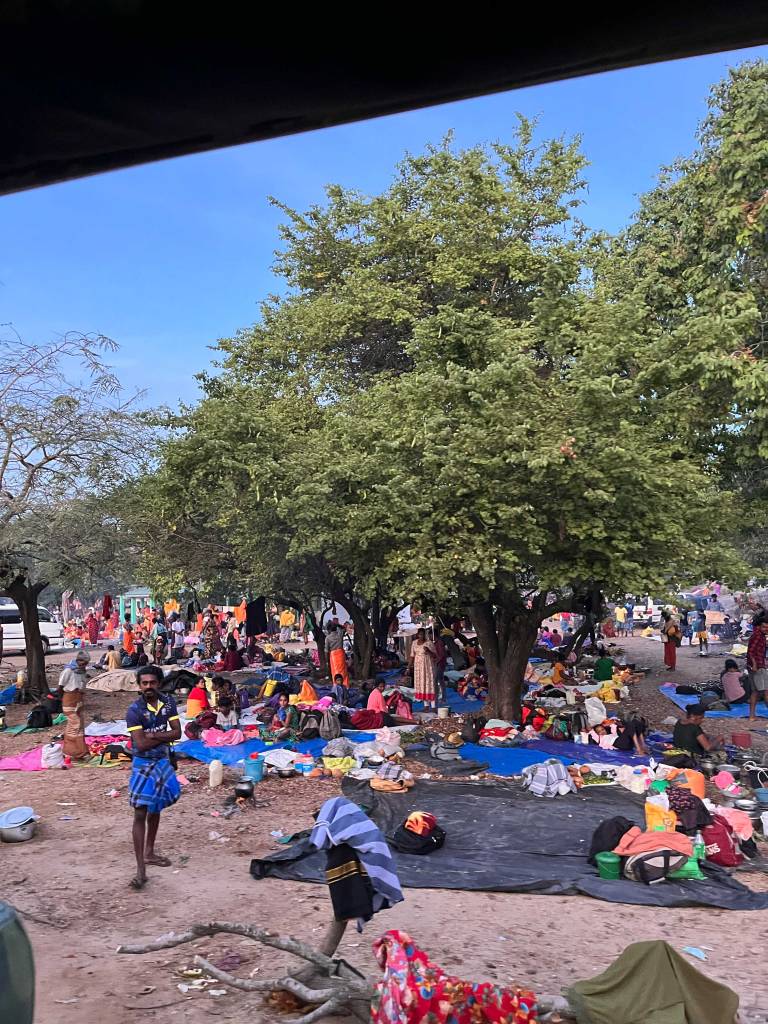

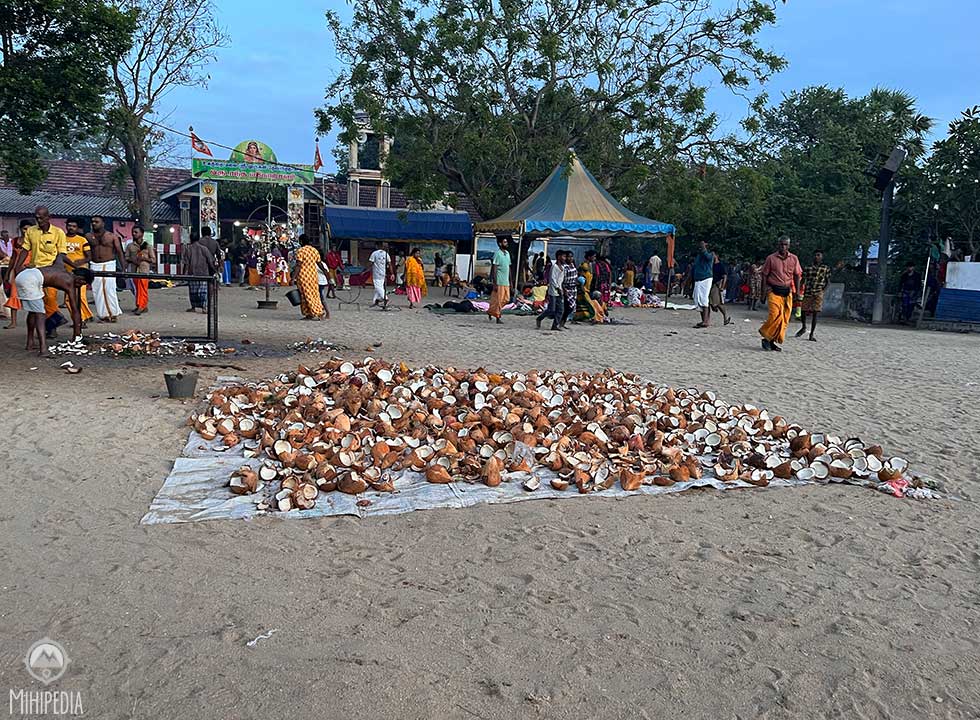
As we get closer, the flickering lights of candles and the soft murmurs of prayer greet us at the Okanda Temple. This serene temple, bathed in the soft glow of dawn, yet teeming with pilgrims who have arrived before us, stands as a symbol of hope and devotion. We pause for a moment of religious observance, our hearts and minds focused on the journey ahead.

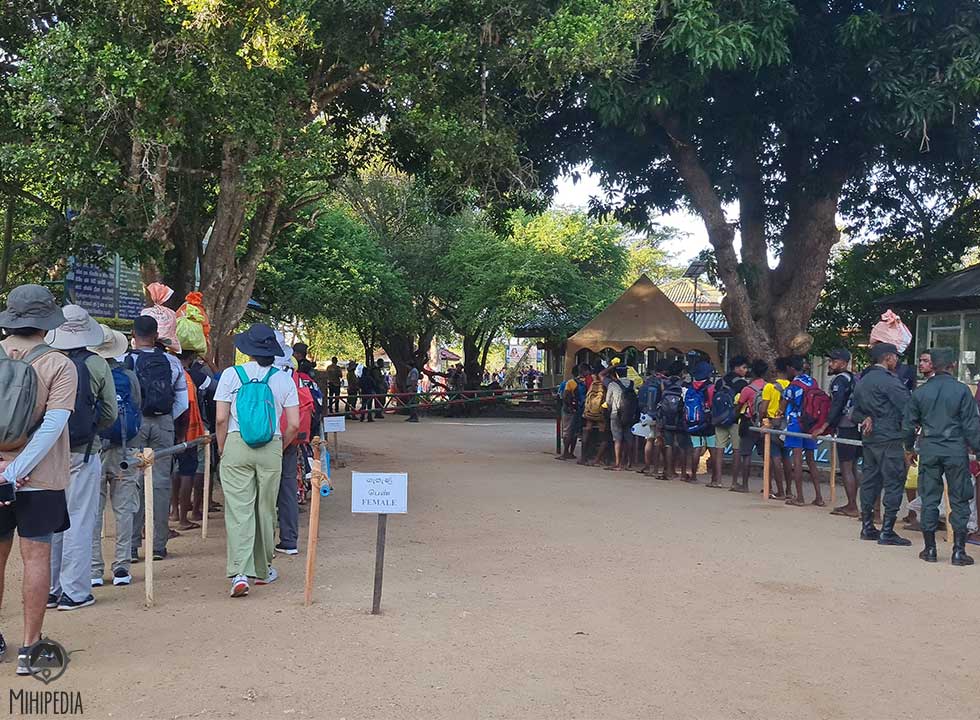

By 6:50 a.m., we reach the Kumana Park gate, the official starting point of our walk. After a quick breakfast and with a sense of purpose in our hearts, we set out on our walk, a journey we have been preparing for over the past week.
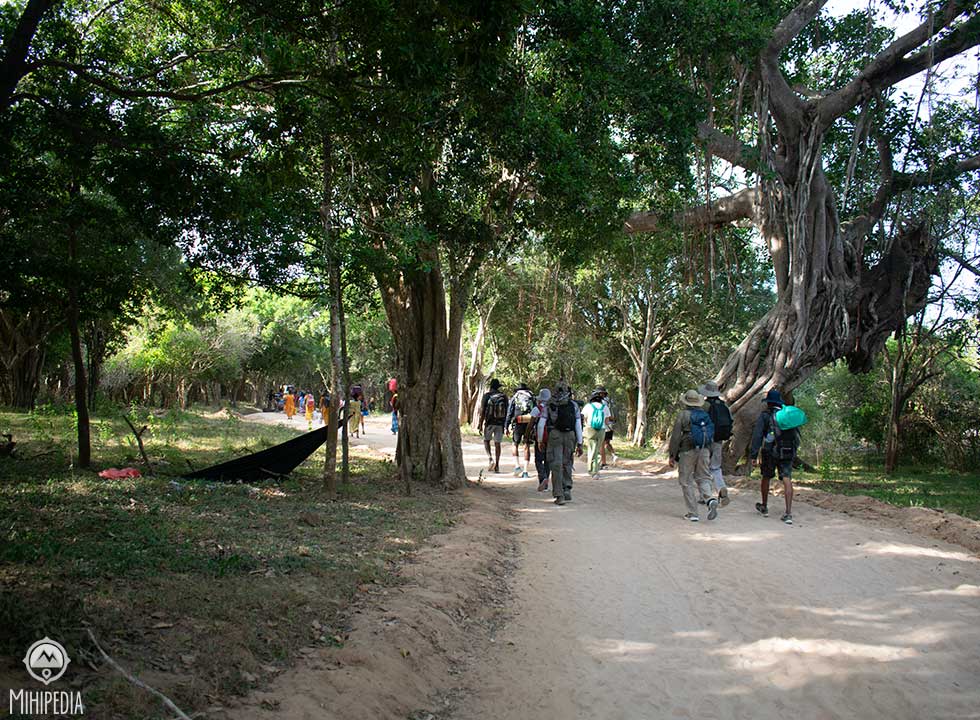
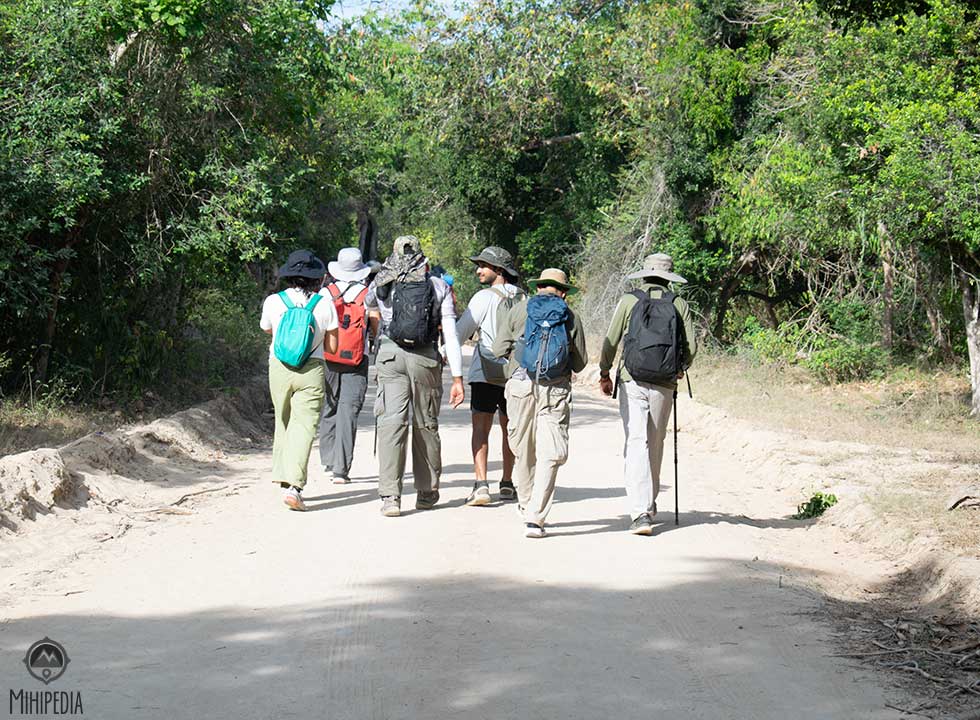
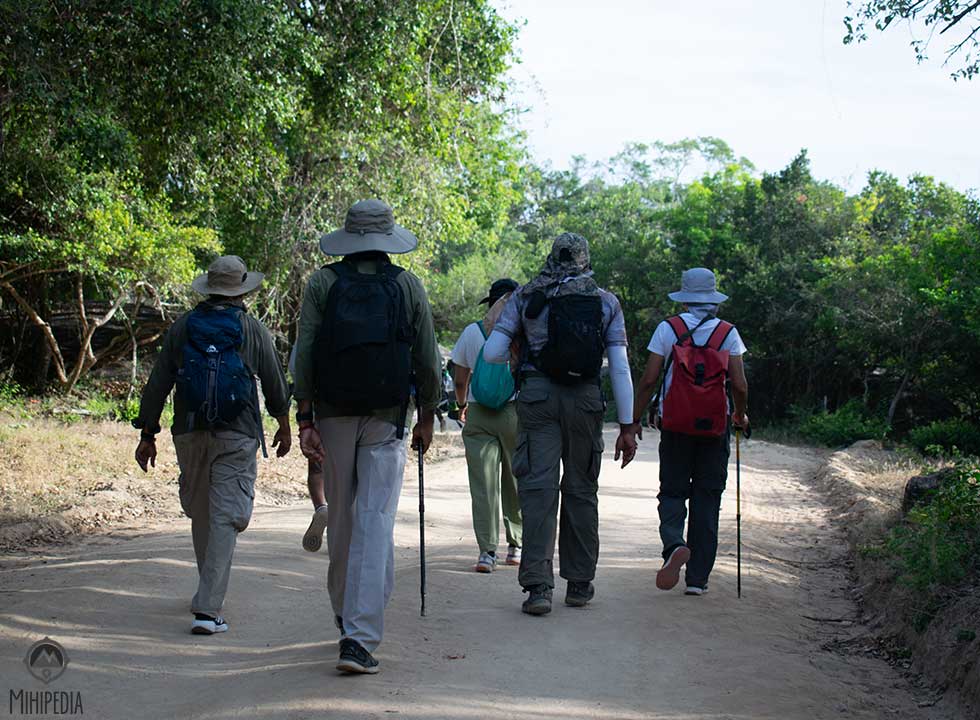
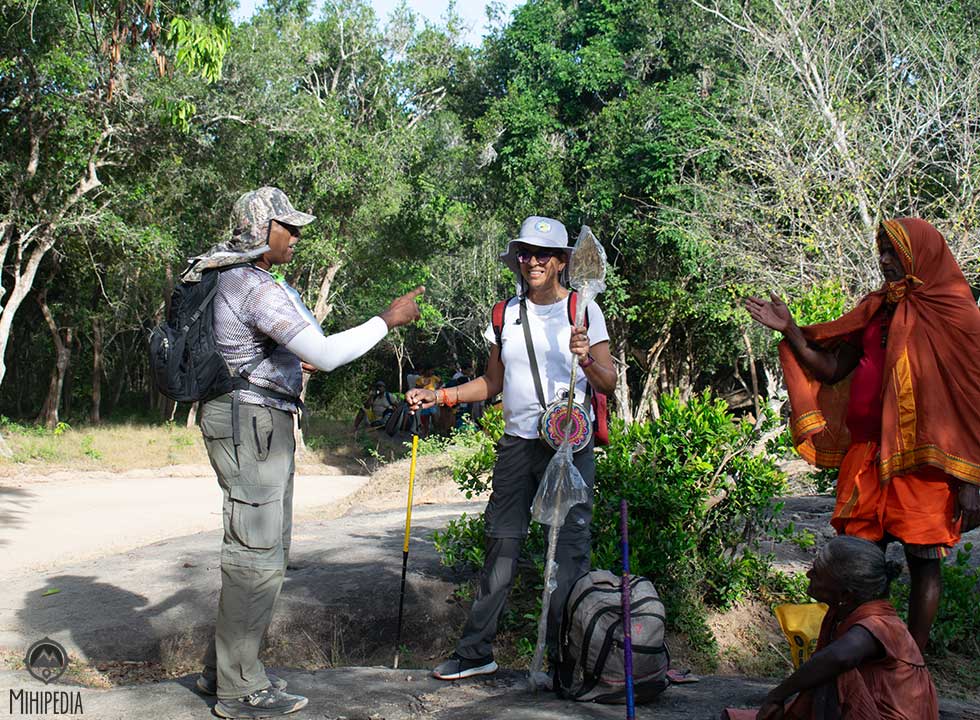
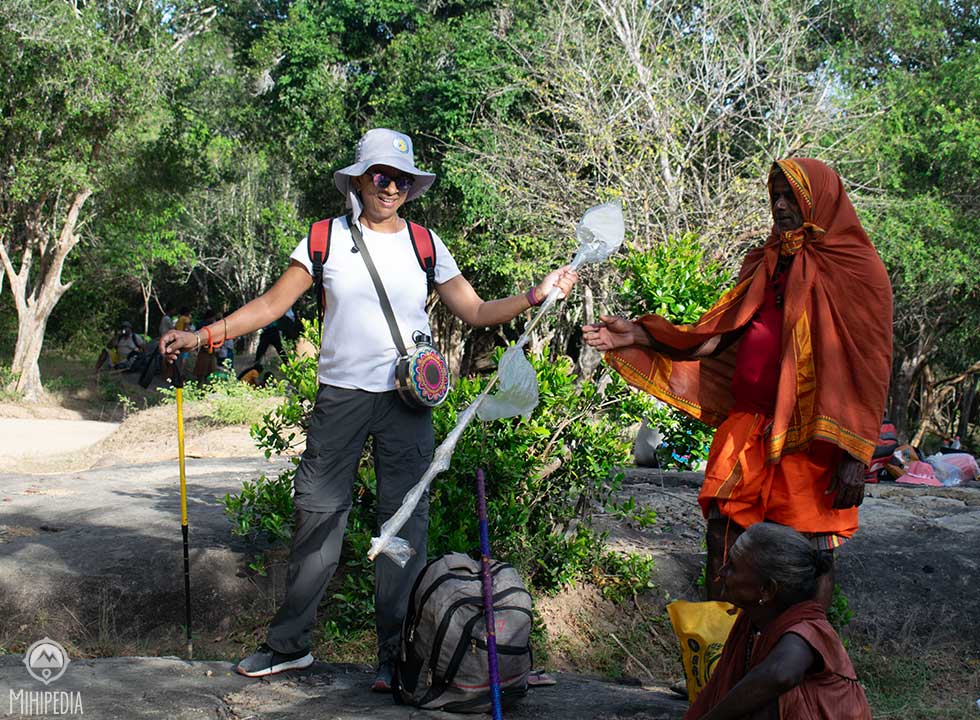
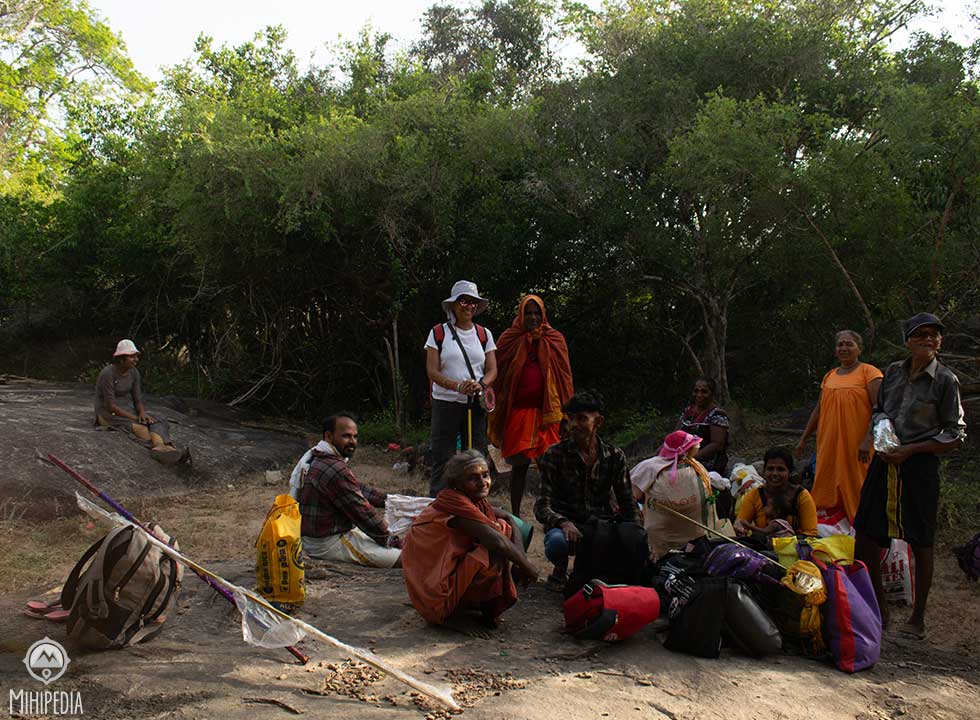
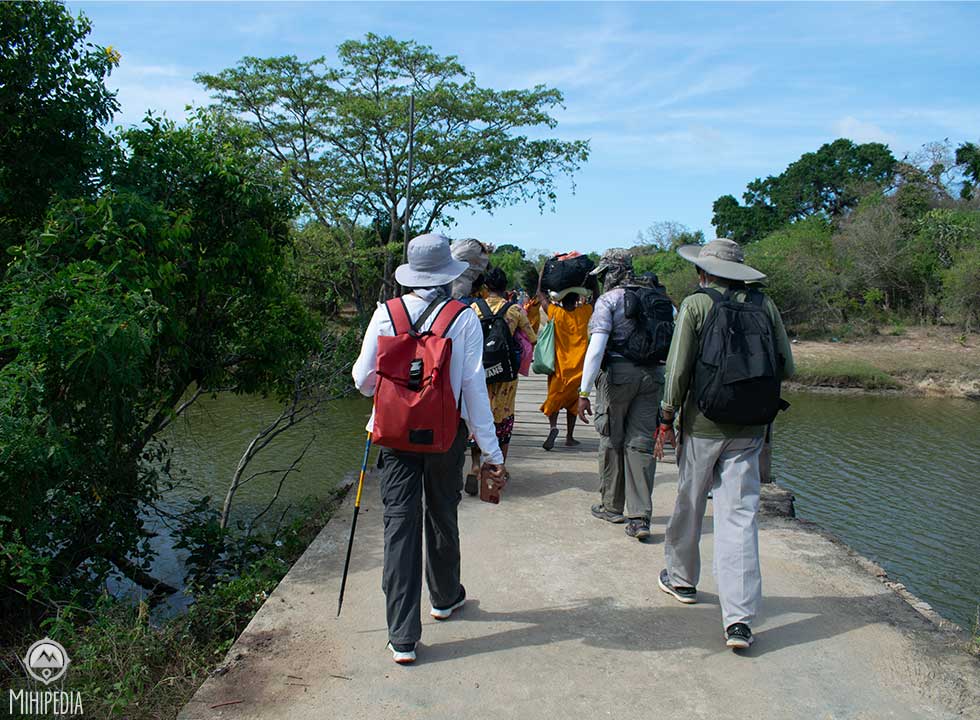
Shaded by a dense canopy of trees, and along with other early-starters, we find the first 11kms to be relatively easy. The forest is alive with the chorus of devotees exchanging cries of “Haro Hara” along with the symphony of nature that accompanies our every step. The cool morning air is refreshing, and the camaraderie among the pilgrims is palpable. We share food, laughter, and photo-ops, our spirits high as we tread the forest path.
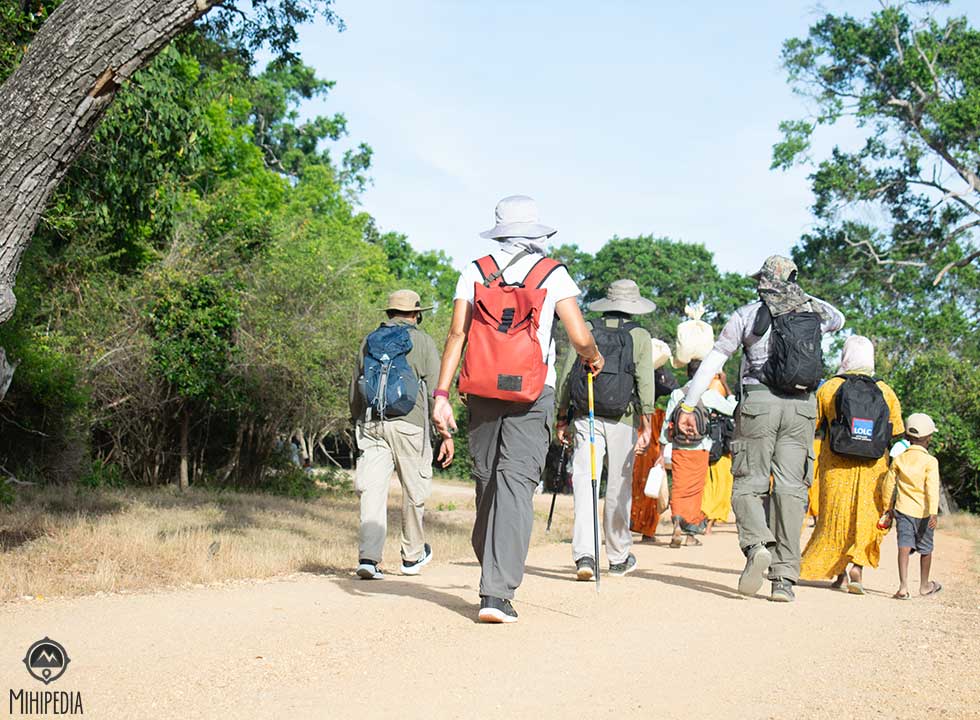
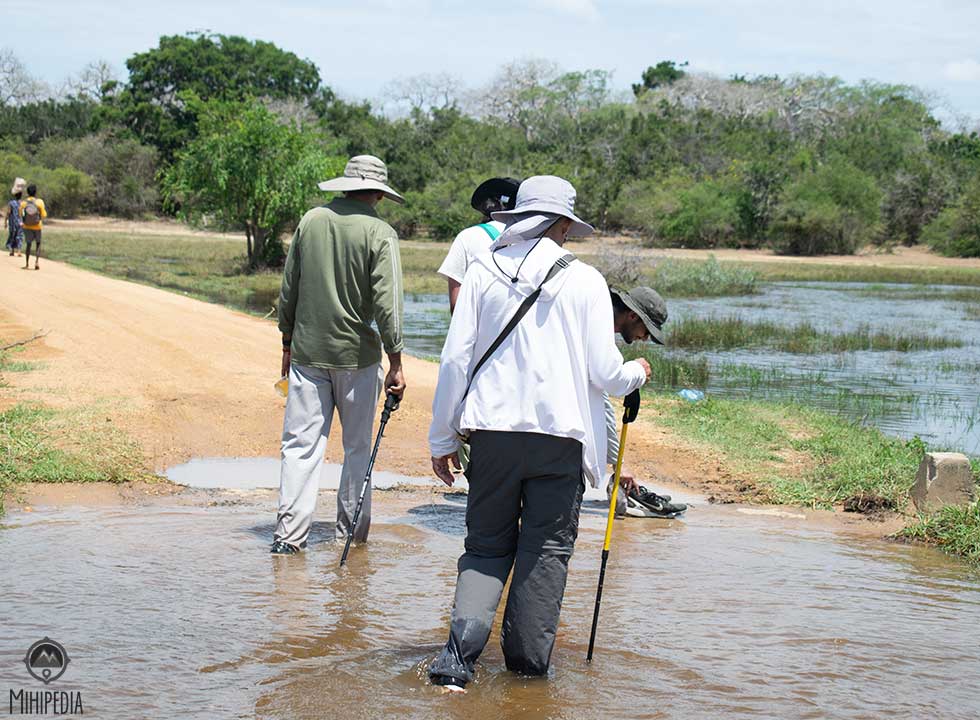
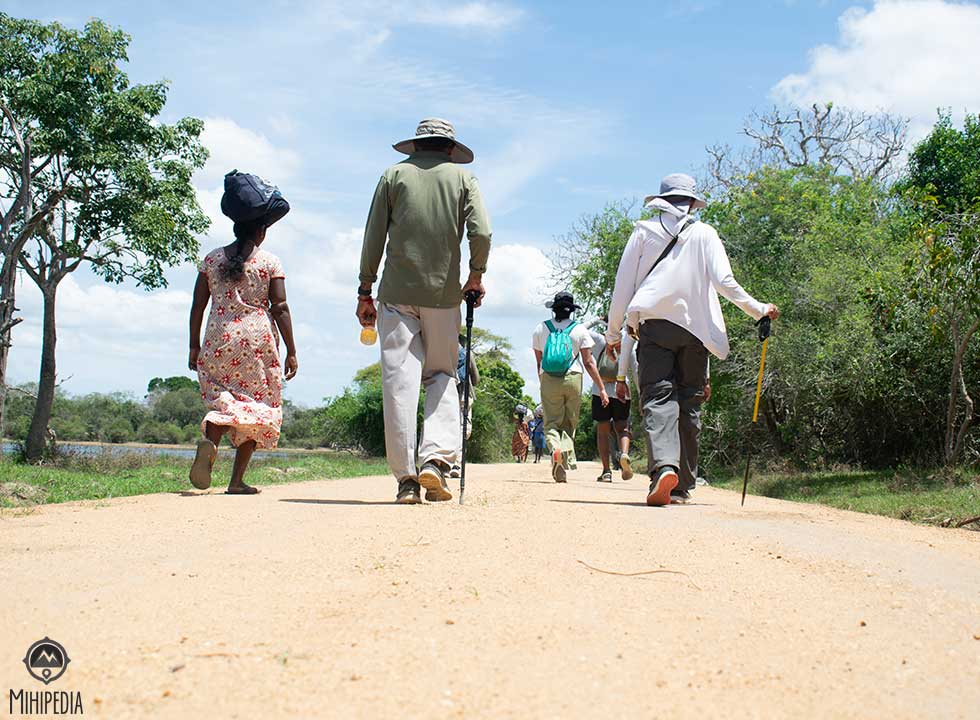

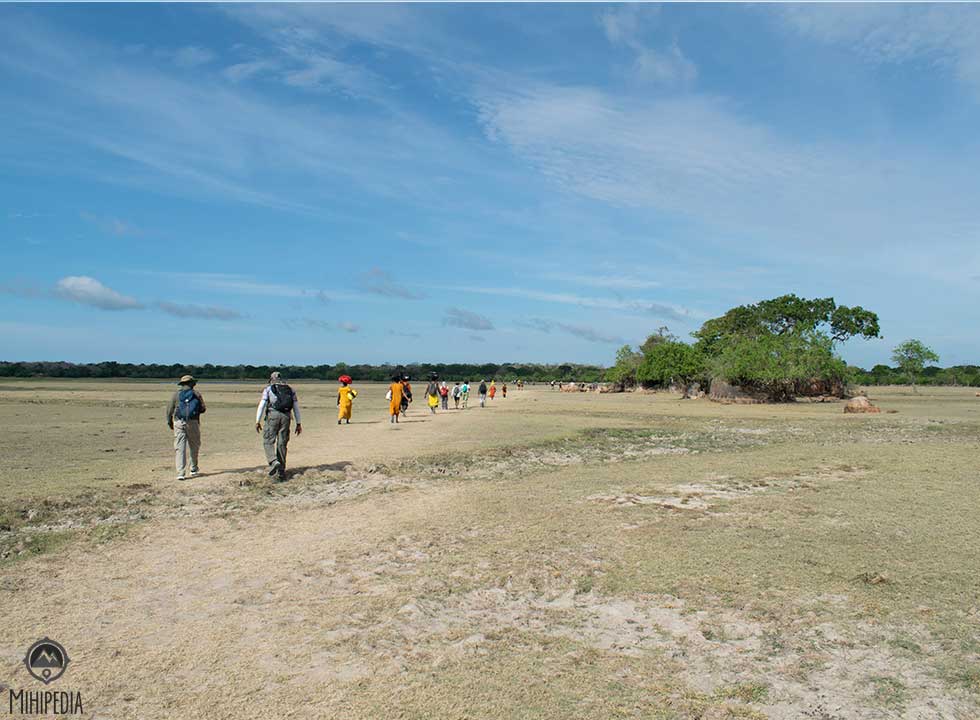

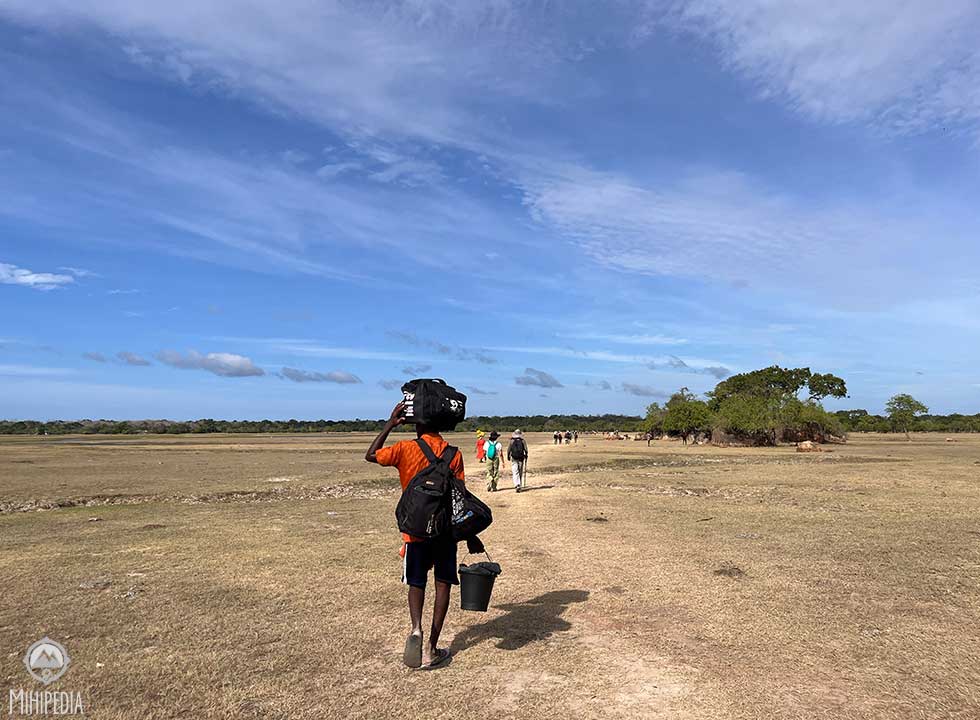
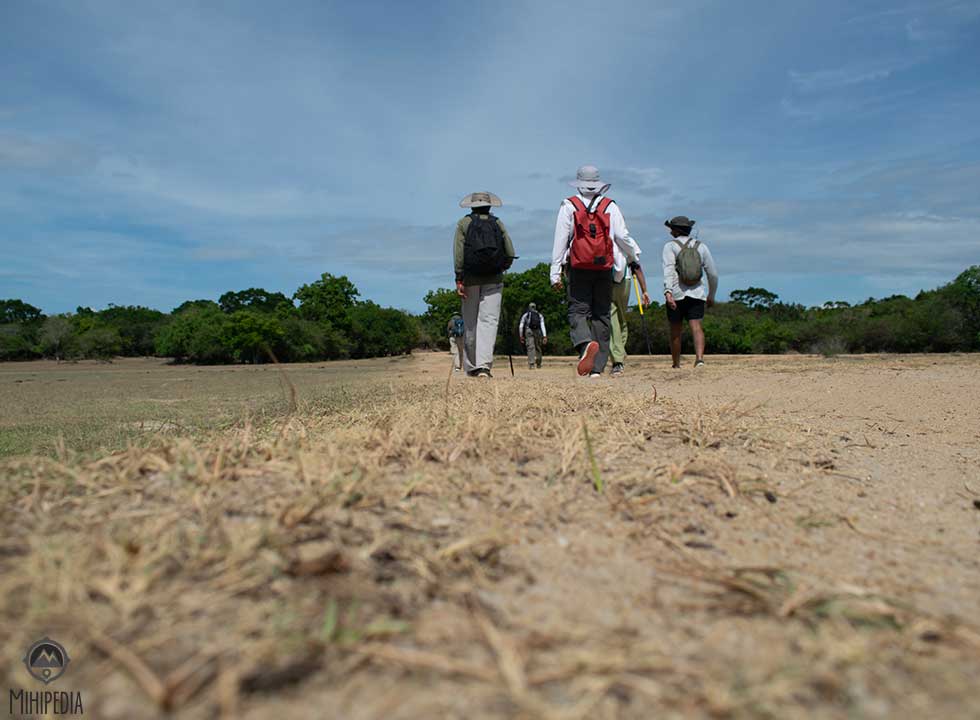
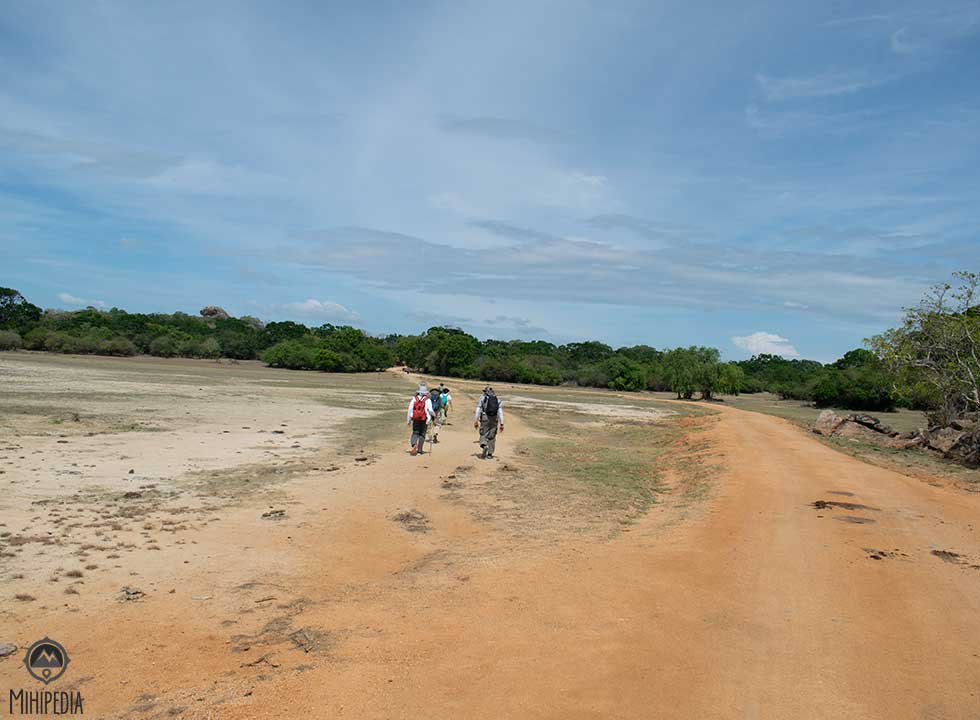
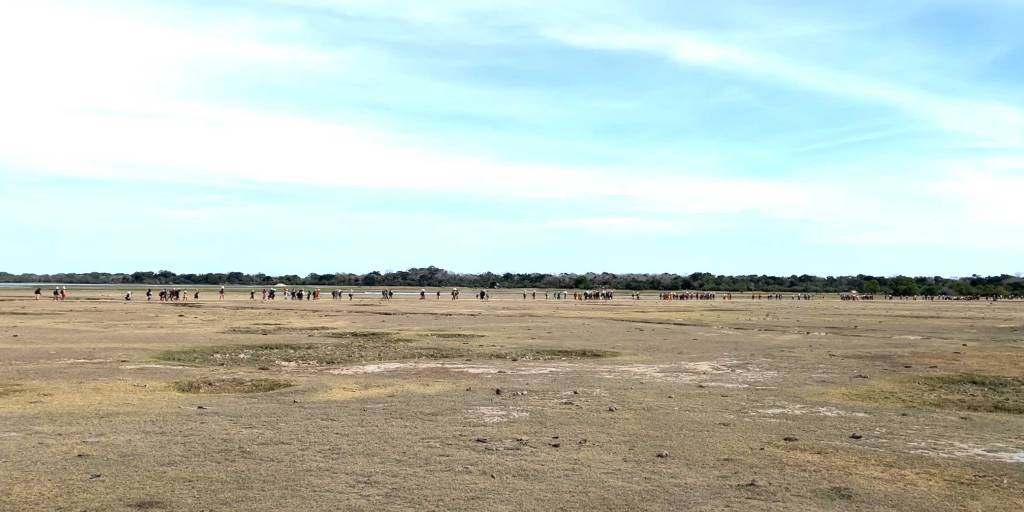
As the sun climbs higher, the shade begins to disappear, and the temperature rises steadily to 37c. The landscape transforms into open grasslands, and the heat becomes intense. Each step feels heavier, and the humidity wraps around us like a thick blanket. The walk becomes arduous, testing our physical and mental endurance. Yet, there’s a sense of determination that drives us forward. We are not alone; hundreds are walking with us, a sea of humanity moving as one.
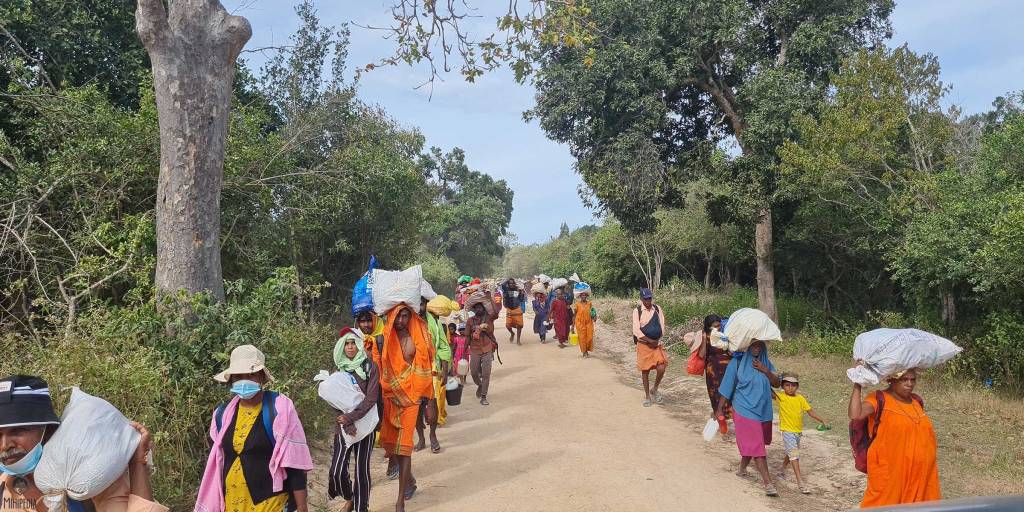
I am struck by the resilience of the people around me. Men and women carrying young children, some barely more than toddlers. Others carry heavy loads of dry rations, destined to be cooked along their long journey. Children walk barefoot or in worn-out slippers, their faces radiant with joy and excitement. These pilgrims have traveled from far and wide, many from Jaffna, making their way to Kataragama in time for the festival. Their faith and dedication are inspiring, a testament to the human spirit’s capacity for perseverance.
The Pada Yatra is steeped in tradition and history. According to legend, this path through the jungle road of Kumana was taken by Skanda Kumara or Kartikeya, revered as God Kataragama, who landed on Okanda beach to visit Valli Amma. Now, pilgrims partake in this annual pilgrimage as an reenactment of episodes related to the legends and myths of Kataragama. Simple, ordinary people who say they have received a ‘call’ take part in this marathon walk, leaving everything behind but a bundle of essentials. They experience the homeless life of a beggar or religious recluse, with deep lessons about the paradoxes of life driven into them in a sustained act of self-denial.
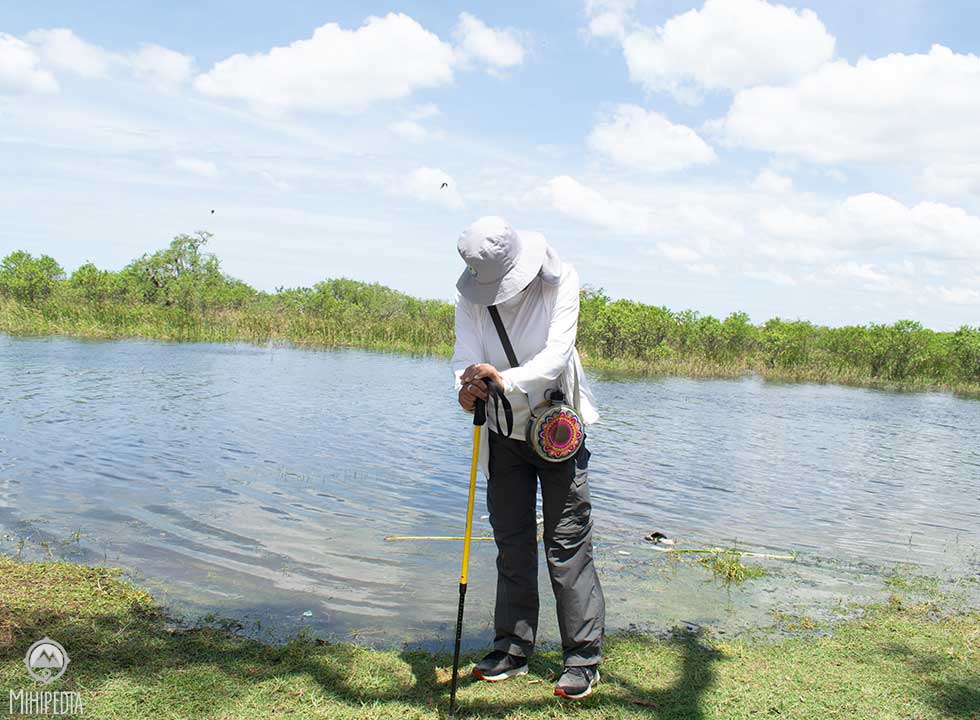
As midday approaches, we take a short break to rest and rehydrate. It’s been almost five hours of walking and I am struggling. But every stop is getting harder to restart, as my muscles are cramping and my feet are aching. Despite the blistering heat, there is a sense of purpose to continue and Ashan will not let me give up!
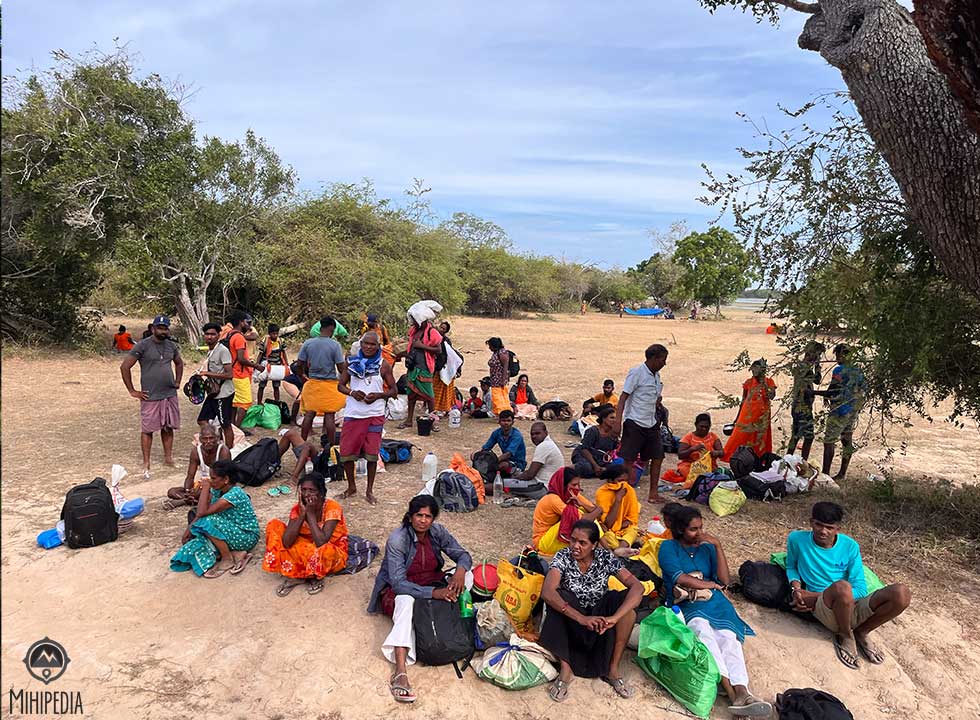
The Pada Yatra can be extremely challenging, both mentally and physically. High temperatures (today’s temperature is 37c) and dehydration are constant threats, and the terrain, with its long valleys devoid of shade, water crossings, and sandy stretches, tests our limits. Yet, the pilgrimage is also an opportunity for profound spiritual growth for these pilgrims. Sleeping and living outside, under trees and in shrines and temples, seldom knowing from where the next meal will come, braving the risk of animal attacks—these factors make the Pada Yatra an intense spiritual experience for those who receive the ‘call.’
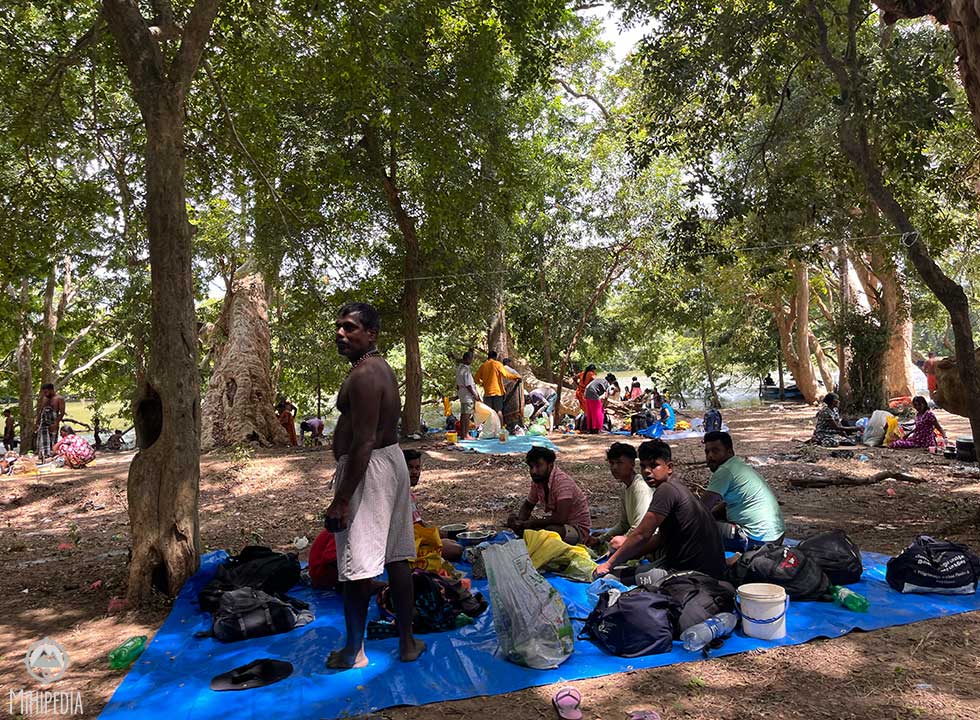
Reaching Kuda Kebilitta is a moment of triumph for me. We stop to offer lunch packets to the hundreds of pilgrims who have stopped to rest or ready to camp for the night. The sense of accomplishment is overwhelming, but we know there is still a way to go. The final stretch to Kumbukkan Oya lies ahead, and we gather our strength for the last leg of the journey.
The traditional two-month-long Pada Yatra from Jaffna to Kataragama spans 400kms and is held annually in May-June-July. This pilgrimage is an essential part of Sri Lanka’s multi-cultural ethos, and has survived centuries of change and challenges. From its origins, where Muslim bawas and Hindu swamis would journey through Jaffna to Kataragama, to modern times where over 32,000 pilgrims walked the final leg this year, this pilgrimage continues to be a powerful expression of faith and dedication.

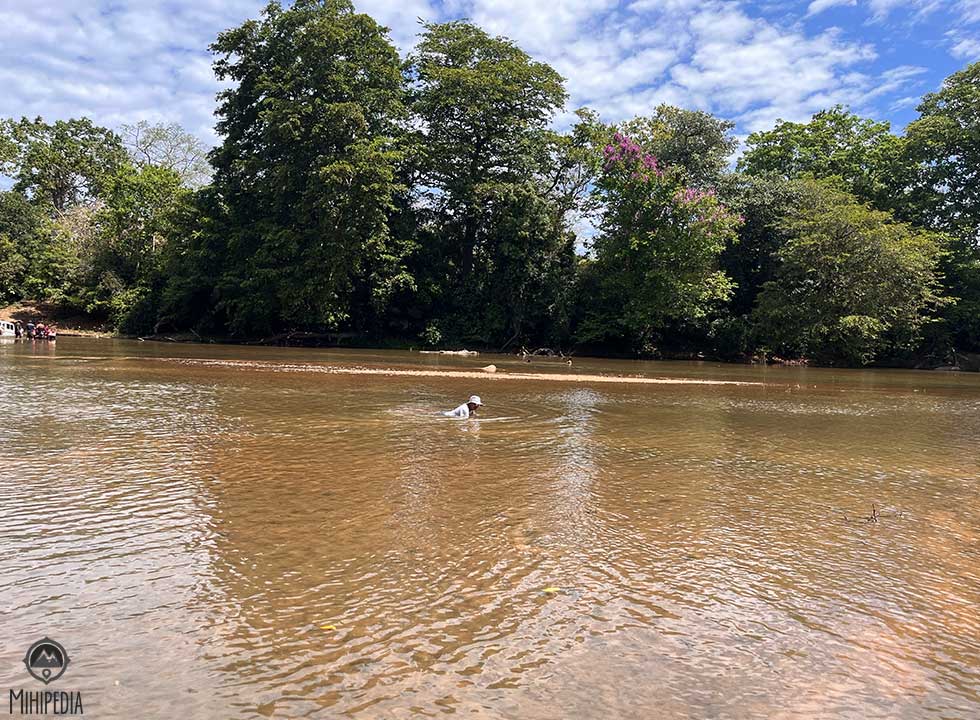
Our journey concludes as we finally approach Kumbukkan Oya, exhausted but exhilarated. The final dip in the river is the balm I was craving for! I am filled with a profound sense of gratitude. Walking alongside these dedicated pilgrims, I am humbled by their unwavering spirit and inspired by their devotion. This journey is a powerful reminder of the strength within us and the beauty of coming together for a shared purpose. This experience has been a test of my limits and a journey I will carry in my heart forever.
According to some legends God Kataragama originally lived in Mount Kailash in the Himalayas and had a divine consort by the name of Thevani, before moving to Kataragama in Sri Lanka. After settling down at Kataragama in south eastern Sri Lanka, he had fallen in love with Valli, a beautiful maiden princess who had been raised by the indigenous Veddahs. Later Valli became the second consort of God Kataragama and transfigured as a deity. Till today the indigenous Veddah people come to venerate God Kataragama at the Kataragama temple complex from their forest abodes. His relationship to the Veddah princess Valli is celebrated during the annual Kataragama Esala Perehera.
 Mihipedia.lk
Mihiri , Coming down from the 1 degree temperatures from the ” Roof of the world” a few weeks ago and starting another journey through the wilds at 37 degrees is in itself a feat ! Reading through I too was a participant in this historic journey ! Thank you for sharing this lovely write up. Maybe an addition to my bucket list!
LikeLiked by 1 person
While on this walk I was contemplating if I grumbled too soon about the cold weather in Ladakh 🙂 The heat was unbearable and completing draining. You can join Ashan next year. He’s going to be organising another walk for the brave! Once is enough for me 🙂
LikeLiked by 1 person
What a beautiful journey in a beautiful story from a beautiful soul. It’s so good to see you traveling and sharing your world. Thank you…
LikeLiked by 1 person
Thank you Eddie. Your words mean a lot to me. I wish that you could come visit me in this part of the world. It’s not too late 🙂
LikeLike
<
div dir=”ltr”>
<
blockquote type=”cite”>
LikeLiked by 1 person
Thank you. Will you join me on the next trek?
LikeLike