
After two unforgettable days exploring some of Paris’s most famous landmarks, I decided that Day 3 would be a little different. Instead of rushing from one major attraction to another, I wanted to experience Paris the neighbourhood—its winding streets, cafés, artists, architecture and the little details that make simply walking through the city such a pleasure.
And what a wonderful decision that turned out to be.

I made my way to the charming hilltop district of Montmartre, one of Paris’s most atmospheric neighbourhoods. Wandering along its narrow cobbled streets, lined with classic Parisian apartment buildings, cafés and small boutiques, I quickly understood why this area has inspired generations of artists.
Away from the grand boulevards and busy tourist attractions, Montmartre has a wonderfully relaxed character. Here, simply strolling through the winding streets becomes part of the experience.
I felt as though I had stepped into a completely different side of Paris, where history, creativity and everyday life blend effortlessly together.
Montmartre has always had a reputation for attracting creative souls. Artists such as Pablo Picasso, Vincent van Gogh, Claude Monet and Pierre-Auguste Renoir were drawn to this part of Paris, particularly during the late 19th and early 20th centuries. Their presence helped establish Montmartre as one of Europe’s great artistic centres—and that creative spirit can still be felt today.

At the summit of the hill stood the magnificent Sacré-Cœur Basilica, its brilliant white domes rising above the Paris skyline. Designed by architect Paul Abadie, the Romano-Byzantine basilica dominates the highest natural point in the city, rewarding visitors with spectacular panoramic views across Paris. Construction began in 1875 and the church was completed in 1914, eventually becoming one of France’s most recognisable landmarks. Standing on the famous steps outside, looking across the seemingly endless rooftops of the French capital, was one of those moments that reminds you just how beautiful Paris really is.
But there was more to Montmartre than its famous basilica.

I stepped inside the historic Église Saint-Pierre de Montmartre, one of the oldest surviving churches in Paris. Consecrated in 1147, this remarkable church predates much of the Paris we know today.


Inside, the sturdy Romanesque columns, medieval stonework and beautiful rib-vaulted ceiling create a peaceful atmosphere that feels worlds away from the lively streets outside. After the crowds around Sacré-Cœur, sitting quietly inside this ancient church offered a wonderful moment of reflection.
It was also a reminder that Montmartre is not simply an artists’ quarter created for tourists. Beneath its colourful modern personality lies centuries of history.


Back outside, wandering along Rue Norvins felt like walking through a classic Paris postcard. The narrow cobbled street is lined with cafés, galleries, souvenir shops and colourful awnings, all contributing to the unmistakable bohemian atmosphere that has made Montmartre famous. Every few metres there seemed to be another charming doorway, artist’s studio or hidden corner waiting to be discovered. This was exactly the kind of Paris I had hoped to find—not necessarily the Paris of grand monuments and organised sightseeing, but the Paris you discover simply by putting one foot in front of the other.


One of my favourite discoveries was a delightful little art and ceramics gallery tucked away among Montmartre’s winding streets near Rue des Saules and Rue Saint-Rustique. Its rustic façade and colourful displays perfectly captured the artistic spirit of the neighbourhood. Places like this are what make Montmartre so special. Around every corner there is something unique waiting to be found. I could easily have spent hours wandering around these streets, stopping whenever something caught my eye.

As I continued downhill through Montmartre, I was rewarded with beautiful views framed by elegant Parisian apartment buildings with their limestone façades, slate roofs and delicate wrought-iron balconies. Even beneath grey skies, the neighbourhood possessed an undeniable charm. The soft light seemed to bring out the textures of the old buildings, while cafés and little shops added colour and movement to the streets. Sometimes the best memories come not from famous landmarks but from simply wandering the streets and soaking up the atmosphere.

Before leaving Montmartre, I returned to admire the magnificent Sacré-Cœur Basilica one last time.
Standing proudly at the summit of the hill, its brilliant white domes dominate the skyline and can be seen from across much of Paris. Flanked by the bronze equestrian statues of Joan of Arc and King Saint Louis IX, the basilica is every bit as impressive up close as it is from a distance.
But now it was time to leave the artists’ quarter behind and head towards another side of Paris.
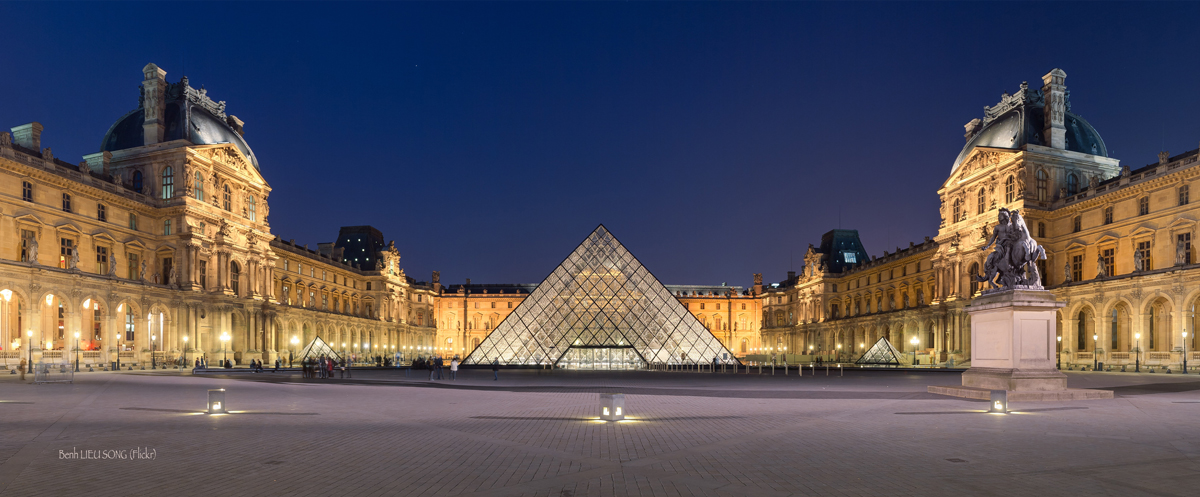
And waiting for me was the place I had been dreaming of visiting for years. The Louvre Palace.





1 good vibe